
THE MANAGER SQUEEZE
October 2, 2026
Managers sit at the point where executive strategy meets frontline reality. In this Beyond Limits Executive Briefing, Kevin Spindt explores why that layer is under extraordinary pressure, how a “shock absorber” belief can quietly limit performance, and what changes when managers see their role as translating strategy into meaningful behavior.
When Strategy Gets Trapped in the Middle
Managers occupy one of the most consequential positions in an organization. They hold executive strategy in one hand and frontline reality in the other, translating decisions, expectations, and priorities into the work people actually do. Kevin describes that position as the organizational hinge—and increasingly, that hinge is under strain.
In the session, Kevin points to 2026 engagement data showing manager engagement at 22%, overall employee engagement at 20%, and an enormous economic cost associated with disengagement. But he cautions against the easy conclusion that the answer is simply to “fix the managers.” In his framing, manager disengagement is a lagging indicator of a deeper belief problem. The Pacific Institute’s model is straightforward: beliefs drive behavior, and behavior drives results. Executive beliefs show up as direction and strategy. Manager beliefs show up in how that strategy is translated. Frontline beliefs and behaviors ultimately become the delivered result.
What You Will Take Away
See the Squeeze Clearly
Recognize the competing pressure managers carry between executive expectations and frontline reality—and why cutting or overloading that layer creates structural risk.
Find the Organizational Hinge
Understand why strategy remains words until a manager translates it into observable behavior, expectations, decisions, and day-to-day action.
Replace the Shock Absorber
Identify the belief that “my job is to absorb the hit and protect my team,” and replace it with a leadership identity centered on translation, growth, and meaning.
Make the New Belief Stick
Use when/then planning, self-distanced self-talk, and small wins to turn a better belief into repeatable behavior rather than a short-lived intention.
THE MANAGER SQUEEZE
Use the controls in the player to enable captions, adjust playback, or enter full-screen mode.
Tip: Select the full-screen icon in the lower-right corner of the player for the best viewing experience.
Managers, Beliefs, and the Translation of Strategy
These answers summarize the central ideas presented in the briefing.
What is the “manager squeeze”?
The manager squeeze is the pressure created when managers are expected to hold executive strategy in one hand and frontline reality in the other. They receive pressure, expectations, and changing priorities from above while also responding to the needs, resistance, and day-to-day reality of the people doing the work.
Why does Kevin Spindt describe the manager as the hinge in an organization?
Executives set direction and strategy, while the frontline ultimately delivers the customer-facing result. Managers sit between those two layers and translate strategy into the behaviors the team can actually execute. That makes the manager the hinge where strategy either becomes action or loses strength in translation.
What is the “shock absorber” belief?
It is the belief that a manager’s primary job is to absorb pressure from above and protect the team from it. Kevin argues that this identity can feel responsible or even noble, but it can also lead managers to soften expectations, avoid hard conversations, reduce coaching, and focus on preventing bad outcomes instead of helping people grow.
How do beliefs affect manager and team performance?
The Pacific Institute’s framework is that beliefs drive behavior, and behavior drives results. A manager’s belief about their role influences what they communicate, what they tolerate, how they coach, and how they translate strategy. Those repeated behaviors then shape what the team sees as normal and how the team performs.
What responsibility do executives have for manager engagement?
Kevin encourages executives to look up rather than simply blaming the manager layer. Manager behavior can reflect the beliefs, pressure, priorities, and examples modeled by senior leadership. If managers consistently feel they must absorb or shield the team from leadership, the executive layer should examine what it may be communicating or reinforcing.
What should replace the shock-absorber mindset?
Kevin reframes the manager as a translator and leader. The job is not to absorb pressure but to understand the intent behind executive direction, translate it into meaningful and observable behavior, and connect that behavior to the goals and reality of the people doing the work.
What three actions can a manager take immediately?
Kevin closes with three practical actions: create a when/then plan for how you will respond when pressure appears, use self-distanced self-talk by coaching yourself by name, and stack small wins by choosing a belief and behavior change you can successfully practice right away.
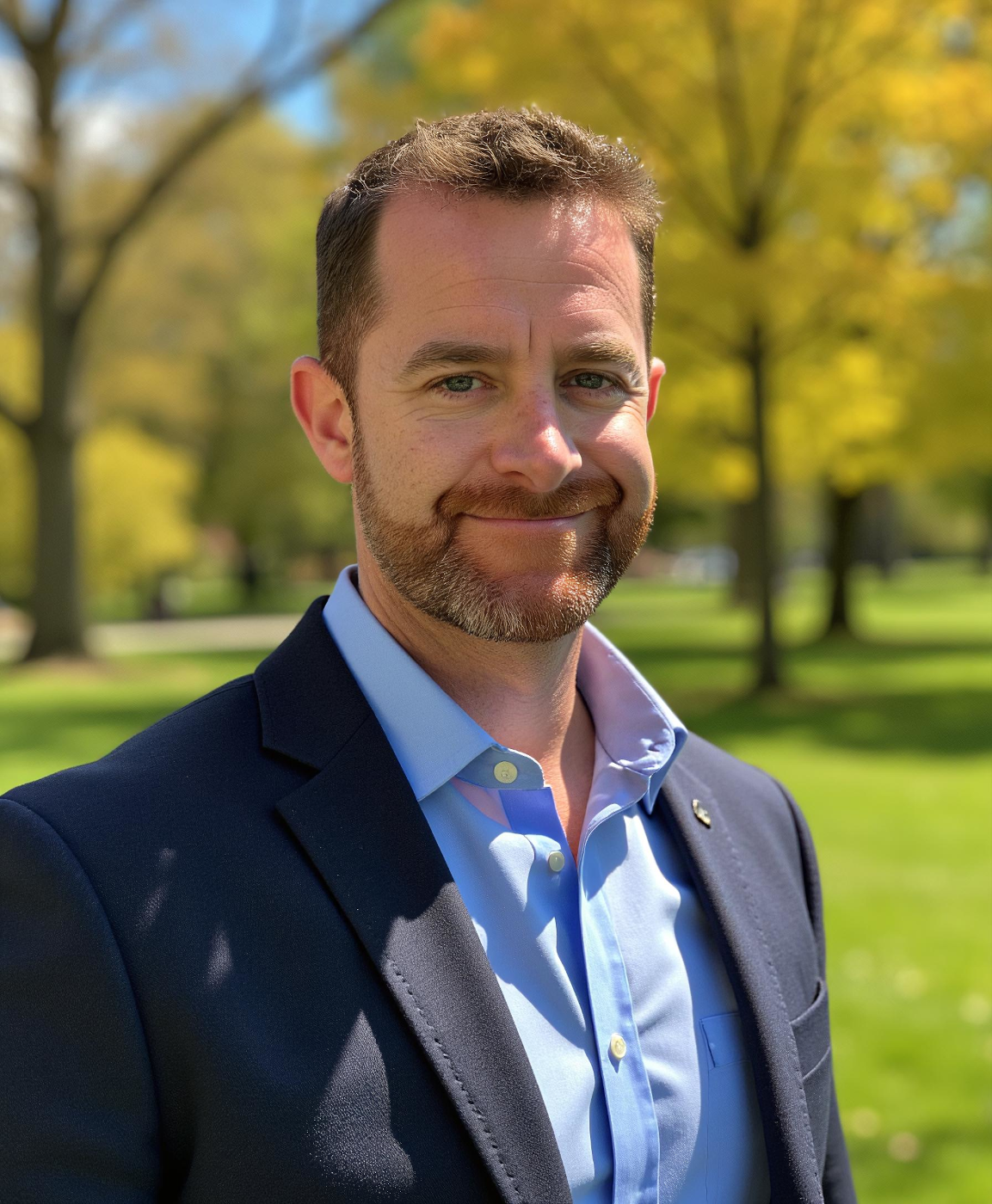
Kevin Spindt
Kevin Spindt is Chief Growth Officer at The Pacific Institute, where he helps individuals, leaders, teams, and organizations unlock greater potential and achieve sustainable growth. His background spans performance and leadership development, professional training, communication, and organizational effectiveness.
Kevin works with business owners, executives, and professionals to strengthen leadership capability, improve performance, and address the beliefs and behaviors that shape workplace culture and business results. His approach combines practical strategy with a focus on the mindset shifts needed to create lasting personal and organizational change.
Read the Webinar
Welcome to Beyond Limits
All right. My apologies to the Steve Miller fans, but we're going to get our day underway, get up and running. As always, we are getting our day started a few minutes in. We're allowing folks the opportunity to get settled, turn those cameras on. We want to see your smiling faces. Open up your chat. We're going to be using the chat all throughout our session today. I'm looking for feedback, questions, comments, jokes if you think they're funny, but we want to put things into that chat to participate as much as we possibly can throughout our time together this morning. Right now is our 27th Beyond Limits session. How many people here have been to 10 of these or more? Raise your hand or put a thumbs up on the screen. If you work here, put your hand down. You don't count. That's just supportive coworkers.
But for those of you that do not work at The Pacific Institute, thank you so much for continuing to come back. We really appreciate it. There's a handful of folks that I've seen a lot of times on this screen that I've never had the pleasure of meeting in person. This is a monthly event. If this is your first time here, welcome. As you can see on the screen there, my name's Kevin Spindt. I'm the Chief Growth Officer here at The Pacific Institute, and we do this session on the first Friday of every month. Our goal is to bring together individuals like you. It's a monthly conversation for leaders, and a leader is absolutely anybody who feels that they can lead another person. You don't need a title to be a leader.
And what we're looking for is leaders who want to think differently about the way that they choose to lead themselves and others. So what we'll do is we'll bring a topic. Today's topic is going to be on managers, and we're going to want to try to explore that topic together. We'll bring a different perspective. We'll take a look at some research. We want to try to talk about how we can take that research and apply that into the real world. And we're going to give you a couple of tips. There'll be three tangible tips that you can get at the end of the day today. You may pick up a few things here from me, but truthfully, the absolute best thing that comes from this session comes from you.
So I ask for everybody to participate in the chat, help learn from one another, share your ideas, share your thoughts. Those of you that are willing, be vulnerable. The more we put into these sessions, the more we get out. Looking at my screen, we've got about 65, 70 of you here today, and they're continuing to come in. So let's get our day started. If you worked with us 55 years ago, back in 1971 when we started, you would've met this gentleman, Lou Tice. He founded The Pacific Institute 55 years ago. At the time, he was a high school football coach, and he went to Stanford to get his master's degree. He met Albert Bandura, who's the person credited with the concept of self-efficacy.
It made him ask an internal question because when he learned what he learned, he brought it back to his football team, and doggone it, they started winning. So his question was, what happens if real change for us human beings, it all starts with our deeply held beliefs, with that conversation that lives inside of our head, the discussion between your right ear and your left ear? And the answer to that question is the foundation of our organization. It's taken us all over the globe, 60 different countries, 23 different languages. Over 10,000 plus leadership teams and well over seven million of you human beings have all been through these fundamental teachings that I'm going to summarize in a simple quote. All meaningful and lasting change, it starts on the inside, and it works its way out.
If you've ever done anything big or grand, you thought about it before you did it. So if anybody's got big thoughts running through their head right now, congratulations, you are on your way because you, your team, your organization, you are 100% perfectly, flawlessly designed to get the exact results that you're getting right now. You are following the blueprint to your current level of success or lack of success, perfectly, flawlessly. Meaning, if everything in your life is aces, it's perfect, it could not be better, and you don't want anything more, go enjoy the rest of your Friday. For the rest of us who are looking for a little bit more, and more can mean any number of different things. It can mean your returns, if money matters. It can be your growth, personal or professional.
It can be your alignment with your family or team, energy, innovation, you name it. First things first, we got to start with the way that we think. Once we're thinking about something, it changes what we're capable of doing. So to start what we're thinking about, we're going to do what we always do at the beginning of our session, is we're going to start thinking about something good.
Back to top ↑Starting With Something Good
Tell me something good. And what we do during this section is participation is mandatory. Open up the chat. I want to hear from absolutely every human being here. I want something good. As always, I will go first. I live in sunny San Diego. As of recently, the San Diego Padres just pulled off a two-game sweep of the Cubs. Sorry, Cheryl. That is our something good. It's brightened my day. It's been a wonderful couple of days, and I'm going to carry that into our session today. Who has something else new? Jeff Bradley leads the way with starting a new business. Congratulations, Jeff. Today is our newest son-in-law's birthday. Congratulations, and happy birthday. Richard Resnick, our CEO, is enjoying a weekend away with his lovely wife for an anniversary. Congratulations. That is something great. Who else has got something good? Look at that chat lighting up.
The Braves won, and if you're a Braves fan, that matters a lot. And I'm even willing to say, "Let's go, Yankees," along with the person that said, "Let's go, Yankees." Although the family I have that lives in Boston will not be happy I said that out loud. Finishing monthly reports with time to spare. Look at all these things that are good. If anybody was timing me, we spent less than a minute on this, but if you look around at all of the screens, find me a face that looks grubby or angry. This is a wonderful way to start any activity or endeavor. I do this before dinner with my children. We argue less at the dinner table.
Main point is, if we're thinking about positive things, if we've got gratitude in our mind, if we're thinking about the good things that are happening, it's really hard to think about the bad. Bad exists all over social media. So today's topic, now that everybody's put something good, thank you so, so much, all of you, for putting your honest answers in there, changing the tone of our day.
Back to top ↑The Manager Squeeze
Today's topic is all about the pressure that is placed on managers. How many people here, raise your hand or put a thumbs up on the screen, are currently in a position where you would consider yourself to be managing other human beings? Look at all those hands go up. If you are not, how many of you strive to be in that position where you manage other human beings? That's probably the rest of the hands that are going to go up. And right now, within every organization, there is a specific layer, I'm not going to bury the lead, we know who it is, that's getting pinched. It's getting a lot of pressure, but there's not a lot of dashboards. There's not a lot of pipeline reviews. There's not a lot of quarterly reports that are focusing on this particular layer that we're talking about.
The executives are away at the offsites. They're spending a bunch of company money to go do a two-day retreat, set all these plans, decide what the company core values are, what the direction's going to be, whether we're a 75 or $100 million company. All of these things are happening with the executive team. All the way down at the bottom is the frontline workers that need to get the work done. Those are the people that dig the ditches, do the work, talk to the customers, interact face to face, and living right in between them are the managers. They hold the executive team strategy over here in one hand, frontline reality in the other, and their job is to spend that time translating.
So what a manager ends up doing, nod your head or give me a thumbs up on the screen if you agree, managers start absorbing all the pressure that comes in from the top and all the things that boil up from the bottom. They start to get pressure, and they start to get pinched. They start to get squeezed. They start to have that feeling that says, I've got all these folks above me telling me what to do. I've got all these people below me pushing me back, and it is freaking exhausting, isn't it? Sheryl, this one's just for you. We know this movie. This came back in 1999. It talks about something that we deal with today. At this point in time, this is a historical document. We're trying to get a feel for how people spend their day at work.
So if you would, would you walk us through a typical day for you? Yeah. Great. Well, I generally come in at least 15 minutes late. I use the side door. That way Lumbergh can't see me. And after that, I just sort of space out for about an hour until- Hey, hey. Space out? Yeah. I just stare at my desk, but it looks like I'm working. I do that for probably another hour after lunch, too. I'd say in a given week, I probably only do about 15 minutes of real, actual work. Uh, Peter, would you be a good sport and indulge us and just tell us a little more? Oh, yeah. Let me tell you something about TPS reports. Ugh. The thing is, Bob, it's not that I'm lazy. It's that I just don't care. Don't, don't care? It's a problem of motivation, all right?
Now, if I work my a*s off and Initech ships a few extra units, I don't see another dime. So where's the motivation? And here's something else, Bob. I have eight different bosses right now. I beg your pardon? Eight bosses. Eight? Eight, Bob So that means that when I make a mistake, I have eight different people coming by to tell me about it. That's my only real motivation is not to be hassled. Not in the fear of losing my job, but you know, Bob, that'll only make someone work just hard enough not to get fired. So as we go into the archives, that movie came back in 1999. We all laughed at it because of how hard it was to work those cubicle jobs and how tough it was to manage. But that was in the past.
That was 27 years ago that that movie came out. Anybody else feel old when I say that out loud? But this is data that's happened in just the last 60 days, right? Tell me if this sounds any different than what we laughed at in that movie just 26 years ago. These are headlines from recently. Last 30 to 60 days, it's been reported that AI is flattening organizational charts. Major announcements from Amazon, Meta, Bayer. These are Fortune 50 organizations. They're cutting managers. They're getting rid of the managers. Raise your hand if you're in a position or been in a manager position, and you feel like you are the beams, like the support beams that are holding up the entire organization. You got the executive team up there, you got the foundational workers, and you're there holding everything up.
And what's happening is organizations are cutting out those support beams, making the pressure even harder on those that are left in those middle roles. RTO, return to office. How many people are back in the office that were fully remote a little while ago? Welcome back to the office. But what's been reported is the mandates to do that are pushing top performers out the door. People are pushing back against that. If you run a sales team and you manage a sales or business development role, you're losing the head of the snake in many of those instances. When your rainmaker goes away, it gets real dry, real fast. This isn't just in small areas. The federal return to office didn't work. The data came back. It was not productive. Productivity went down instead of going up. People are pushing back.
Another way of stating that is when we took people's autonomy away from them, suddenly they pushed back against it. Sounds a little different when we word it that way. And then there's this middle management burnout. We've known this has been going on for a while, but now it's starting to be recognized that this is actually a structural business risk. This isn't just the personal failing. This isn't poor Michelle is exhausted, poor Tracy can't get by, poor Charlie can't do it anymore. This is a breakdown of the business not performing well, not of the person having a problem. And the issue is that layer is getting cut out. Like I said before, the support beams are there, and if there were 10 beams to hold up the house and you took out three of them, those other seven are working real hard.
And that's what's happening to the manager layer right now. That's where it's getting squeezed in with all that additional pressure and all that different work that needs to come through the front door.
Back to top ↑What the Engagement Data Shows
So when we see this from both sides, here's what the data looks like. This is what's backing this up. 74% of managers say that they lack the influence or the resources to make changes for their people. Their job is to drive the performance and the behavior of these individuals that are in their charge, and only 26% of them feel like they have the influence or the resources to do that. Or as this stat says, three out of four feel like they don't have the tools to be able to drive the change that they want. Even if you do happen to fall in that 26%, 54% of those same managers are saying that the leadership above them is out of touch. They don't know what's going on in the day-to-day business.
Raise your hand if you've ever managed before and leadership was telling you to do something and it was crystal clear they had no idea what the front line was dealing with on a day-to-day basis. As somebody who consulted in many call centers, I can tell you that is the average. That's the status quo. That's the norm. But this squeeze isn't just a feeling. This isn't just an out there feeling. Managers are actually absorbing this from both directions and heading for the exits. So we're going to do a little participation in the chat. I want to see some guesses because I'd like to see from all of you, maybe you read the data or maybe you're good guessers. I want to know how much you think this is impacting it. So start with the number up on the left.
You can see my mouse jiggling around on the screen. Manager engagement, 100% means managers are fully engaged every single minute of every day. 0% means they just quit. What do you think manager engagement is hovering at across the United States right now? Hundreds of thousands of millions of humans. I'm seeing a very wide array of numbers, most of them in the 30, 50, 60% range. Here's what the real data shows. 22% is the manager engagement. Remember those pillars that I said were holding up the building? Only 22% of them even care that they're doing it. The other four out of five are focused on getting out of the end of their day. Now, those managers directly impact the overall engagement of the organization. What do we think this one here, the overall employee, frontline employee engagement is across organizations across the United States?
Let's see some guesses in the chat. Seeing some pretty doggone low numbers in there. Couple of you got it exactly correct. You either read the articles that I read or you're a doggone good guesser. The real number, 20%. That means if you walk from where you're sitting to the break room and back, four out of five people you see are more focused on getting out of that day than they are interested in what they get out of that day. What I mean is they're more interested in going home than they are in getting any work done. They're just trying to survive the workday. One in five. That's not a lot. If that was a basketball team, that is just four dudes walking around doing nothing. What do we think the impact is over here on the right-hand side?
How much money is lost to disengagement across the United States? Please pick a number with a lot of zeros. John hit it right on the head in the chat. People just trying to get that paycheck. We're seeing some big numbers. I like what Kelly put in. You just put as many zeros as you could put and hit enter. That was a good one. The real number is $10 trillion. And in case you need some help like I do with numbers sometimes, that's a thousand billions. That's a lot of dollars that is being lost. That is more than every single one of the individuals in this office, if I added up the revenues of all of your companies together, I bet you we don't reach that. That's how much is being lost because 22% of managers don't care.
22% of employees are just like our friend in "Office Space," just doing what they have to do to not get fired, collect that paycheck. It's about 9% of global GDP is being lost to just not giving a darn. So management engagement is down from where it was. This is a trending lower number. This is not on the rebound. It is progressively getting worse. In fact, it's down nine points from where it was just four years ago. And all this is really doing is reinforcing that the most important layer in the organization, the most influential layer in the organization, has got cracks in it. It's starting to fracture. The foundation is starting to show where it's breaking. So let's see some answers in the chat. We've got three statistics that are up here on the screen.
I'm curious from all of you, which one of these stands out the most to you? Is it the 22% manager engagement? Is it the 20% overall engagement? Or is it what John just put in there with a big old wow next to it, the $10 trillion that we're losing as a result? Let's take a look at a few answers coming through in the chat here. Now, there's a second part of this. I want to give folks an opportunity to answer this one. I'm going to give you about 30, 60 seconds here. Put some answers in the chat to are you seeing or feeling this in the workplace? And if so, what does it look like? What are you seeing and feeling in the workplace? Lots of folks are saying, yeah, the engagement is low. Chris points out that it's showing up as attrition.
Very common answer. A couple folks seem to have some banner examples. They're saying we're not seeing much of this in our company, which is very great to see. A lot of honest answers. Some stores, locations, rooftops, yes. Others, not so much. Yeah, the self-employed folks may not see it so much in their own workplace, but I bet they do if you're a consultant or work outside. All right. Good stuff coming in here. We'll see a few more trickle in. Just because I move to another slide does not invalidate your answer, so if you are still typing, please hit enter. It's always nice to see what you have to say. As we're moving along,
Back to top ↑The Problem Beneath the Problem
there is a temptation, and I'm going to warn you not to fall for the temptation. Halloween's right around the corner. Yours truly has a candy problem. It's really easy to fall for the temptation when it's right there in front of you, and the version of Halloween candy in this story is to say it's the manager's fault. They're not doing it right. What is wrong with these frigging managers? It's so easy to say, "Go fix them. They're the problem." My opinion is that's the wrong read, that they are experiencing the problem. They are the lagging indicator to a bigger problem. They are not the leading indicator to the problem.
What we believe is the reality is that this is a belief problem, that it is what is going on in the minds of these leaders, what they believe is expected of them, the identity they carry about themselves, what they think is possible or not possible for themselves in their role. Another way of saying that is it's their self-efficacy or their belief in their own abilities to execute their job and drive changes in others. And whether you're a manager or not, this belongs to you. Every single person, whether you work on the front line, whether you're the CEO, or whether you're one of these managers that's being squeezed in like a trash compactor. In the rest of our session today, the next 35 minutes or so, is going to be us doing an exploration on exactly why that is.
So, no matter what your seat is, this is something that should hopefully be pertaining directly to you. Now, if you've been here before, you've heard us say this. If you've not, hopefully, this will be something that is pretty easy to pick up. We have a belief that beliefs drive behavior, behavior drives results. Like I said before, before we do it, we think it. So, when we have thoughts that run through our head, they turn into our beliefs. The one that we repeat more frequently guide the actions that we take, AKA our behaviors, right? My son is 13 years old, didn't use to brush his teeth all that much. Now he's 15 years old, brushes his teeth all the time. His belief didn't change about the importance of oral hygiene or going to the dentist. His belief and interest in girls changed.
Suddenly, the behavior changed with it. All humans operate exactly the way my 15-year-old son does. We have a belief, and the automatic behavior goes along with it. Ergo, we get a result. Little dude went to the dentist two weeks ago, and they said it was the best visit he's ever had. They're like, "We didn't know you knew how to floss and do all these things." And that becomes the automatic behavior. That's what we're striving for.
Back to top ↑One Belief Engine, Three Seats
That's what culture is, and managers drive that culture. And it's the same engine in every single seat, no matter what position you are in, whether you're an executive, whether you're a manager, or whether you're a front line. The things that you're believing, the story that you're telling yourself, if you're an Brené Brown fan, is as an executive, it lands as direction and strategy. It results in the behavior. The biggest behavior you can do is make decisions behind the scenes, direct others, make those changes, decide what those company core values are, instill them in the organization. If you are a manager, it becomes the translation of that information into what the team does. It takes what the big boss or bosses, what he or she said, takes whatever they said, and it translates it into the action.
You might declare, "We're going to go become a $100 million organization." That might not mean anything to the person who's digging a ditch on the front line. So that translation, that goes through your manager. That goes through the people, those pillars that I was telling you were holding up the organization, it goes right through them. Now, on the front line, it's delivered as the result, the output. In other words, it's what your customer feels. So, if we start at the top, the beliefs that are driving the leaders are turning into the direction and the strategy. The beliefs that are then had by the managers translate whatever that strategy is to actions. The belief of the front line and how they actually turn that into a result is what gets experienced by your front-end customer.
If this was a game of telephone, think about how much slippage there would be from one to the next. So, question for you in the chat. Whichever seat you're in today, put an answer. Are you setting the direction, are you translating it, or are you delivering it? See what some of those answers are. What seat do you feel like you're in? It's also perfectly acceptable to have more than one answer to this question. Setting direction, translating it, delivering it. Getting a lot of folks saying more than one. A lot of folks delivering it. And in today's day and age, if you're a self-employed person, you're getting to do all three. So, we've got a lot of folks taking the final translation. No matter your seat in the work that you do, part two of this question, who feels or experiences the behavior the most?
So, the behavior that you demonstrate, the actions that you take, who ends up feeling or experiencing that the most? Nicole says that it's my team. Paul says it's the client. Everybody, according to Steve. Lots of folks are saying it goes right to the clients. Randy says hopefully everybody. If it's a good thing, hopefully everybody, Randy. If it's a bad thing, hopefully nobody. So, what we all just essentially agreed, then, is the quality of the thoughts and the nature of the beliefs that we have, if that directly correlates to our results, what we're thinking directly impacts, according to a lot of you, everyone. It impacts your customers, it impacts your employees, it impacts the front line. So, what we believe has an awful lot to do with how we lead. It has an awful lot to do with how our organizations operate.
It has an awful lot to do with our overall success.
Back to top ↑The Manager as the Hinge
And the manager, I want you to think the manager is kind of the fulcrum. They're the linchpin. They're the hinge that controls whether or not we're going to be moving towards the right, which is where success is, or whether we're going to be moving towards the left, where failure is. Now, the strategy. How many people here have been in the executive meeting before? Set the strategy before? Made the direction? Feels freaking good, doesn't it? But those are just words until it gets translated into behavior.
So as good as that offsite was, as strong as the plan is, as convinced as you are that this is what you're going to have to do to get to that $100 million target, absolutely everything is going to have to go through the English to English translation, which is you telling it to the managers and them telling it to the front line. And if that filter is broken, if that filter translates your wonderful ideas that you came up with at that executive offsite into a marginalized version of what you thought, you spent an awful lot of money to do half of what you planned. Every single thing below is shaped by that belief that hinges it.
You've got your executive setting the strategy and the front line delivering it, and we've got the managers acting as the hinge as whether or not that message translates into action. And the natural tendency is for those executives to come back in and say, "Well, it didn't work. We got to change the goals, make them harder, make them different, change direction." But if they're not changing the way that that information gets translated by the managers, if they're not making a difference into the way that that, as I jokingly call, English to English translation goes, then those really good thoughts and words that you came up with together as a team, you agreed on, get translated to something different.
And by the time it makes its way to the front line, do you think they know exactly what went on in the executive meeting, or do they know just the message that was passed along to them?
Back to top ↑The Shock-Absorber Belief
Pretty important role. So part of this is there's a named belief that went on with it. There's a lot of different beliefs that managers have. I'm going to isolate the one that was identified as the most frequent belief that was named by managers in the reports that just came out. Gallup poll that came out, the State of the Global Workplace report that came out about a month and a half ago. Let's put some guesses in the chat. What do you think the most common leadership belief amongst managers, people living in that middle level, those support pillars I was talking about? Put an answer in the chat. What do you think the most common belief was that was reported about their role as a leader or a manager? Let's see some answers come in the chat here.
I've got a vote for, "My voice is not heard." "We need more help." "They're easily replaced." Because that wouldn't feel good. "Not getting management support." "They're overworked," says Randy. "They're wearing too many hats" is a good answer. Paul says the very painful, "No matter what I do, it is not enough." Yep. And I say yep because these are not empowering beliefs, are they? Ah, not being asked their opinion. Lots of good answers. I didn't see one person put something in there that said, "I empower my team." There was none of those things. Here was the most common answer that came back. Managers feel that they don't lead. They feel like they're shock absorbers. Number one reported answer was, "I'm not actually leading. I'm not actually managing.
I protect my team from all the you know what that comes from above." If this wasn't a professional environment, I'd sound out what you know what is. But this is the belief that many of the managers are adopting under pressure. They feel the pressure coming in from the ceiling above, and what they do is they take a protective role. They say, "I'm going to take this hit from above. My job is to make sure that I cushion the blow. These savages up in the executive team make these harsh, awful, difficult rules and goals. I will translate this into something softer and easier for my team so that they don't have to be subject to this." Steve labeled it properly, shepherd syndrome.
They feel like, "My job is to protect this flock." Perfect example, Steve, because the shepherd is not trying to help those sheep grow, they're just trying to keep them alive. That's not your job as a manager. Your job as a manager is to help those individuals grow. It feels responsible, though, doesn't it? It feels noble. What if the CEO's a total a-hole? What if they're not nice? It feels like you're protecting that layer. You're cushioning the blow. I won't let the bad stuff happen. In your mind, you've told yourself, "I'm the hero. I would never let this happen. I'm Mother Goose." But this is the exact same layer, the exact same belief that's inadvertently buckling this layer. So answers in the chat.
If you are a manager, or have managed in the past, what are some of the difficult beliefs that you carry into a hard week? You know next week's going to be a really tough one. Don't bring, "I'm not a leader, I'm a shock absorber" into it. Maybe you do. But what belief do you bring into a hard week that helps drive your behavior or your team's behavior? Ooh, do I like that answer. "I am bigger than the challenge in front of me," Curtis says. Curtis, you must accomplish a lot of goals with that. "Lead by example. Stay above the line," Nicole, that one gave me goosebumps. Lolly says, "This too shall pass." There's an amazing clip of Tom Hanks talking about this too shall pass. Good or bad, this too shall pass.
Randy says, "I'll get it done." If you lead other managers, same variety of the question, but if you happen to lead other managers, what belief do you think they're actually carrying into it? Knowing that only 22% of them are engaged, what do you think some of those maybe not so good ones might sound like? There's some real positive ones in the chat. Yeah, we flip that coin to the bad side and people start saying, "I'm not doing so well." Anybody ever say, "Here we go again"? You're coming up towards that time of year. Ah, budget season, here we go again. That's a hard week. You're coming up on, you work in sales. We all know between Thanksgiving and Christmas, nobody sells anything. That's our slow season. What's your belief going into that?
Are we going to be slow like we are every other year, or is this the year we make a change? A lot of folks talking about burden belief versus opportunity. I like that. And if you think about the next likely action, if we read some of these positive things in the chat, 1% better every day. I can handle any situation. I'm bigger than the challenge in front of me. How do you think you translate the message from the executive team differently than when you go into the week, "Hang on, this is going to get you"? What do I have to do to make my manager happy? What do I have to do to not get fired today? How can I keep them off my back?
Same message started up above, but by the time it makes it to the people that actually dig the ditches and do the work and build the homes, you've got a totally different set of expected and acceptable actions. As Sheryl Hicks would define that, you have a different culture.
Back to top ↑How Manager Beliefs Shape the Team
So we know that beliefs drive behavior, drive results. Here's what it looks like in practice. A manager's belief about their own role, whether they view themselves as a leader who can drive behavior, or whether they view themselves as a shock absorber whose whole job is to just stop the crap from above from getting to the people below. That drives what they actually end up doing, what they allow themselves to do or not do. Ergo, it has to do with how the team shows up.
No surprise that a 22% disengaged management team resulted in a less engaged workforce, and that number's going in the wrong direction because the manager's belief about their own role drives whatever behavior takes place, and that behavior, modeled in front of their team about what's acceptable and not acceptable, becomes monkey see, monkey do, and it ends up impacting the team's results. So if you're able to change the manager's belief, then you have the ability to change the behavior of absolutely every person downstream. I wrote that one in bold on purpose. If you change the manager's belief, you can change the behavior of every single person down below. No doubt that if manager engagement increased from 22% to 44%, there is no doubt in my mind that employee engagement would go up with that.
If you change the filter, it's going to change drastically what the output is. So here's what that belief ends up producing. That 20% manager engagement, that shock absorber belief, that is what results in this 20% employee engagement. Because when a manager starts to believe that their job and their role and their responsibility is to buffer and protect, you're setting goals to only have not bad things happen. Imagine you went to the doctor and your only goal was, "I don't want to get colds and flus anymore," instead of, "I'd like to be thriving with my health in the future." This is the difference between setting goals to just meet the middle, to just be average, or setting goals to thrive.
And if a manager's goal every day is to be a buffer and to protect, they're not doing anything that managers are supposed to do to help a person thrive. It's just barely table stakes. So as a result, they go quiet, and they stop doing things like coaching and managing and leading and having hard conversations because what that feels like to them is more pressure, and they're sick of having more pressure applied to them. They don't like it anymore. They don't want to feel that horrible pressure anymore, so they don't want to pass that downstream. Now, if you can imagine a manager who's not coaching and not applying any pressure, what you're left with is a babysitter. So of course the results aren't going to be very good, and the team ends up feeling every last bit of that.
You don't have to call anybody out by name, but raise your hand if you've ever worked for a person who you could just tell was disengaged. They were not in it. And how much did it make you want to show up and go into battle with that person every day? Or how much did it make you show up and go, "All right, Dolly says it's 9:00 to 5:00, so I got about seven hours and 45 more minutes of this crap." And that's what ends up happening in a lot of those instances. The manager's belief becomes the team's result. Anybody ever switch teams within an organization? Lateral move, go from company A to company B, manager A to manager B, and suddenly it feels like a totally different company?
Raise your hand or put a thumbs up in the chat if you've ever switched departments within an organization, and you felt like you were in a totally different environment. That's because the manager has everything to do with that. Two kids can go to the exact same summer camp. One of them has the best experience ever. Another one comes home and hates every last bit of it. They didn't have different weather. They didn't have different activities. They had different camp counselors. Those managers translated the message differently, and it drastically changed their entire experience.
Back to top ↑Look Up, Not Down
If you're an executive, if you sat at that company offsite and you made those decisions, the mirror that you want to look at is looking up, not down. Look directly at yourself. If you're an executive, if you're a manager, look up, not down. The manager level is the clearest level to see what the top level actually believes. The behavior of the managers is a direct reflection of the beliefs of the executives. It passes right through, and if the managers believe that they're shock absorbers, the honest first look that you should be taking is to look up at the executive team that models the behavior and ask why might they feel like that. If you don't know how to have those conversations, I've mentioned Sheryl Hicks twice by name, make a phone call to Sheryl Hicks. She'll walk you through exactly how to do that.
It's not a complicated process. It's much easier than you think. But for leaders in the room, here's another chat opportunity. What does your manager's behavior reveal about what the top of the organization is modeling? So observe the manager behavior. What do you think that reveals, good or bad, about what the top of the organization is modeling with their behavior? I like that, support and common drive to success. That is a wonderful belief to pass through. I highly doubt those managers view themselves as having to shock absorb support and common drive. What else? See some answers in the chat here. Hmm. Sometimes it can be, John, the mission and the vision that make their way through. Here's some answers that I've heard in other sessions before. Pressure gets passed through.
Sometimes the executive team likes to meet with the managers and tell them, "You have any idea how much pressure the board is putting on us right now?" You think those managers feel like they need to be shock absorbers? Because they don't want to pass that pressure on to the people that do the work every day. There's another mirror, because it's not just for the executives. Frontline, people that are doing the work. Anybody disagree with this statement? Your day is shaped more by the manager's belief than the executive strategy. The work you do and what ends up happening might ultimately be shaped, big picture, by what happened there, but your day-to-day action, your day-to-day work, is shaped drastically more by the person that manages and supervises you than the person they report to.
Now, that takes some of the control out of you if you're a leader, and it puts it onto those managers who need to be empowered. But it's important to recognize that belief is not just a top-down funnel. It doesn't go both directions because frontline workers and managers, they interact all day, every day. If you're a manager, raise your hand if your team's griping or complaining or just general malcontent about the job has ever impacted you and how you do your job. Because it goes both directions. People that work shoulder to shoulder, kneecap to kneecap, face to face, the belief ends up moving both directions.
Back to top ↑From Shock Absorber to Translator
It gets passed back and forth. So the shift that we want to try to make, I'll give you a hint behind, a sneak peek behind the curtain, any negative belief that you have, you want to change into a positive belief because if you continue to have the negative belief on repeat, it gets imprinted in your mind, and it changes your behavior permanently. So if you've got that shock absorber or I take the hit or I protect my team belief, and you take pride in that, and you look yourself in the mirror every day and say, "God bless me, I'm such a good shock absorber," I'm sorry to say, that is hindering your team's performance.
What you need to be able to do is recognize that your job is to be a leader that takes that information from the executive team, good, bad, or indifferent, and translates it into behavior. It translates it into something that can tangibly and physically be done, witnessed and seen, and observed by others. And these are human beings that don't like to do things that they have to do. They don't like to do things that they're told they're forced to do. We as human beings, when we're told we have to do something, science has proven that it takes eight to nine times as much energy as the exact same action that we choose to or get to.
So the manager's job is to translate that message into a behavior that aligns with the executive team goals and aligns with the goals of that human being that's right there in front of them. It's not to absorb the pressure. It's not to eat the garbage that's served by the leadership team. It's to translate that message into meaning. It's to have the conversations with the executive team so that you understand the message, so that you can directly translate that into action. English to English translation is the manager's job.
Back to top ↑Why Managers Matter So Much
So best guess from you people in the room, there's some smart folks here. Your best guess of how much of a team's engagement traces back to the manager. Answer 100% if you think every last bit of this has to do with the manager, and answer zero if you think managers are just pointless waste of space on the org chart. What kind of numbers are we thinking? Kelly says, "100% of the people that work for me are impacted by me." Big numbers are coming in. Most people are saying in that 80, 90, 100 range. I don't think I've seen any numbers lower than high 50s or 60s. The data has proven a lot.
70% of the variance of a team's engagement, ergo their performance, is tied directly back to the work that Julie does with her team, directly back to the work that Lindsay does with his team, directly back to the beliefs that are had by Jim and his team. That's not bad news, though. We should look at this as an opening or an opportunity because I don't know a whole lot of organizations that go directly from the executive team to the front line. In fact, most organizations that I've had the good fortune of working with over my career do have managers in there.
And instead of viewing that as a negative thing and saying, "Oh my gosh, they're disengaged and they're 70% of the result, we're screwed," the other variety of that is to look at this and say, "This is an opening." Because all it takes is one good manager with a positive belief. Remember that example I said, you change teams within the same organization, suddenly feels like you work at a whole new place? That's just the belief of that one good manager, and if they can change that belief for the positive, translate that into their team for the positive, it directly impacts the potential results. So this is an opportunity right now. I want to hear about some of the best managers you've ever had. I want to hear about a manager. This is a chance for you to call out somebody you've worked with in your life.
If you've got a huge ego and you think you're great, you can call out yourself, but this is a chance for you to point out somebody who's been a wonderful manager who you know impacted a team in a positive way. First vote is Julie Davis, who's in this meeting. Congratulations, Julie. Todd Mellinger. If I pronounce the name wrong, my apologies. Someone named Jasmine. Debbie, Christine, Julie Davis with a second one. Julie, that cup is filling up today. John, Michelle, Kevin. Not talking about me, but I'll take it. Eduardo.
Back to top ↑Build a Better Replacement Picture
Lou Tice. Great answer, Steve. If you can identify what a great leader looks like, if you can identify what a great manager has done, congratulations. You've got a replacement picture. What would Lou Tice do? What would Julie Davis do in this situation? What would Eduardo do in this situation? If you've had the good fortune of having a person that came to your mind when prompted with a question like this, then you have the good fortune of having a conversation with somebody who thinks about leadership and management in the right way. If that person is still living, like Julie, you should have a conversation with them about what they do to bring that type of a mindset into every day.
If that person is not living, like Lou Tice, I would encourage you to contact us where we can put you in contact with one of our coaches who absolutely thinks that way and can help you work through the minutia that might live between your right ear and left. Clear it out, organize those thoughts, and drive you towards performance. Don't boil the ocean all at once. You can't fix everything all at once. It's not going to happen. You can't lose 100 pounds without losing one pound first. So your one pound in this journey is just pick one belief and start working on changing it on purpose. It's just that simple. Pick one belief and make a concerted effort to making a change on purpose. So let's talk about managers that we've seen in general. Opportunity to go right back to the chat.
I want to hear what beliefs have you seen-- These are the bad ones. We're going to be dirty for a second. We're going to wash our hands after this. But what beliefs have you seen that hinder or restrict the way a team performs? This is a manager belief. I'll lead with shock absorbers. But in your experience, what type of beliefs, what do you think is going between the ears of a manager whose team is at 20% engagement and they're at 22% engagement, and their team shows up red on every report? Attitude is a good answer. Do as I say, not as I do. Oh, yeah, right? Follow these rules. Don't anybody yell, it's not acceptable. Wouldn't make a whole lot of sense, would it? I'm going to let folks read through some of the scum that is in our chat here.
I say that half jokingly, but now that we've seen that, let's flip the coin, please. Let's get all the junk. That was all the bad stuff. Hope we got that out of our system. Now, what have we seen on the good side? What are those good managers you've seen, those good leaders you've-- Positive ones here. What beliefs have you seen that empower or enhance? Personal growth and motivation is such a great answer. You mean this manager wanted you to grow as a human, not just produce a result? Being part of the team, not just the manager. Yes, I'm here with you. Right? When the captain yells row and they're holding an oar, it's totally different than when they're not. Trust your people, provide them with the resources they need. I love that. Honest with themselves and their teams. Belief in teams.
Simple one word, strong answer. Feedback. Yeah. Letting people know where they stand. Honesty. Belief that you can do it. So we know how to have the positive beliefs. These are good. So let's take a minute to reflect. We have nine minutes left. We're going to finish right on time. We'll actually finish a couple of minutes early today, so nobody's going to be late. But let's put it into your own seat. Wherever you sit, whether you're the CEO, whether you're on the front line dealing directly with the customer, or whether you're one of the managers translating in between, what's one belief that you think you can change right now that would change the behavior on your team today, Monday? Not big picture, five years from now I hope to be the leader that does.
But what's one type of behavior, what's one type of thing you might be able to do right away, right now, immediately, to get the type of results that you want from your team? Ooh, I like that. Assuming positive intent, which is such a good one because if somebody comes to work five minutes late and you're not assuming positive intent, I'll let you fill in the blanks. George says, "Not to be a shock absorber." I'm going to provide some free coaching to that. What were you going to be instead, George? Because the moment we think about not being something, our brain says that right now. If I say, "Don't be an elephant," you picture an elephant. If I tell you, "Don't think about tigers," you just pictured something with stripes. "Be an example," Macy says. I love that. Persistence is a nice, simple one.
These are some good answers. Everybody has the answer. The beauty of this is I'm not telling you things that are brand new, and you don't need my slides to hear the right answers. Whatever you answered, no matter what you answered to this, the key is let's make it stick. There's going to be a QR code that comes up at the end. On that QR code, there's an opportunity to email me. Anybody that wants a copy of these slides, including these tips, just scan that QR code when it comes up. Email me, I'll send you all of this.
Back to top ↑Three Actions to Make It Stick
Three actions that you can take right away to turn your belief into action. Number one, create an if/then plan. Just this simple. Not an if/then, more like a when/then plan. When I get pressure from above, I am going to... When you give yourself that self-talk and you describe what the next likely action is, it makes the automatic action automatic, and that's exactly what we're striving for. If you want to change behavior, you need to give yourself a roadmap of what to do, not just keep saying, "I'm tired of turning left all the time." You need to give yourself a demonstration of what it looks like to turn right. Number two, self-distance, self-talk. What that means is coach yourself by name. That's right, Kevin, you call yourself by name like you're a whole different person. Have the conversation with yourself about yourself.
Talk to you about you, about the actions that you're going to take when you feel the pressure from above, when you feel misalignment, when you feel disengagement, I am going to... What we're doing with this is building an attitude around an action. It's exactly what you want to do. Third tip for you, Albert Bandura came up with this one. Win. Who likes losing? Really? Nobody put their hands up? Son of a gun. I thought maybe at least-- So everybody likes to win. Don't give yourself a task that you're not going to win at. We like to stack wins. It feels good to win. It feels good to be successful. Don't try to lose 100 pounds without losing one pound. So pick an area that you can take an action on. Make your when it happens, I will plan something that you can succeed at today.
It's early. Even on the East Coast, it's not even 1:00. Give yourself some way that you can have a goal to be successful at in one of these areas and then take action on it. Because this layer ends up making or breaking everything we do, this management layer, and the big fix is not in what is done, it is what is thought by the managers. Beliefs drive the behavior, and the manager is where the behavior lives. The behavior that comes out of the team is at your manager level, and what they think, what they interpret, what they say ends up being the gospel that drives the organization. So you all took a self-efficacy assessment earlier today, and if you gave yourself a number on that, if you picked an area of your life, maybe you might have even picked how you manage your team.
And if you did and you saw a low score on that, something that wasn't in the high 30s or low 40s There's a good opportunity for you to identify that might be a belief that I'm going to choose to work on. That might be a belief that I'm going to want to flip, because if I continue to keep having that belief in that way, my actions are going to drive the behaviors of the people who are underneath me in a negative way.
Back to top ↑Closing and Next Steps
So I promised before there'd be a QR code as we wrap up. There are three minutes remaining. We are closing out our session now. I'll stick on at the end for additional questions as I always do. But if you scan the QR code that you see on the screen, that will give you an opportunity to work with us. There'll be a follow-up email that is coming out to you shortly after this. But that is our time for today. If anybody has questions, comments, or concerns, you are welcome to stick around. Scanning that QR code gives you all the potential actions you can take. You can book time on my calendar. You can send me an email. You can fill out feedback. It has access to our upcoming events, like registering for this session on an ongoing basis.
We have some upcoming open events like our October Invent Your Future, which is a four-day virtual workshop held over from October 27th to the 30th. And for those of you that are looking to make a big executive investment in yourself, we also have our Executive Fellows program. That is a one-year annual development program for executives starting this coming January. Seats are capped at 12, so if you have an interest in that, please act soon. We plan to have that one filled up by the end of November. That is my time for today. We have two minutes to spare. Thank you everyone for your time, your attention. If your camera was on, I love you and thank you. If your camera was off, I'm sure you had a great reason. Everybody have a wonderful weekend. And if you do have any questions, I'll stick around.
Back to top ↑