Leading Through the AI Lens: How Mindset Shapes Adoption, Trust, and Momentum
December 5, 2025
AI is reshaping how organizations operate, but the most urgent shifts are cultural rather than technical. In this Beyond Limits Executive Briefing, Kevin Spindt explores how belief, attention, transparency, and leadership tone shape whether teams approach AI with trust, resistance, confusion, or meaningful momentum.
Leading AI Change Through Culture and Belief
This session examines AI adoption through a leadership and culture lens. Kevin Spindt explores how what leaders notice, communicate, and reinforce influences what employees fear, ignore, or move toward as technology changes the nature of work.
The discussion also addresses transparency, psychological safety, cultural readiness, continuous learning, responsible adoption, and the need to measure AI success through more than financial returns. The central message is that organizations build momentum when strategy is supported by beliefs and behaviors that help people adapt with clarity.
What You Will Take Away
Examine the Leadership Lens
Understand how leadership perspective shapes what employees notice, fear, trust, and act upon.
Assess Cultural Readiness
Identify silence, resistance, confusion, and misalignment before they become visible in performance data.
Connect Belief to Adoption
See how unspoken assumptions about people, change, and technology influence whether AI tools are actually used.
Create Clarity and Trust
Use transparency, learning, measurement, and visible investment in people to strengthen engagement through change.
Leading Through the AI Lens: How Mindset Shapes Adoption, Trust, and Momentum
Use the controls in the player to enable captions, adjust playback, or enter full-screen mode.
Tip: Select the full-screen icon in the lower-right corner of the player for the best viewing experience.
AI Adoption, Trust, and Cultural Readiness
These answers summarize the central ideas presented in the briefing.
Why is AI adoption a cultural issue rather than only a technical issue?
Tools and training do not determine adoption on their own. Employees also interpret what AI means for their roles, value, security, and future. Those beliefs influence whether people experiment, resist, remain silent, or engage.
How does a leader’s mindset influence AI adoption?
Leaders direct attention through what they discuss, model, measure, and reward. Their perspective shapes whether employees see AI as a threat, a passing initiative, or a practical opportunity to improve work.
Why is transparency important during AI-driven change?
When leaders leave gaps in the story, people often fill those gaps with fear. Clear communication about purpose, expectations, investment, and likely impact can reduce uncertainty and strengthen psychological safety.
What does cultural readiness for AI look like?
Cultural readiness includes trust, adaptability, open discussion, permission to learn, visible leadership support, and shared expectations about responsible use. It means people are prepared to change how they work rather than merely having access to new tools.
How should organizations measure AI success?
The briefing encourages organizations to look beyond financial returns alone. Useful measures may include productivity, customer satisfaction, employee wellbeing, learning, adoption, trust, and the quality of work.
What role does reskilling play in responsible AI adoption?
Organizations should create time, training, and support for employees to build new capabilities. Reskilling signals that people are part of the future strategy rather than simply being expected to adapt without help.
How can leaders build momentum when the future of AI is uncertain?
Leaders can focus attention on what is known, communicate honestly about what is not known, reinforce adaptability, and create space for responsible experimentation. Clarity, curiosity, and cultural readiness help teams keep moving even when the exact future is unclear.
Kevin Spindt
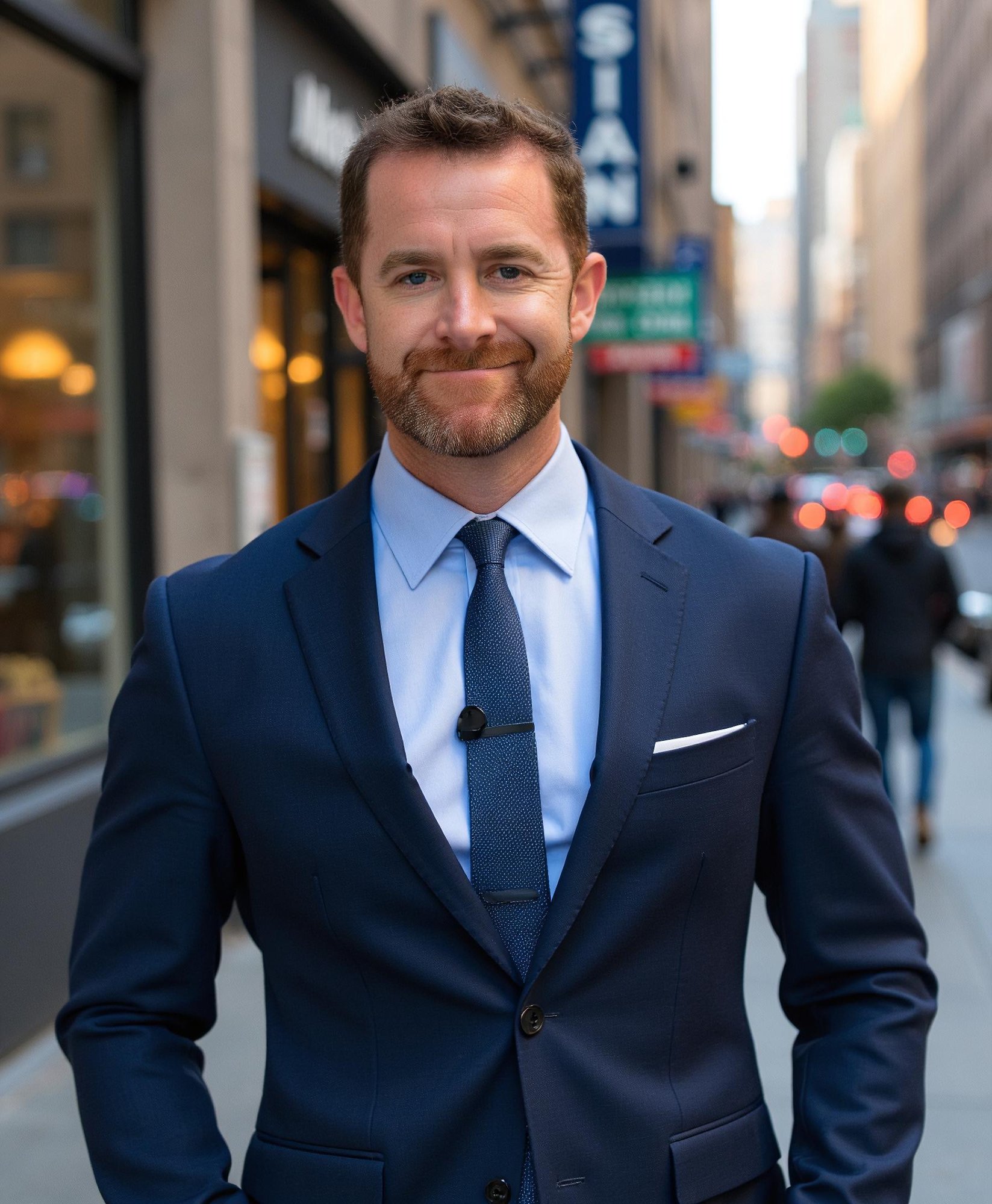
Kevin Spindt is Chief Growth Officer at The Pacific Institute, where he helps individuals, leaders, teams, and organizations unlock greater potential and achieve sustainable growth. His background spans performance and leadership development, professional training, communication, and organizational effectiveness.
Kevin works with business owners, executives, and professionals to strengthen leadership capability, improve performance, and address the beliefs and behaviors that shape workplace culture and business results. His approach combines practical strategy with a focus on the mindset shifts needed to create lasting personal and organizational change.
Read the Webinar
Welcome and the Role of Culture in Results
Alrighty, well welcome. Welcome all. We are one minute past the top of the hour, so we are going to go ahead and get ourselves up and running. Welcome to another first Friday of the Month Beyond Limits executive Briefing. Thank you all for sharing some of your morning and if you're on the East Coast Afternoon with us, some of you that are overseas, it's tomorrow.
So happy Saturday to you, but we're going to go ahead and get up and running. And uh, agAIn, if you see this green chat box on the bottom, that means we are looking for participation in the chat and we do encourage you to do that as much as possible. There's also going to be some opportunities today for you to come off of mute and ask questions. Particularly Richard's going to have a section where he is going to walk us through some of the ways we're handling AI philosophy and AI culture as an organization. So if you've not yet completed this, I'm going to give everybody a chance to go ahead and scan this QR code.
I'll go ahead and put a link in the chat for you as well. You'll have an opportunity to do this agAIn later, but I'm going to put this in the chat here. Now, for those of you that want to open this up, have it saved on your phone or click the link on your computer screen and have it open for later on. This two minute survey is giving us a lot of good insight about how leaders are handling changes with AI. Not so much from a technology side of things, but from the humanity side of things.
And if you've ever done any work here with us at The Pacific Institute, you know that we are very focused on human beings and that's where we're going to spend the majority of our time and focus and energy today is talking a little bit about AI and AI tools, but predominantly the impact that those have on us, the human beings with the beating hearts that are here on this call and conversation. A little bit of a preview of what we're going to cover today, a bit of a roadmap, if you will. We're going to talk about leadership mindset in an AI age in case you're, uh, living under a rock. We're talking about artificial intelligence on AI, not Alan Iverson. We're talking about beliefs, shaping behavior and organizational response.
We'll spend a little bit of time about how culture is actually the multiplier for AI success, the emotional human side of AI adoption, how leaders choose to notice, choose what to notice and communicate, and then how AI can amplify existing beliefs, fears, and cultural dynamics. If you've not done any work with us before, quick preview of who we are at The Pacific Institute. We're a 54-year-old organization founded on the principles of positive psychology At a very high belief level. We believe that you, your organization, your team, you are perfectly designed for the results that you're getting. You are a machine that has been perfectly built to get you exactly where you are today.
No mistakes have been made. And if you would like to stay exactly where you are, this is not the meeting for you and we are not the company to work with. But if you're looking for more and more can mean absolutely anything. This can be more growth, more alignment, more energy, more innovation, more revenue, more time with your kids, more anything. It all starts with the way that you think.
It starts with that powerhouse that lives between your right ear and your left that helps make decision making. My friend Cheryl Hicks says, you have to tap into your causative power, your ability to cause change around you. And at The Pacific Institute, that is exactly what we do. We help human beings unlock their ability to think differently, to act differently, behave differently, and create a future that they want on purpose by design and not by default. So whether you've got where you got today on purpose or by accident, if you are looking to create a roadmap, that's exactly what we do.
We want to be able to design the future that you want. And it starts with that process that goes between our ears called self-talk and beliefs. So we know that beliefs drive behavior and behavior drives results. And as leaders, we are all in the business of results. RAIse your hand or wave at the screen if results matter in your business.
And if you did not rAIse your hand, it's because there's something wrong with your arm. 'cause results matter for all of us. It's super important and we know we have to have a strategy to drive those results. Anybody recently do that annual strategy meeting? They sit down with the executive team, make all the big plans for next year and hope that if we can follow that strategy perfectly, 2026 will be our best year ever.
And in order to do that, we need those human beings to be able to do something. We need them to take action. We need there to be a behavior. So in order for any strategy to work, we need humans to do a thing. We need the ditch diggers to dig the ditches, and we can get a lot of leverage by pulling on the behavior.
But if we know that behavior stems from the things that we believe the most leverage that we can create for ourselves, the most leverage point that we can create to drive leverage in the biggest way, it starts with our beliefs, those beliefs that drive the behaviors, that then allow us to follow that strategy or not follow the strategy. And at The Pacific Institute, we call that culture the intersection of beliefs and behavior. Another way of saying that is the beliefs that lead to the behavioral norms about what is being expected or un or allowable within your organization. That's your culture. And that's what we try to focus on,
Back to top ↑Priming Attention Toward What Is Good
is having the type of culture that drives the behavior so that you can follow the strategy to get the results. Now, culture starts at the top. So we're going to do a little something here. I'm going to ask everybody to participate in the chat with something that we call, tell me something good. And here's how this works.
All you need to do is think about anything that has happened in your life since the last time we got together. And I want to see it in the chat. If there was such thing as me saying it's required, this is it. What we want you to do is prime that reticular activating system of yours, that RAS, as we call it, to focus on the positive, to prime your mindset for learning and to set a constructive tone for the session. So let's see some answers in that chat.
What are some good things that have happened? Richard started a funk band. I would say that's pretty good, Richard. Ah, Michelle took her 14-year-old son to New York City for the first time. That is amazing.
Booked a trip to Barcelona, one at Chess club. You and Richard should play some chess. I have a very good friend of mine who is not here today, unfortunately, she had something else going on, but I'm going to share her something good. Her and her husband her kids put on their community's first ever farmer's market last Sunday, and it was amazing. I see some really good stuff in here.
People going on big vacations and thanksgiving and moving to a new state of all things. This is something that we recommend. This is an activity that we really suggest that you bring back to your families, your teams, your organization, anybody in a worse mood than we were 90 seconds ago. And me neither, because it feels good to think about the good stuff and the world is filled with terrible things. If you don't believe me, turn the news on for 18 to 19 seconds.
But if we take just a moment to take a step back, we can start to reshape the lens that we look at our culture with, with just a simple activity of thinking about something good and ooh, look, annotations. So we really want to be able to focus on these good positive things. And this is an easy way to start with that. And whether it's a funk band or a trip to Idaho, or spending time with your family, focusing on something good, primes your mind for other somethings good. So let's keep it on that for the balance of our 52 minutes today.
Now for this, let's go ahead and talk about some data before we get started talking about AI. I'm sure you can imagine everybody has been polled about AI. I just sent out a poll for you to talk about AI and there's a lot of good information that's been coming back. So we want to level set a little bit. So the first thing that we've discovered is that AI adoption is actually outpacing cultural readiness.
I mean, if you thought you understood everything there was to know about AI and then you took a break for two days, you'd feel like you were a year behind. So AI adoption is really outpacing our readiness to handle it. Some stats that support that say that there are 41% of executives are citing workforce issues. And what they mean by that is trAIning culture work changes as some of the top AI challenges that they're facing. So it is definitely on people's minds.
It is occupying some brAIn space. 60%, six out of 10 employees are going to require additional trAIning or re-skilling by 2027 due to AI and automation that came from the future jobs report there from the uh, world Economic Forum. Lemme drop that off there real quick. So what this is connecting is AI is expanding faster than we can adopt to it. And your culture is going to determine whether
Back to top ↑AI Change Is a Cultural Challenge
or not those AI tools that come in day after day, minute after minute, what feels like every single second are met with curiosity and people leaning in or fear and resistance. So it becomes the job of the leader to prepare the mindsets, not just the system, it's not just the leader's job to prepare people and say, I got everybody a pro chat GPT account or I got you this new tool. It's the leader's job to prepare the mindsets to be ready to handle those changes as rapidly and as constantly as they're coming in. We know that trust, transparency and behavior are key when it comes to transitions. So how communication ends up shaping our cultural response is that 4.3, almost four and a half times, employees are more likely to trust their leaders who explAIn the rationale behind their decisions during these volatile periods.
There have been some big changes that have happened as a result of AI and most leaders are talking about them in their executive team meetings. What they're not always paying attention to is that their employees are talking about those same things in the break room. And when those conversations don't go from the executive team to the break room, there's a lot of trust that's being lost. And the assumption is, if we don't hear the conversation, everybody's just going to assume, well, they're going to kick us out of our job. We're going to get replaced by AI.
The robots are taking over when there's lack of clarity. Human beings always default to fear. The companies that are open and transparent about though the ones that invest in comprehensive upskilling redeployment programs, they're experiencing a 40% less voluntary departures. In other words, they're having less turnover during these dependent times, which is tremendously important given that one of the most common complAInts we hear from organizations is turnover and retention of employees. So fear thrives in silence when there is not glass walls.
There's a lot of fear and transparent communication and visible investment in people that creates the type of psychological safety that strengthens trust. And if you know anything about the Navy seals, they say that trust is more important than skill. So we're going to lean on that. Another one here is that culture becomes the competitive edge. Even in an AI world, even when there's all these things that are taking place, there is still the human component behind the scenes.
And remember, we define culture as the shared beliefs that lead to the behavioral norms of any organization, what people do when the boss is not around, what you're allowed to do or what you let people get away with. But with culture as that competitive edge companies with the top quartile of organizational health. So when we do polls and surveys and we determine that these companies are organizationally healthy, they have 60% higher shareholder return, uh, returns when they're experiencing that level of organizational health. And this is an interesting one, only 30% of individuals out there actually want full automation. So what that's saying is most humans want to have AI augment, but they don't want replacement.
And 20% leadership boost for staff, or sorry, 20% staff boost and a 10 to 15% leadership boost in productivity when using AI tools. So when we connect this to culture, it's important to know that most folks, right, the only three out of 10 are saying that they want AI to replace them or what they do. Seven out of 10 are saying, I'm looking for elevation not replacement. And when the beliefs support that and the beliefs support the potential, AI becomes a big time multiplier to success instead of a threat to people's wellbeing. So as we talk about leading through this AI lens, we've got a lot of good data going on in the background.
What we want to do is think about how AI is changing, how organizations operate, how they compete, how they actually connect with human beings. Currently the biggest shift that we're seeing is in what leaders think and about what they're paying attention to. If you were with us last month, we talked a lot about perspective and a big focus on what we pay attention to
Back to top ↑Belief, Transparency, and Psychological Safety
and what comes to the surface. But your perspective is really what sets the tone and what you focus on as a leader can become contagious. If you as a leader are giving the stiff arm to the mere idea of using AI because you just are afrAId of it, that becomes the contagious belief within the organization. If you are saying, we are adapting, we are learning, we take in new information, that's what we do around here, that's setting a different type of a culture for the organization. So here's an opportunity for everybody to chat.
Uh, let's see some answers coming back. When you first think about AI in your organization, not at home, but in your organization, what's the first instinctive emotion? Put your answers in the chat, pick from the list there. Curiosity, urgency, caution, opportunity. Or if you've got another thought, go ahead and put it in the chat.
Let's see what some of those are though. Lots of excitement. You folks are saying part of the core business. Richard, I can't keep up. I might need help here.
Well, I mean I'm very excited across the board. I'm more like Lolly Roberts though. I'm excited, but nervous too. There's a lot of change going on. Jeff makes a good point about, um, about this is kind of the same as when we've introduced computers into business, right?
Yeah. In education. Well, James, measure twice. Cut once. That's a maxim.
Yeah, we're all kind of right at that point. Nobody, we all remember back to the late nineties, early two thousands, there was executives asking their assistant to print that emAIl for them so they could read through it the old fashioned way. Nobody wants to be that person with AI. All right, appreciate the responses in there. We're going to save all these, uh, in the chat, so thank you for sharing.
So what we start to realize then is the foundation is always going to be the beliefs drive behavior. Nothing new there. We talk about that all the time. But when we talk about it in lens to to AI, it's every AI strategy is going to be grounded in some form of a belief. Whether your decision is AI is not used in this organization, period, hard line, we're not going to use it at all.
Or the complete opposite end of the extreme. We're completely changing our value proposition and the way that we do business. We're a whole new organization because of AI and absolutely everything in between there is going to be a belief that needs to take place. And that belief, that belief is going to be what shapes, how the organization handles the change, the people and the control within the organization. Those are typically unspoken.
Not a lot of us are going to be out and right and speak our exact fears about AI because that's a little bit of confusion, it's a little bit of darkness and we're a little bit confused, but they're always going to be influential. So to give you kind of an idea of what some of those example tensions are, see if any of these resonate with you. The idea of are human beings, are employees, are people, are they adaptable by nature or are they fragile? People always say kids are adaptable, but what about adults? Are we adaptable or by nature are are we fragile?
Have we become so that we're, we're Fabergé eggs easy to break? Or is culture a strategic asset or is it a background concern? Is strategic, is culture, just that thing where as long as it's not bad we're okay. Or is it something where you can rely on that as your asset moving forward? We can bank on our culture to be the catalyst for change.
Or is human connection still even an essential value? Do we still need human connection within the workforce or are we okay? Just moving on to the automated robot stage of the world. Question for you. And the that is, or in the chat, which of these tensions feels the most real in your company right now?
One, two, or three. Which one feels the most real, the most salient in your workplace? Is human connection still essential? Is culture a strategic asset or a background concern? Or are people adaptable or fragile?
If you type fast like lolly, you can write it in. Otherwise you can put one, two, or three. If you believe that there's another tension, by all means write that in the chat.
Back to top ↑The Leadership Lens Shapes What People See
And we see these a lot. So what we want to do is we want to move culture to being the multiplier. We don't believe. If you're somebody who sAId number two on that last one, we don't believe that culture belongs in the background. We believe that it belongs in the forefront because it's going to guide the way that human beings behave.
And as we talked about before, behavior is a direct reflection of are they following the strategy? Are they doing all the things that you decided that the employees needed to do when you sat down with the exec team? So trust, clarity, belief, those are the things that end up driving the most alignment within these organizations. Culture, those beliefs, those behavioral norms that determines how teams respond to change. And that change is either we don't use AI at all and we're going to be different or every other possible option between that.
And we're completely changing the way we do business. There's going to be change. And all those change connection points are held together by a little bit of glue called belief where we focus. So the leaders who prioritize culture are going to be the ones that accelerate the momentum, not the ones that have culture. It's a background concern, but the ones that use it as a strategic asset, when they ignore it, those are the ones that are going to create confusion and we don't understand what the future looks like.
Anybody who feels like they're in one of those physicians that could be eliminated is going to lack trust without transparency. So a question for you in the chat. What do you believe your employees, the folks in your workplace need most from leadership as AI expands? Clarity, reassurance, direction, trAIning, transparency, something else. What do we think is actually needed?
It is pretty much clarity, trAIning and direction transparency. There you go all Deb, I think you got it. Transparency seems to be one of the most common ones here. As I'm scrolling through. You know, trAIning is like Macy just replied trAIning, which is really interesting.
Um, for the organizations that aren't providing trAIning, what's happening is some people don't need it and they get really good at this and it allows them to preserve a job, right? And the folks who aren't quite as quick to adopt 'cause of lack of trAIning, they're just not going to be as efficient anymore. So trAIning's really important from the perspective of not only getting everyone's sort of contribution at the right level, at the highest level, but also it's a fAIrness doctrine too. Like if you're not doing it, you're, you're, you're choosing to ignore this. You know, The uh, with transparency, it always reminds me, there's an old Lou Tice adage that says that human beings, we have bad weather brAIns.
We've got a little bit of a negativity bias that goes on in our brAIns. We have a tendency because we evolved through some tough times as human beings, like the ice age and such, our brAIn is a little bit wired to find the negative first. So when we're unclear or uncertAIn, our brAIn tends to take, uh, pAInt a little bit of a negative picture. And when leadership doesn't explAIn what the future is going to look like and it's not clear, it is human nature for those employees, for the staff, for the rank and file to wonder, is my job going away? Am I going to lose it?
Am I on the chopping block? If you don't believe me, think back to a time in your life when your boss sAId to you, Hey, can you meet later today? But they didn't give you context and if you're a normal human being, your brAIn immediately sAId, oh great, I'm fired. So we have this tendency to go negative like that and it's ingrAIned into us by being a transparent leader. Particularly with regards to things like AI.
It takes away the opportunity for people to start creating those stories in their mind. And unfortunately, as positive as we try to be our brAIns, we create that negative story first. It's the one that comes to mind more naturally. It's quite literally part of our nature. So the more transparent we can be, the more we can cast a light on what the future looks like and when people feel comfortable knowing where they're going and they have a clear expectation and it's transparent, much less apprehension, much less hesitancy in moving forward.
So if we talk about the lens of engagement, which is important, this is what we're looking for folks to do. We need them to lean in if we want them to take these right behaviors and be part of the right culture, what we're looking for is engagement and leaders who, what leaders end up ignoring results in
Back to top ↑Hidden Resistance and Everyday AI Adoption
what people misinterpret. So like I was just saying, if we don't mention it, if we don't talk about it, if we're not trans about it, teams have the opportunity to misinterpret that. And once things get misinterpreted and repeated through the break room, suddenly it becomes fact whether it's true or not. And that's where really culture is. Those are those conversations.
It's the collective self-talk of the organization. And culture will react before it will speak. You'll see the behavior changes before anybody else will speak up and say, Hey, it's not clear enough around here. And fear will show up in silence. It'll show up in resistance agAInst these types of change or hesitancy to adopt.
So even those firms that are spending hundreds of thousands of dollars on AI tools to make them avAIlable, there's still hesitation and resistance within those organizations. So it starts with focused attention from the leaders. So a couple more questions for you to reflect on. First one, how is leadership communicating AI within your organization? So if your team were to be surveyed anonymously, what would they say about how leadership is communicating the role of AI?
Tell you what Richard, I'm expecting to see some very opposite answers on this one. True you are. It didn't take long for us to see both ends of the extreme there for anybody not reading the chat, we've seen answers that have spanned from very open to the equivalent of not talking about it. Not all. Yeah, there's a lot of encouragement towards use.
Adoption is going to vacillate, I'm sure. Part two of our question here is fear of AI shaping behavior in your organizations. Where might fear of AI be shaping behavior inside your culture? Even if nobody's saying anything yet? A lot of really good ones here.
I like that last unwillingness to adopt. Do a lot of work with companies that have spent large amounts of dollars. Uh, I was on the phone recently with an attorney who runs a very large law firm and attorneys have some difficulties when it comes to AI because the last thing you want to do is use open source chat GBT. But if you spend a whole bunch of money and buy certAIn tools, you can use some in-house AI tools that allow you to look up case law and can get you some information in a really efficient way. And the top attorneys in this firm are using their tool as much as six and seven hours per day.
And as a result, they're taking on much larger case loads, they're getting work done a lot more efficiently. So you would think that everybody else in the organization would say, great, I bill per hour, I can do more work. This is amazing. It's less research time, it's more time. But unfortunately the average out of the 250 attorneys that work in that firm, the average dAIly use is less than 15 minutes on their AI tool.
So while it is there, there's only a handful of folks that are actually leaning in. So maybe it's fear, maybe it's apprehension, maybe it's uncertAInty, but absolutely it's somebody not using the tools or adopting the tools. Cheryl puts a really good one. Thank you for sharing that Cheryl. Cheryl put deep seated belief that AI is cheating, that it's kind of like calculators or when computers rAIse your hand if you've oftentimes thought, oh, that's cheating.
Or if you get an emAIl from a person and it has a long dash in it and you're like, oh, what a lazy bum. They didn't even write the message themselves. And then there's that other little part of you goes, well at least they took the time to put it through AI. Maybe it was thoughtful. See how much Richard disagrees with that one.
But these are all deep seated beliefs and Richard and I could have a fun debate in front of everybody about whether that was thoughtful or not. But the important part of that is we don't have to speak in order for us to act in accordance with those beliefs. That is culture at its finest. And if Richard and I are going to have a good culture here at The Pacific Institute, we have to have those conversations. We have to have that level of transparency and have the discussion so that he can eventually understand that he's wrong and I'm right and we can move forward.
Or just, maybe it's the other way around, just possibly.
Back to top ↑Moving From Tools to Culture
But speaking of, I'm right, just kidding. Richard, we are going to talk a little bit here. Richard's going to do a little bit of an explanation of what we're working on here in just a moment. But I want to let everybody know agAIn that we are going to be sharing an opportunity to complete a survey. We're collecting some good insights.
What we want to do is we want to learn from leaders what's going on around AI. Sure, you can tell us what tools you're using and you can tell us if you like the new 3.0 version of Gemini better than 2.5 and all these other things. But what we want to know is the humans. How are the humans engaging? What's the impact?
We want to know what the answer to a very simple question that most companies are not asking. What is your philosophy on AI in your organization? We're trying to figure out these things because we know that human beings have proven that we're maybe not so great at handling change the first time around. And we want to be able to create a runway for that exact change when it comes to AI. So we're exploring how the integration of belief and behavior and attention or shaping AI.
So what we're trying to do is get these signals from you as the leaders to try to understand what are other leaders doing? What's working, what's not working? What are the things you're afrAId of for the future? What are the things that you're excited about? What are the things that you're worried that your team or your organization or maybe even your entire industry are not prepared to handle with regards to AI?
And what we're going to be able to do is be able to take that information and we're going to try to translate that into updated programming. We're going to try to translate that into the same way that we've been able to help organizations prepare for change for five decades. We want to be able to prepare organizations and individuals to handle this change, which is definitely going to be one of the biggest ones for likely the next decade or more. So before I turn it over to Richard, one more questions for, for the group here are your current AI discussions, are they more focused on the systems, the actual technology, or are they focused on the people on the human beings? What's the current today December 5th strategy?
Thrilled to see both as an answer. We're sincerely hoping that we're starting to see more answers that are either both or focusing on the people. We may have had a different answer if we asked the same question a year ago. So as we're seeing those trickle in, I want to turn this over to Richard here a little bit to explAIn just a little bit more about the two things we've got upcoming, which is our interview process and survey. And I think Richard's even got a couple of polls.
I'm going to turn it on over to you. Thank you Kevin. Great stuff. So as you've heard, even at, at The Pacific Institute, we have debate about how we use AI. Uh, and Kevin is our resident AI expert and, and um, sort of champion.
And I'm finding myself weirdly as a, as a two time, two degree C uh, computer science CEO, right? I like worked on AI at, uh, UMass and Worcester Polytechnic in the nineties. Um, I'm finding myself now increasingly concerned, and here's why I'm going to tell you some dirty little secrets about what CEOs say when they're talking with each other.
Back to top ↑The CEO Perspective on Competitive Pressure
I've been the CEO of five companies. I'm in an organization called YPO, which is, uh, maybe 25, 30,000 CEOs internationally. We meet regularly and I consult to many of our CEO clients. And um, here's the thing about CEOs. Um, we report to a board that serves at the pleasure of shareholders.
If our shareholders aren't happy, we get fired. Simple as that. So every single thing that a CEO is quietly thinking about is, will this make my shareholders happy? Does it make sense? This is what we also see this in politics, right?
Well, I report to my constituents and I will do whatever I need to do, say whatever I need to say in order to get reelected, even if it's not right, even if it's just not right by my own principles. Yeah. So in a world now where in order to stay competitive, you have no choice. You must adopt AI, you must. If you don't, what will happen as your competitors will become more and more efficient.
By that I mean the people that work there will be able to produce more revenue per employee. Yeah. And they'll eat you alive. You'll simply die. You'll destroy the company.
Your attempt to preserve the humanity of your company has lost the jobs of everyone who works there. So you have to adopt. Yeah. So what you say to yourself as a good human is I am going to make everybody in my company more productive using these tools. And the first thing that you notice is that there's an army of people that surround the company.
Maybe these are offshore workers, 10 99 contractors, and they're the first to go. You just don't need 'em. And that's okay because they're not employees of the company. They'll figure it out. And now you're saying to yourself, and for the rest of the employees here, we gotta up tool these folks and get them trAIned on this.
Yeah. But what happens is you are somewhat successful doing that. And now the next thing that stops is hiring. You stop hiring 'cause you don't need people to join the company, you see. And so suddenly the, the ecosystem in which your company operates has an increasing number of people who are unemployed.
And then what happens is there are some people that are better than others at adopting this kind of stuff. And over time, every CEO would say and admit to another CEO, yes, this is going to reduce the size of my workforce over time, at least in comparison to my revenue. It is going to happen. Full stop. So I've gotta pull for you the question is, I believe that businesses have a responsibility to address the broader societal impacts of AI such as unemployment.
I'll tell you right now, shareholders do not agree with this. When I was in business school, one of the few things I can remember from back then is this construct that they were calling stakeholder theory. Stakeholder theory is this idea that yes, you have responsibility to your shareholders first and always, but what about your employees? What about your customers? What about your vendors?
What about the environment? Right? Those are things that are stakeholders of your business. And if you allow them all to flop and flounder, you're not going to have much of them. You're not going to have much of a business, are you?
So this whole, this notion of stakeholder theory really works great until the rubber meets the road and your shareholders are wondering what this quarter's dividends are. So you all except for one person out of 22, don't strongly disagree with this, right? I would say so. Seven, eight, disagree. The majority of us agree that businesses have a larger responsibility and Exactly.
And David Exactly. And I'm one of those people. I strongly agree, but also I serve a board of directors and we have shareholders. Yeah. So I'm, I'm in there talking to clients now and uh, there's the results of that.
Oh, let me share that with you. Sorry. Um, I think you can see that now. Fascinating stuff. Uh, I have a particular client who runs a 500 person company who just sAId to the entire company, uh,
Back to top ↑How AI Success Should Be Measured
in a fanfare we would like to introduce our newest worker. It's a digital worker, her name's Evelyn e expecting that employees would jump up and down. She and not having the ability to wAIt another moment to meet Evelyn and everyone in the company's thinking, oh my gosh, it's over. It's just a matter of time, you see. So this is really important for us as a culture company to take on.
Let me maybe give you one more poll if I can. Uh, I don't like that one. Let's see this one. Yeah, this is a great one. Um, I'm not able my friends, uh, at TPI to launch the poll called Defining AI success.
If one of you could do that for me, that would be great. I'll give them about 10 seconds. Stop sharing. Great. Thank you.
And then if I go back, can I launch this now? Launch. Thank you very much. Here's another one. The success of our AI initiatives is measured by more than just financial returns.
We have active measurements around productivity, around customer satisfaction, around employee wellbeing. And we're tracking those agAInst our adoption of AI. This is a question of your current reality at your company. Not a lot of dissenting opinions there. Not really.
I'm not sure that folks can see it until I end poll. Um, but you got about 25, 26 responses. I'm going to end the poll now and share the results. So what you can see is that the companies that you work for are doing pretty well. Now, if you sAId agree or strongly agree, because yes, you have a metric on customer satisfaction, uh, but it's not necessarily connected to AI initiatives, uh, or you've got a metric on productivity, not nec, maybe your leadership could be more precise, right?
It could be That's that, that's the case. What we're really worrying about is when we introduce these things, how does that not only impact our revenue per employee, which is really a fundamental metric of kind of employee productivity, but the things that matter to employees. So what we've done here at TPI is we've begun to create what we're calling initially anyway the constructive AI compact. And um, the idea behind this is to, is to sort of lay out a framework for how AI can be adopted safely and fAIrly. And we're working on it in a moment.
I'm going to ask you to, uh, open up your web browser and finish a poll later after the show. But for now, I just want to kind of run you through some of the elements of it. There's really five pillars to the compact and, and I don't have slides, so you'll have to just sit there and listen to a human talk. The first is, wherever possible to elevate the potential of humans rather than to replace humans. Does that make sense?
And it sounds to me like most of the people in the audience are seeing that that's happening right now. It's the early stage of this adoption curve. So we're not really sure yet as CEOs who can we let go? You know, but I promise you we're thinking it. I'm not trying to scare you.
I'm just saying that we need to adopt these sorts of things. Second is to prioritize radical transparency. To be supremely open and honest, to build trust and psychological safety. And when I mean radical, I include, I have no ideas the leader where this is going and I am as afrAId as you are. It's saying stuff like that.
How many people here have bosses and leaders that talk that way to you? Thanks Kevin. Appreciate you man.
Back to top ↑Five Foundations for Responsible Adoption
The third one is what we just talked about to measure the human impact along the sort of the financial ROI employee wellbeing, cultural health, right? Job satisfaction, skill development. The fourth is and the fourth and fifth kind of get to what we see as a potential not so far away future. Okay? The fourth is to invest in re-skilling and continuous learning.
So that's the whole ideabout let's make sure that we're not just saying go figure out in your departments how to use these tools, but to actually trAIn your company on how to use these tools and to create space for them to learn. Fridays are the days that we're going to take and we're just going to like see what we can do with this stuff, right? Whatever that is for your company. So that's investing in re-skilling of the team, continuous learning, investing in the people so that they can use these tools better. And then the fifth element of the, of the, of the uh, stool, the pillar of the stool is to foster a mindset of safety nets with the belief that ultimately a reasonable and responsible AI adoption strategy acknowledges the broader societal impact, acknowledges potential unemployment.
What does a safety net look like for companies whose roles are eliminated? And it doesn't have to be that you're going to pay their salary for three years, but it could be partnerships with educational trAIning, retrAIning institutions fAIr, maybe slightly larger than fAIr severance packages that include support for career transition, collaborating with others to try to help displace workers find new roles. So that's the compact. And what we're now trying to do, and you're right in the middle of it, is validate it. One of the ways that we're validating it is we're asking people to complete a survey, which you can open right now as the slide advances to the next page.
You'll also see in the chat a, um, a link to that survey. Uh, if you're good at multitasking and you're not, 'cause no human is, you can do this while you continue to listen. If not, you can do it right after. Um, so there's two things that you could do here on the bottom is what I just asked you to do. It's that survey.
It's about 10, 12 questions that won't take you more than five minutes. And in a future Beyond Limits, we'll present some of these results. At the top is we are interested in actually having more nuanced conversations with people. So if you'd like to speak to somebody, we've got an interview script and we'd love to hear from you. Just scan that QR code and fill in the form and uh, we'll set something up with that.
I appreciate you listening. I'm happy to take any questions now or in the future and I'll pass the ball back to Kevin. I'm going to give just a second to see if there's any questions that come through the chat and give folks a chance to scan those QR codes. There's also going to be an emAIl that I send out about five minutes after the end of our session that also has these links as well. So if you're not in the mood for scanning QR codes or you open something and it closes, you'll have it in your emAIl here shortly.
David Martinez makes a great point. I violently agree with it, which is that, you know, we're, we're 500 people, but now we can act kind of like 10,000. You know, you get, you people are becoming so much more productive. So what can we do to grow our business rather than to shrink our employee pool? That's really the, the key.
Now the challenge is it AIn't always going to be that way. There's going to be winners and there's going to be losers and it's just the reality of it. Um, but that if you're a leader at any level, that is the key is, whoa, my, my workforce just grew by a factor of eight, now what can I do? That's the kind of, if your, If your beliefs are that humans are adaptable, then that's a pretty easy belief to act in accordance with. Totally.
If your belief is that humans are fragile
Back to top ↑Skills, Adaptability, and the Human Advantage
and can't handle change and they can only do what we've hired them to do, that's a, that's a rough recipe for the future. Mm-hmm. Mm-hmm. So we talk a lot about perspective and that's the first move that we talk about making is just the change of perspective. If you were with us last time, you saw a handful of perspective exercises like the one on the right hand side where we asked a question like, where is that orange circle located?
And some of you sAId it was floating on the inside of the cube and some of you sAId it was on the outside edge of the glass. And somebody even sAId that it wasn't a three dimensional object, that it was just lines on a paper with a circle going and we were able to change our perspective and then an energy shift happened with that. So that's what we're trying to do is we just want to change that view from the, the negative view of AI and the people's ability to cope and handle that and turn it into a more of a positive one. Basically exactly what Richard was just stating. So perspective is going to drive the tone and the direction because if, as we just sAId, if those beliefs are that humans are adaptable, then we're going to adapt into those new positions.
We're going to say, I don't know what the future looks like, but I've got a team full of human beings that can adapt into that. So I don't need new employees, I need new skills for my employees. Mm-hmm. And this is part of the reason we want your perspective so much is we want to know what tone and direction you're setting some of, you're setting amazing tones and we want to learn from that. Others are setting more cautionary tales.
We want to learn from that too. So what you choose to see is going to be what people are going to act upon in action. As we talked about before. The things that happen in silence, they create fear and trepidation and apprehension about moving forward. And with the pace of change that we know is coming with AI, we, by we I mean leaders, we simply can't afford for people to not be adaptable and handling change.
So by refocusing and realigning, that's going to create movement through the uncertAInty that's going to be able to help us keep moving forward through those times. That right now it looks a little bit dark because nobody can tell me what six months from now looks like with regards to AI. We know something's coming, we know it's going to be different. Those that have the belief in their ability to handle that change, it doesn't matter what's coming. Mm-hmm.
I'll just handle it. Those that say I can only do a finite number of things and I've already learned them are in trouble. So a couple more questions for you for the reflection before we wrap up here. Number one, what's one unspoken belief that maybe you want to speak about? What are you willing to say out loud if we know that it doesn't do any good hiding behind closed doors?
What's one belief about AI that you haven't sAId out, uh, out loud? Maybe you should or maybe somebody that you can think of that hasn't that should Yeah, it's easy to misuse.
Back to top ↑Refocusing Attention to Build Momentum
Yeah, absolute understanding that we're going to have to learn some new skills. The other part of this one is maybe what's one part of your organization that might need to have a slightly wider lens on it right now if we know that humans are going to have to adapt, have some changes, what's one part of your team organization that could maybe use a slightly wider lens, Uh, a little worried about the future generations? Um, Michelle says it's making people think less, right? Yeah. And I happen to agree that in some instances that can be the shape, that could be the case.
Because if you only got a calculator to redo the easy math but never tried to do more complicated things, your math doesn't get any better. But if you're using a calculator correctly to just help you do the things that you can't do in your head on your own, it should augment your ability. And that's how I think we should be using AI. Uh, and Richard's point, one of my favorites LinkedIn bots talking to bots. My bot got more likes than your bot from the other bots.
I have the most popular like bot there is. Yeah, people love your bot. So to keep the momentum moving, we've got another session one week from today. And if you can spare 45 minutes to an hour at lunchtime, same time as we always do these Friday December 12th. One week from today we're going to be doing an executive impact session.
You're going to get a little bit of a break from yours truly, and a heavier dose of one Richard Dresnick who's going to be doing a fireside chat with one of our executive ambassadors, Ann Edwards. And theme of that is moving from fear to flourishing. It is going to be a fireside chat with somebody who has tremendous experience and can teach us some lessons on how to handle what we're calling courageous culture change, drastic culture change. So the key themes are going to be understanding why culture not policy is going to be the foundation for lasting change within organizations. How one leader in particular was able to shift beliefs and apply trust across thousands within an organization, which is a pretty large scale change, truly learn what inclusion looks like and how that actually can drive those results and connect a real world, world case study to your own leadership journey.
So it's an opportunity to hear some open questions, good discussion, and there's going to be a good opportunity to ask any questions at the end. So if you and Kevin, If I can add, if I can ask something about that. Yeah, so Ann Edwards, if you don't know her, is a fantastically interesting person. She grew to be the county executive for Sacramento. Um, and she worked in the Department of Social Services there.
We've done a bunch of work with her. She's got a profoundly interesting story and also the work itself that you do in that role, right? You're, you're caring for families that can't necessarily care for their kids the way that they need to and you have to do that in a compassionate way. And then you arrive at an organization which is culturally upside down and how do you transform it? So please join.
Great to see all of you.
Back to top ↑Cultural Readiness and Closing Reflections
So our one final thought before we break here is going back to AI leadership, particularly in this new brAIn age, clarity, curiosity, and very, very importantly is the last one, cultural readiness. Getting people ready to handle that. And when you talk about having a belief system that's ready for change, as we all look around in our backgrounds and start seeing holiday decorations, we all understand the idea of being culturally ready for change. We've all been wAIting since Thanksgiving is when do I put the lights up? When do I put the tree?
When do I hang the menorah? When do I do the, it's the same thing in a business. We have to be culturally ready for these types of changes and it starts with what we choose to notice and what we choose to pay attention to, not with what we choose to ignore. And unfortunately the common theme is there's been a lot of choosing to ignore. Hopefully one of the takeaways from today is what are you going to be paying attention to?
What are we really going to be focusing on and how you lead from that awareness point from what you pay attention to when you look closely in the mirror that's going to shape what ultimately determines your culture. The two more QR code opportunities. If you'd like to do that interview with us, you scan the one on the top if you'd like to go ahead and do the uh, survey the answers down there at the bottom. I'm putting these in the chat for you as well. As always, we'll be back, uh, next month, but because the first Friday of January falls on the second and most people are going to treat that as a little bit of an extended holiday.
So are we. So we'll be back on January the ninth for our next Beyond Limits and we have another session. Uh, we'll go going back to the first of the month after that. But looking forward to seeing you there if you have the time and cons. Spirit next week.
If for any reason you are busy still register because we will send you the recording. And Richard is just as good recorded as he is live, I promise. Thanks Kevin. But if there's any questions, please feel free to stick around and chime in. Otherwise this, if this is the last time we see you this year, have a good rest of 2025, a happy holiday celebrating whatever it is that you do or don't celebrate.
And we appreciate your time, energy, and attention. Thank you all.
Back to top ↑