Adaptive Leadership in Times of Change
February 7, 2025
Adaptability is a defining leadership capability in fast-changing environments. In this Beyond Limits Executive Briefing, Kevin Spindt explores how leaders can navigate uncertainty, distinguish technical problems from adaptive challenges, strengthen team resilience, and create the conditions for learning, innovation, and forward movement.
Leading With Flexibility, Learning, and Resilience
This session examines why familiar solutions are often insufficient when the challenge itself is changing. Kevin Spindt explains how adaptive leadership requires leaders to question assumptions, remain flexible, and help people learn their way through uncertainty rather than simply applying yesterday’s answers.
The briefing also focuses on leadership modeling, team resilience, experimentation, and practical strategy. Leaders are encouraged to balance clear direction with empowerment so teams can respond creatively, stay grounded under pressure, and build confidence through action.
What You Will Take Away
Understand Adaptive Leadership
Recognize why changing conditions require learning, flexibility, and new thinking rather than fixed answers.
Build Flexibility and Innovation
Use experimentation, reflection, and adjustment to uncover better responses to complex challenges.
Strengthen Team Resilience
Create confidence, clarity, and stability so teams can remain effective through uncertainty.
Model Adaptability
Demonstrate openness, curiosity, and course correction so adaptive behavior becomes part of the culture.
Adaptive Leadership in Times of Change
Use the controls in the player to enable captions, adjust playback, or enter full-screen mode.
Tip: Select the full-screen icon in the lower-right corner of the player for the best viewing experience.
Adaptive Leadership, Resilience, and Innovation
These answers summarize the central ideas presented in the briefing.
What is adaptive leadership?
Adaptive leadership is the ability to guide people through challenges that cannot be solved with existing expertise alone. It involves learning, experimentation, flexibility, and helping teams adjust beliefs and behavior as conditions change.
How is an adaptive challenge different from a technical problem?
A technical problem has a known solution that can be applied by expertise. An adaptive challenge requires people to learn, change assumptions, and develop new responses because the answer is not yet clear.
Why is flexibility important in leadership?
Flexibility allows leaders to adjust plans without losing sight of the goal. It helps organizations respond to new information, changing conditions, and unexpected obstacles more effectively.
How can leaders encourage innovation during uncertainty?
Leaders can make it safe to test ideas, treat setbacks as information, ask better questions, and give teams room to explore different approaches.
What role does resilience play in adaptive leadership?
Resilience helps leaders and teams remain focused, recover from setbacks, and continue learning under pressure. It supports steady progress even when outcomes are uncertain.
How does leadership modeling influence adaptability?
Teams watch how leaders respond to change. When leaders remain curious, acknowledge uncertainty, and adjust openly, they give others permission to do the same.
What practical step can a leader take after this session?
Identify one current challenge and ask whether it is truly technical or adaptive. Then define one experiment, one assumption to test, and one team behavior that would support learning.
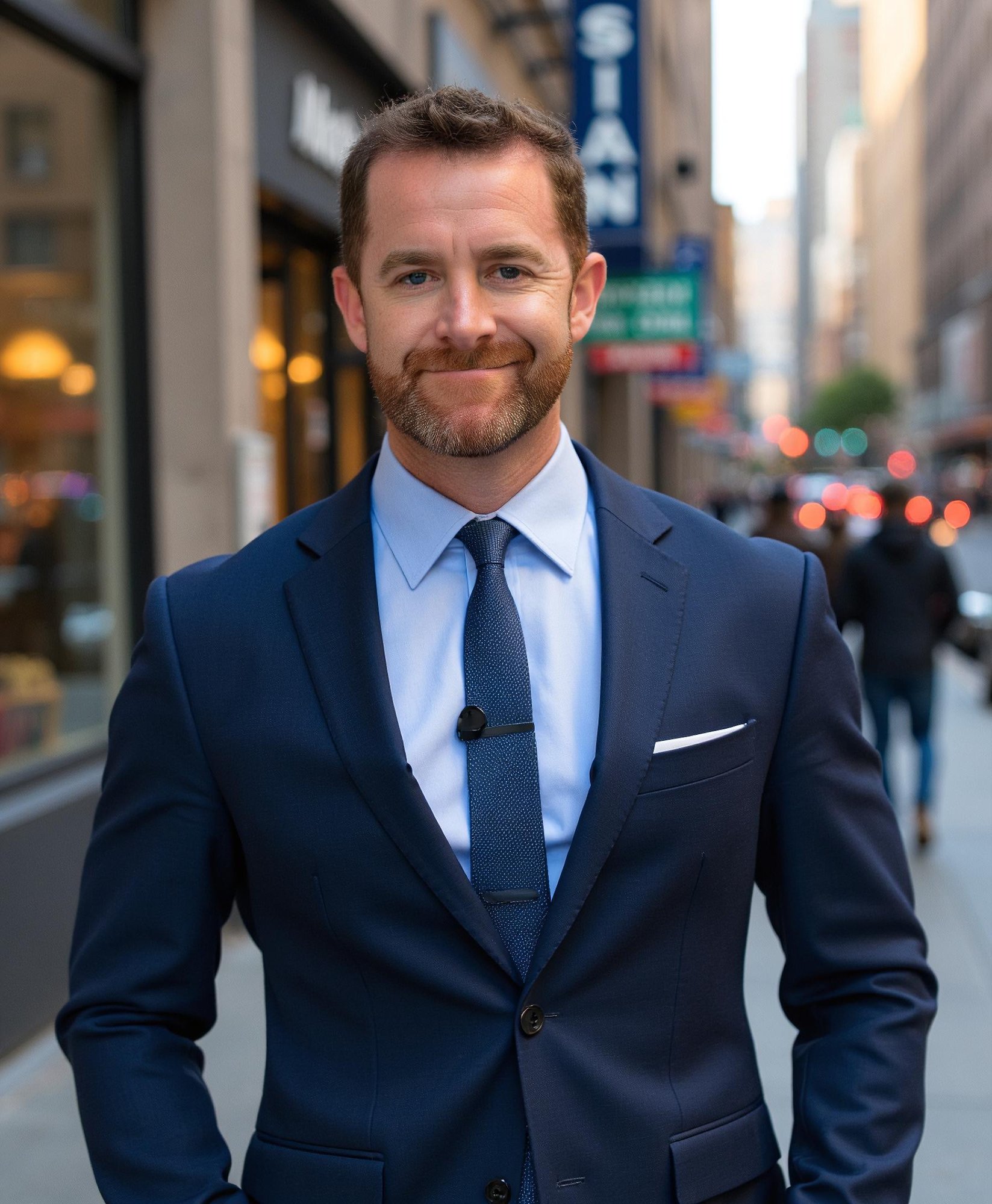
Kevin Spindt
Kevin Spindt is Chief Growth Officer at The Pacific Institute, where he helps individuals, leaders, teams, and organizations unlock greater potential and achieve sustainable growth. His background spans performance and leadership development, professional training, communication, and organizational effectiveness.
Kevin works with business owners, executives, and professionals to strengthen leadership capability, improve performance, and address the beliefs and behaviors that shape workplace culture and business results. His approach combines practical strategy with a focus on the mindset shifts needed to create lasting personal and organizational change.
Read the Webinar
Welcome and the Need for Adaptive Leadership
All right. My least favorite part is where I turn off the music, but my favorite part is where we get up and running. So welcome everyone. Thank you so much for joining. Thank you for being here and joining us for yet another Beyond Limitss executive briefing.
Uh, I'll put it in the chat or we'll remind a few times, but uh, I'll say it just one more time. If you are here, we really want to be able to see you. If possible. We do ask that you put yourself on mute if possible. Uh, Anna's going to be helping me, uh, mute anybody that may accidentally be having their, uh, their audio on if they don't need to.
Please use the chat as much as you want today. There's going to be a lot of opportunities unlike sessions in the past. We do not have a workbook this time, so anything that you type, let's just see it in the chat and get a lot of participation. Don't hesitate to come off of mute if you have any questions. And by all means, do not hesitate to interrupt me.
So we want to make sure that we bring everybody along in this little journey We take on the first Friday of every month. If this is your first time here, welcome. This is not your first time. Welcome back. My name is Kevin Smith.
I am the Chief Growth Officer here at The Pacific Institute, and we do this session on the first Friday of every month. And Beyond Limitss is our way of getting in contact with individuals like yourselves. We want to put, uh, folks together in a room like this where we gather our leaders, our executives, business owners, and the like. We want to share some concepts from our core curriculum, from the things that we've championed for the past 53 years. We want to relate that to the current events, to the things that are going on in your world to the salient and tangible things you experience every day.
We'll get probably 75 to a hundred people here today. So there's an opportunity to network and see some, uh, common and not so common occurrences that take place within our industries. It's certainly a chance for us to promote our business and we want to be able to engage with those of you who are our existing clients, those of you who might become clients of ours, those that have worked in the past if you've not done work with The Pacific Institute before. Real briefly, I just want to explain who we are. And at The Pacific Institute, we believe that while most organizations change companies either to elevate their egos or to strive for change for the actions of a group, what we believe is we focus on transforming the individual's beliefs.
We really want to focus on the core of how we view and how we react to the world around us. From there, we believe that the goodness radiates outward and can move out to our teams, out to our families, out to our entire organizations. So another way of saying that is we don't believe that it's just, uh, one to one to one. We believe it's one-to-one to one to infinity. And where that all begins is with the person that has a heartbeat on the inside, right?
All meaningful and lasting change starts on the inside and it works its way out. If you ever worked with TPI in the past and had the fortune of meeting our founder, Lou Teis, that was his quote, from there, we're able to take those steps forward so we can transform ourselves positively and impact the people around us, our family, our team. And when those individuals are impacted, then they can impact the larger group of the organization. And that's certainly what we're striving for. Today's topic and what we're going to going to talk about, making that meaningful and lasting change for us as individuals and hopefully translated to it as leaders, is the topic of adaptability.
Raise your hand if you've heard the topic of adaptability come up in the last four or five years. Heights, I should see a lot of people waving at me because covid and other things have taken place. The rate of change in society is faster than it's ever been before. What used to take a decade to change is now happening every six months. So lots and lots of changes are taking place.
The best leaders are the ones who are able to adapt to that. And what we mean by adaptability is it's your ability to adjust or change circumstances without losing sight of the goal. When the wheels come off, it's your ability to change to the adjusting circumstance and still move forward. I mentioned to those of you that are joining that it's very unusual in San Diego today. It's raining.
That happens about twice a year. So in order to be adaptable, I'm going to need to use an umbrella. Still keep my eyes on the prize that I've gotta get out to the car and I gotta walk my dogs. But I need to be able to adapt to that. It's really easy with stuff like rain, it's harder.
When we talk about work, what we'll talk about today is there's components to being adaptable. That it's not just, oh, I'm going to go be adaptable. That there's some ingredients for how to become a more adaptable individual and a more adaptable leader. And that starts with flexibility, innovation, and resilience.
Back to top ↑Why Adaptability Matters in Fast-Changing Environments
And we're going to focus on those in a little bit more detail in about 10, 15 minutes. So why does it matter? Feel free to put an answer in the chat. Why does adaptability matter that my chat wide open? Let's see who the first person to put an answer is.
Why does adaptability matter? People? Because it's how we grow is an answer that comes in. Adaptability, promotes growth. We're getting a common theme there, how you show up and be ready for others.
Mark Anthony says, change never stops. You have to adapt to the new landscape. That's a good way of putting it. I turn my headlights on when it gets dark at night, I guess I'm adapting. So absolutely just changing to our environment.
I like this because generations change. So we have to adapt to the needs of a younger workforce. So these are all really important. I love that lolly put the answer in there. Change is constant, right?
If you're like my mother, you say, change is scary. I don't like it, right? But what we want to recognize is that change is inevitable and we can embrace it. So being adaptable is something that allows us to adapt and modify and react appropriately within our environment. So why does it matter?
We say rapid change, right? Organizations face unprecedented speed of changes. Things are happening overnight that used to take a decade, and there's unpredictable changes that are happening. So it needs to be that the expectation is change is coming. And whether it's a global disruption or whether it's just the survival of a small mid-size business, it really ends up breaking down to what are people going to have to do to be successful?
How are they going to remain adaptable within their environments? Sorry for anybody that just made their way in the waiting room, we accidentally left that on. The other part of it is leadership influence. So if you can be an adaptable leader and you can model being an adaptable individual, then you're going to create a culture of innovation and resilience. When you create an environment where people adapt and they can hear opinions from others, you start to operate like Netflix did a long time ago when they took advice from an intern who said in a meeting, maybe we should do this through the mail.
And that was the triggering point that made Netflix put blockbuster out of business. So what does it look like? What does it really look like? It's leaders and teams who embrace change that drive innovation and sustained results. So our goal today is we're going to dig into what does it take to be more adaptive, right?
We know the world is changing. We know that those of us who can adapt to it the best, who can flip the headlights on as soon as it gets dark and be prepared, those are the individuals that are going to be the most successful. So that's what we're striving for. So answers go in the chat on this one. Let's hear from you.
What's one challenge your organization has faced recently, last couple of years that required adaptability? I'll let you be the judge of what we mean by recently, but what's one challenge your organization has faced Recently? Oops, Get that muted. What's one challenge? Whoever was just off of mute, if you wouldn't mind putting yourself on mute.
Thank you. Uh, but let's see some of the ones that are going in here, there's lots of common challenges that are coming up. Those of you that are watching the chat, you can see that a lot of us are facing the same types of issues. Department changes. Uh, there's going to be a lot of things about employee turnover, management, managing growth, all common things.
How about question number two? How have you seen adaptability demonstrated in your organization? And if you haven't, what did a lack of adaptability look like in your current or maybe a past organization where it didn't go so well? How have we seen adaptability? I've seen a lot of things going in here.
Increased communication is an improvement. A lack of adapting is blaming. Those are absolutely two sides of the same coin. A lot of that breaks down to what we talk about with our self-efficacy. And when we believe that we have control and can make changes to the world around us, we're much more likely to look for opportunities when we're faced with adversity.
On the flip side of that coin is we're much more likely if we think that we do not have a strong internal locus of control. We don't believe that we have a lot of self-efficacy. We don't believe that we can make those types of changes. When we have that type of a belief
Back to top ↑Technical Problems Versus Adaptive Challenges
that really drastically changes whether or not we're capable of being adaptable. It fundamentally changes that. A few of the other answers that are in here, stand downs at meetings with team to hear from breaking through bureaucracy. Use of adaptability equals employee and customer excitement about changes. Outstanding core communication led to a resistance to change.
Absolutely. 'cause people want to do what makes them feel safe. And if we're not prepared to adapt, we're just going to do what we've always done before to stay safe, not innovate. So let's talk about what we can do to move forward from that. Let's talk about what adaptability looked like in action.
As always, if you've been to these sessions before, I'm going to tell a story. So the story starts like this four score. And five years ago what happened? Covid, it came along March 14th, 2020. Nobody saw it coming.
And all of a sudden there was a drastic change that happened. And with that drastic change, all of us started to use a new tool. We're using it right now. Raise your hand if you'd never used Zoom before. Covid, if you'd never done a virtual meeting before Covid, if Covid was the reason that you first started having interactions like this, that's true for a ton of us.
The idea of adding Zoom was something that was new and unusual. Zoom had been running a successful business for a while. That successful business has been heavily predicated on business uses, right? So I used it with the work that I did in consulting and coaching, and that was really what most people did. But all of a sudden, raise your hands if you have a child that went to school via Zoom in 2020 or 20, 20, 21, yeah, sure did all of a sudden keep your hand up if your child had to teach you how to use Zoom, right?
They had to learn it first, right? But there was also the school option, uh, that was added. Now the other one that was really big was families suddenly started using it. How many people here did a family zoom during Covid to see family members that they probably didn't go see regularly? I sure did.
I saw some aunts and uncles that I hadn't seen since an actual in-person family reunion like 15 years before. And the next thing you know, we're all deciding, Hey, how can we mix up virtual cocktails via Zoom to stay in contact with one another? Which was great, but it led to a massive demand. It led to a massive demand. And while this was great for Zoom, you have to imagine that it was going to require some adaptability because if you look at the chart December, January going into 2020 there, they averaged about 10 to 15 million users on their platform.
That was at the, that was in February. Covid comes along and just pops its head up like a groundhog in March and says, Hey, guess what? I'm here. How many do, how many users do you think that shot up to? Let's see some answers in the chat.
Take some guesses. How many users, those are in millions. So there's about 10 to 15 million users in February of 2020. How many users do you think they shot up to in the next 45 days? Seeing some big numbers come in there, see some real big numbers.
I like the grin on Nick's face. He's like, I'm going to go, I'm going to pick something big. I'm going with a nice big guess on this one. So it was massive. It was a massive difference.
They had a 30 time, 30 x increase in their demand. All of a sudden they went to 200 million and then 300 million overnight. Now remember how at that time, zoom just kept crashing and it ruined all of our meetings? Me neither. 'cause it didn't happen.
Zoom, unlike Microsoft, unlike Google, unlike Skype, unlike FaceTime, managed to not have breakdowns like all of their competitors did because they were able to adapt. So their ways that they were able to adapt was of course making it available for students and making it available for families. But they made a lot of big infrastructure changes. If you know anything at all about the technology space, you can imagine how much server capacity would be needed to be suddenly 30 x the amount of users and not losing any service, right? Making the systems really easy to use and making it customer centric.
My folks are in their seventies, they learned how to use Zoom. They can't use the TV remote, but they learned how to use Zoom and it's because they made it really easy. A lot of folks here have a virtual background. Guess what? You used to have to pay for that?
Zoom made those free during Covid. So they rolled out breakout rooms, the ability to have a breakout conversation to take one meeting and turn it into multiple, just like you could when you were face-to-face. They rolled that out. They put user, they put the virtual backgrounds in there so that your background could look like it was in a Corona commercial.
Back to top ↑Beliefs, Assumptions, and the Limits of Familiar Solutions
Instead of looking like your dirty office or your closet where you had to work from. It gave us the ability to have a customer-centric experience that said, you know what? This is good. I want this. And of course, they made a massive community impact.
It didn't cost anything for your children to watch Zoom. They started making themselves available for more businesses and they increased the amount of time that a conversation could be had on Zoom from 15 minutes to 45 minutes without paying for it. So they did all these things to put their customers first. And as a result of that, the outcome was they developed a lot of leadership agility. They created leaders who knew how to be able to adapt under pressure to meet things like unprecedented demand to meet things like innovating at lightning speed to be able to do things like building trust across their platform with global users in addition to building and uh, evangelists.
Because my children will use nothing other than Zoom because that's what they learned. Even though they've got all the technology in the world, if you talk to them about a video conferencing, they've got that built into their mind because there was trust built with this global organization and that's how they attended school for almost two years. So when we talk about seeing this in action, let's take some time to put an answer in the chat here. What is a time, I'm going to play music for a second on this one. What is a time when you saw your organization make a bold move to adapt?
Now keep an eye on those chat answers. I have these daily meetings with Tracker. I love this. Our new CEO is not a financial analyst, it's someone that came from the shop floor. My first job out of college was working for a company you might've heard of called Geico.
Their CEO Tony. Nice started in the mail room. Ooh, that's a big adaption there. Rebecca says, the company back in 2015 launched a new LMS online therapy. Big ones.
If you've already put your answer in, I'm going to put a second prompt up there for you. Are there other examples that you can think of of other companies that did what Zoom did? Bobby says, Instacart. Heck yeah. I had never had groceries delivered before Covid.
And I had moved to a world where it was like, do I go to this store? I don't even know where they keep the shopping carts Adopting to a wellness platform app to engage associates in wellness activities. That's pretty bold. Oh yeah, all the virtual glasses, everybody moved to the vr. So I got a bus stop the other day just doing this, Bobby, with a drop the mic answer.
Adopting a mindful mindset. Great starting point. So moving on from here. So here are the three pillars that we want to talk about. These are the three pillars.
As always. I'll share the slides at the end. I'll put up a QR code where you can get ahold of these. But the three pillars, if you're trying to become a more adaptive leader, a more adaptive person, these are the pillars that we believe that you're going to put down as your foundation.
Back to top ↑Flexibility, Experimentation, and Learning
It's going to be flexibility, it's going to be innovation. And the final one is going to be resilience. We'll define each one of those. We'll go through this one by one so we can put some clarity behind that. But for flexibility, what we really mean by that as a definition is it's the ability to adjust your strategies and approach while maintaining focus on those long-term goals.
The long-term goals aren't going to change, but you're going to have to change some of the things in the short term. Can't go to work anymore because of covid. What can we do? So flexible leaders are able to do that with the key idea being they just have to be able to embrace change, accept it like it's a sunrise or a sunset. It's going to happen and it is inevitable, but be prepared enough to be flexible to turn the lights on when it gets dark and not lose sight of the main vision.
An example of that is in response to covid, the CEO shifting to remote operations. A lot of us did that. A bunch of hands went up and we said if we'd never done this via Zoom before, but being able to focus on the growth of the organization instead of focusing on this big obstacle of, oh no, covid is right there, there's an obstacle and focusing and perseverating and negative goal setting around the problem. The ones that were flexible and said, we're going to shift and reorient just a little bit. We're going to put all of that nervous energy into what we want.
Instead, we're able to be flexible and use that energy to do something productive for the organization. Second tenant or pillar is going to be innovation by definition. It's using bold or creative problem solving to address challenges, to seize new opportunities, right? This is the key idea being adaptability thrives when people are able to think outside the box. And when an a foster, when the environment fosters those creative ideas.
So I brought up that Netflix story before the lore is that Netflix was in a planning meeting and they had an intern who, they don't even know the name, they just call her new girl who said, why don't we try doing this through the mail? When you have an innovative culture, when you have an adaptable and innovative leadership style, you accept those types of ideas and people feel encouraged and empowered to make those types of suggestions. And something as small as a suggestion from an intern called quote new girl changed the entire shape of how we receive movies and mediand that's what got Netflix up and running. So you have to have an adaptable and innovative leader in workforce to be able to do that. An example of this might be what we all saw happen during Covid, right?
How many people had never done outdoor dining at a restaurant that suddenly has a whole bunch of outdoor dining? How many people were sitting on a chair that was laid right on top of a parking curb because they had just moved in easy up outside and said, this is outdoor dining we're going to eat on the street or in the parking lot. And that's what kept businesses up and running. That's what kept them in business. You've heard me mention before that here in San Diego, they figured out if you deliver a little bit of food, you can also deliver a drink.
And mobile margarita delivery took off in San Diego, which was pretty darn popular during the scary parts of Covid. Final one is resilience. And we've talked about this in sessions in the past. Another way of saying resilience is your ability to bounce back up. So like a kid's rubber ball, you throw it down, it bounces right back up.
Human beings have that natural tendency to bounce a little bit more like a medicine ball. We just thump and stay down. So resiliency is the ability to bounce back up, accepting that down happens. But just like that rubber ball up is on the other side. So by definition it's maintaining mental toughness and focus during uncertain times and adversity like covid, like going back to work and leaders that can remain calm, the ones that are accepting that down is part of the process.
If you're dribbling a ball, it's what happens before you come right back up that remain calm, that do not ring the fire alarm. Do not cry wolf. They just stay focused and driven on the goals at hand. The leaders that did a really good job with that were the ones that moved to covid, but then they were brave enough to to move from remote during covid back to hybrid or getting people back to the office. Those were the ones that really were the most resilient because they said, you know what, we're going to adapt and were going to do this at home for a while.
But then when the world has changed and we're allowed within six feet of one another, and we do want to try to get the synergy in the office coming up with some way to make it work for those individuals and not just accept, well, we've moved and we're a remote company and that's all wherever will be. Being able to bounce back and forth that resilience is what leads the to the, to the adaptability. So knowing the definitions of those flexibility, innovation and resilience, let's see. In the chat, I'd love to see from everybody, which one do you think is the most important? Which is the most critical for you and for your team right now?
Let's see those answers in the chat.
Back to top ↑Modeling Adaptability as a Leader
Getting a lot of resilience votes, but innovation is coming in strong so far. It looks like most of the votes are on resilience. If were in a workshop, I'd tell everybody, go to different sides of the room and stand under a sign that said it. Then it'd be like a cage match. We'd have you argue about who was right.
John Outland says innovation, so he'd be captain of the innovation team. Michelle says resilience. So she'd be leading up the resilience crew. And Christian says flexibility. And he says that is the most important thing is to be flexible.
So who's right? It's where everybody upvotes their own answer, right? When you think about how to become a more adaptable leader, Bobby put a good answer in the chat. It's hard to choose one. Does anybody here really think that only one of 'em matters?
I'm not going to get a whole lot of head nods on that. Does everybody believe that? It's probably a combination of all three that matters. Suddenly everybody looks like the dog on the dashboard. Yeah, they all matter.
Jim, hit it right on the head. They all matter. Some of them are going to matter more or less for you based on what you're already doing, right? If you're already being really innovative, but you're not being flexible or resilient, this is the way that you can kind of evaluate yourselves and the leaders that work around you to determine can we be more adaptable? Can we be better leaders than we are right now?
And instead of just proverbially saying, gosh, I hope we're better. What does that mean? If you think that adaptable is better, this is how you can work on on improving that. So when it comes to flexibility, innovation, resilience, let's talk about your company. What's something that has happened that's been flexible or innovative or resilient in your organization that has kind of inspired you or has been inspiring Since we all think better with music?
I'll play it again on a big shift to some people in the last four or five years, uh, working from home hybrid work. Rebecca, the answer to your question is yes. I will send you an email. Ollie has a great answer. Clear goals with resources with regular follow-ups.
Raise your hand if you were with a company that used to do regular get togethers or meetings before Covid and then they stopped afterwards. Not being able to be flexible with that. Some of the companies that I was fortunate enough to be consulting for, I got to see them be really flexible and really innovative in the way that they led. I was working with an insurance company that had a call center of four or 500 individuals that were used to all going to work together and showing up and working kneecap to kneecap and face-to-face. And they had a great in-person culture that all of a sudden had to switch to everybody working in the living rooms overnight.
And it was really tough for them because they were really young and they were experiencing a lot of really difficult times and they really had a lonely workforce. Many of them were single. So with their idea for being innovative was they wanted to do something to improve the mood. They hired a comedian to come to their Friday Zoom sessions to actually make those people laugh for the first hour of their Friday. And just plain old tell jokes.
And this was not work related. There was no work message. It was like, just like getting Nate RG Gotze to show up and tell jokes and tell you were in a better mood and that's what they needed for their culture. You know who came up with that idea? Wasn't the CEO o, it was the CEO's assistant who understood what was going on with the culture.
So there's a lot of really innovative things that happen, a lot of resilient things that'll happen. But we need to be able to get those from all different locations. And adaptable leadership, as we've said, it thrives on flexibility. It thrives on innovation, it thrives on resilience. And leaders who can embody those traits more importantly,
Back to top ↑Resilience, Confidence, and Team Stability
can demonstrate those traits. It's contagious. When you act flexible, when you are innovative, when you demonstrate resilience, it makes other people want to emulate that same thing. You've probably seen this quote from me before, James Baldwin quotes, if you have children, you agree with this, children have never been very good at listening to their elders, but they have never failed to imitate them. And for the purposes of this discussion, I think we can substitute the word employees and leaders to make that say employees have never been very good at listening to their leaders, but they've never failed to imitate them.
So if we know that we are able from a leadership standpoint to say things to people and they may or may not listen, but they're going to emulate what we do, it's really important that as a leader we understand that we don't have to have the answer every single time. It is not your job to come up with a new innovation, but it is your job to create the environment where innovation is accepted. So leaders who can demonstrate that they are flexible in the face of change, who can demonstrate that they're open to the ideas that the group has to offer and can demonstrate that they can stay calm and resilient in the face of adversity. They create teams that look just like that. 'cause the apple doesn't fall that far from the tree in the workplace any more than it does in the home.
So we know that the adaptability is starting at the top and it's demonstrated. What does it look like? Well, zoom, they showed flexibility by skyrocketing their infrastructure, by making fundamental changes. So that calls like this didn't drop in the middle of them. They added those free features and accounts for schools, upgrading things, making it available, making it so that we could all use this new fancy toy whenever we wanted to.
And in some instances for three times as long as we could before on those free accounts. And then the leadership was committed to navigating through rapid growth while maintaining quality. They kept their eye on the north store of we don't drop anybody, but they changed a little bit of their picture that said, you know what? We're facing unprecedented demand right now. We've got to adapt.
We have to be able to be flexible and innovative, and we certainly have to be resilient. So thinking about flexibility, innovation, and resilience, what is one way that you think, put it in the chat that you might be able to model adaptability. How do you think you can show adaptability right away, whether it's flexibility or innovation? Let's see some examples and learn from one another about what we might be able to do to model adaptability in our workforce. Rebecca leads the charge with asking questions, proposing ideas, and offering solutions.
Rich is going to tell stories. I love that one Rich because my favorite Seth Goodin quote, you've heard it before, people don't believe what you tell people don't believe what you tell them. They rarely believe what you show them. They usually believe what their friends tell them, and they always believe what they tell themselves. A good third party story sounds an awful lot like what your friends tell you.
I see listening to team members solutions before offering my own outstanding suggestion. Yeah, encouraging bad ideas, admit mistakes, and keep moving forward. One of our favorite quotes around The Pacific Institute is different is not always better, but better is always different. It's okay to have bad ideas, but if you want to do something better, there's a pretty darn good chance something different has to take place. Discouraging blame, excellent, I like that.
Promoting ownership, promoting responsibilities. Other answers would include seeking the ideas of others. When you seek the idea of other individuals, you are inspiring innovation. You are creating an environment where folks feel safe offering their ideas, accepting those ideas demonstrates flexibility. Moving forward from the ideas that don't go well demonstrates resilience.
You can pick anywhere you want as a leader and decide where do I want to put a little bit of focus. We agreed before that maybe none of these are more important than the others, and we agreed that they all kind of hold hands. So you don't have to think about doing all three at once. Pick which one seems like it would make the most sense for you, and then you can figure out how it's holding hands with those other ones. So as you work to be more innovative, you'll learn
Back to top ↑Creating Space for Innovation
to be more flexible and you'll demonstrate more resilience. And since those employees have never failed to imitate what they see us as leaders doing, that's a really good model to set. That's a really good role model to be. And when we talk about trying to drive results, those of you that have been here before have seen a version of this slide. We know that when we want results, as a leader, our job is to be able to provide the right strategy for our teams and for our organizations.
And we can create a little bit of leverage off of that if everybody follows the strategy. In order for us to apply a strategy, we need human beings to do something. Every company involves human beings doing a thing different for everybody, but something's gotta be done. We call that our behavior. That behavior will either drive towards the strategy or away from the strategy, and that gives us more leverage.
So a strategy is really just comprised of do we do the darn thing or do we not? The more we do it the way that it's supposed to be done, the better those results are going to be. There's a lot of leverage. Now, our behavior, if you come to our workshops, you come to our sessions, you learn from our curriculum, you know that it comes from beliefs, the things that run through our head, those 70,000 thoughts that are noodling through our minds all day and night, all the time that are guiding our behaviors because we act in accordance with our beliefs. So when we have the strong beliefs that support those behaviors to engage in the strategy, as you can imagine, this teeter-totter gets an awful lot of results from it.
You get a lot of leverage. Beliefs that you can have are things like being resilient, acting innovative, being flexible. So when you have the beliefs that you are a resilient person and an innovative leader and a flexible organization, you're going to drive behaviors that are resilient and innovative and flexible and you get a heck of a lot of leverage. And when those goes well, you can drive your results upward. When you don't demonstrate a belief that we are resilient, when you don't demonstrate that there are other ways of doing things, and when you don't show that you can be flexible, you're going to drive behavior away from your strategy and the results end up going down.
So if we want to work on those, if we want to figure out what are the ways that we can take conversations like this, expand on that a little bit further, do more moving forward, we have a handful of upcoming events, events that are headed your way. As you know, we do this session on the first Friday of every month. We also have a new session that we've launched a couple months ago, and we're going to be doing our third of those two weeks from today. Two weeks from today, our CEO Richard Resnick is going to be joining a session that we're hosting. This is going to be excellent for CEOs, business owners, presidents and leaders.
He's going to be putting everybody through a experience that demonstrates different leadership styles in a very experiential way. If you've not registered, I'm going to go ahead and put a link in an email that we send out afterwards. We highly recommend that you attend that event. Another event that we have coming up next month, everybody here is going to get a break from yours. Truly.
We're going to have another guest presenter, and I'm extremely excited because next month, one month from today, we are going to have a guest presenter named Christian who's going to be giving us a presentation called Your Life Can Change in a second. And I'm not going to give anything away other than to say, get your goosebumps ready and please show up for this one because you will leave motivated and you'll hear a story about adversity that leaves you ready to charge through a brick wall. So Christian's an extremely dynamic motivating speaker who's done amazing work with veterans, all following a tragic accident, and we have a lot to learn. So hopefully you all can make that. I will add that into the uh, email that we send out as well.
This is the part where we use our technology. So coming up next month, we do have an upcoming session. If you've got a phone, you can hold that up, scan the QR code. We have an open session that is going to be starting in March. That session is our Invent Your Future Professional Program.
That is going to be four interactive virtual sessions, two hours a piece running throughout the month of March every Friday. So that's the seventh, 14th, 21st, and 28th. This goes over our core curriculum, our proven mindset tools. It's a collaborative environment in another room right now, Richard and Cheryl Hicks are facilitating a group of 43 individuals going through that program right now and we're hoping to have another group of about that same size coming back in March. It's a great opportunity to learn from one another and as much as we take pride in facilitating with 40 some odd people in that room, we're learning a lot from each other.
So we hope to see some of you in an upcoming session. If you want to attend, don't forget to use the qr. Don't forget to scan the QR code and use the discount code bl, which stands for Beyond Limitss. That is where we are now.
Back to top ↑Balancing Direction With Empowerment
If you put BL 400, that is going to take $400 off of that. Feel free to share that discount with others. That's not just for you as well. I'm going to keep that same QR code if you'd like to engage with us moving forward in a different way. The QR code on the right hand side is our survey and that's how you can get in contact with us.
You can give us your feedback and yes, we do believe that all feedback is a gift. So liked or loved or in between on this presentation, we do want to hear what you thought. If there's things that you believe we can do better or differently, please don't hesitate to reach out. If you loved it, great, tell us. We've got egos, we like having them boosted up too, but this is how you can give us feedback.
This is how you can get a copy of today's slides. So if anybody pulled up their camera to take a picture of a slide and didn't get it in time, no problem. We'll send a copy and this is how you can learn how to work with us to explore our coaching, our consulting options, learn more about our curriculum, and be able to get in contact with us. We have finished a little bit early today because we did not use our workbooks. We spent a little bit more time on the chat.
So if those of you who are liking the idea of having 20 more minutes of your Friday, please go have a wonderful weekend and keep your eye open for an email that we are sending. If anybody would like to stick around and has questions or concerns or comments or thinks that maybe my music is cool and I'll play it for longer, please feel free to stay on. But I'll stick around for questions and I hope to see everybody in two weeks at Executive Impact and even more of you a month from now. When we do Beyond Limitss with Christian.
Back to top ↑