How Culture Alignment Drives Performance
January 16, 2026
Strategy does not execute itself. The choices an organization makes only become real when its people believe in them, understand how to act on them, and operate within systems that reinforce the same direction. In this Executive Impact briefing, Eric Spindt explains how culture alignment turns strategy into coordinated behavior and stronger performance.
Turning Strategic Choices Into Aligned Performance
This session connects strategy, belief, and culture through a practical strategy-choice framework. Eric Spindt shows how hidden beliefs can either accelerate or inhibit decisions about where to compete, how to win, which capabilities to build, and which systems must change.
Drawing on Commonwealth Financial Group’s own transformation, Eric explains how leadership modeling, aligned incentives, shared language, and consistent reinforcement helped the organization move from traditional financial planning toward a differentiated planning experience. The central message is direct: building belief is not separate from strategy—it is the leadership work that allows strategy to perform.
What You Will Take Away
Connect Belief to Strategy
See how assumptions and expectations influence every major strategic choice an organization makes.
Identify Hidden Constraints
Recognize where fear, legacy thinking, and cultural habits quietly limit where teams are willing to play and how they try to win.
Align Systems and Culture
Ensure capabilities, incentives, leadership behavior, and daily operating systems reinforce the same strategic direction.
Make Belief Leadership Work
Treat the creation of confidence, clarity, and shared conviction as a central responsibility of leaders.
How Culture Alignment Drives Performance
Use the controls in the player to enable captions, adjust playback, or enter full-screen mode.
Tip: Select the full-screen icon in the lower-right corner of the player for the best viewing experience.
Culture Alignment, Strategy, and Performance
These answers summarize the central ideas presented in the briefing.
How does culture alignment affect organizational performance?
Culture alignment helps people make consistent decisions, coordinate effort, and act in ways that support the strategy. When beliefs, behavior, and systems point in different directions, execution slows and performance suffers.
What does it mean to define strategy as a set of choices?
Strategy requires choosing a winning aspiration, where to play, how to win, which capabilities are required, and which management systems will support those choices. Each choice reinforces the others.
Where do hidden beliefs appear in strategy?
Hidden beliefs often surface as assumptions about what is possible, which markets are safe, what customers will value, whether people can learn new capabilities, or whether established processes can change.
Why can legacy practices hold an organization back?
Legacy practices feel familiar and reduce short-term discomfort, but they may no longer support the desired strategy. Without a clear belief in the value of change, teams often continue old behaviors even after leaders announce a new direction.
Why is leadership modeling important during culture change?
Employees take cues from what leaders consistently do. When leaders participate, use the shared language, reinforce new expectations, and visibly support the work, they demonstrate that the change is important and durable.
How should incentives and systems support culture alignment?
Incentives, processes, measures, and development systems should reward the behaviors required by the strategy. Misaligned systems can undermine even a compelling vision because people naturally respond to what the organization reinforces.
What is the most important lesson for leaders?
Building belief is not optional or separate from the work of strategy. Leaders must create the conditions in which people believe the direction is possible, understand their role, and are willing to act with conviction.
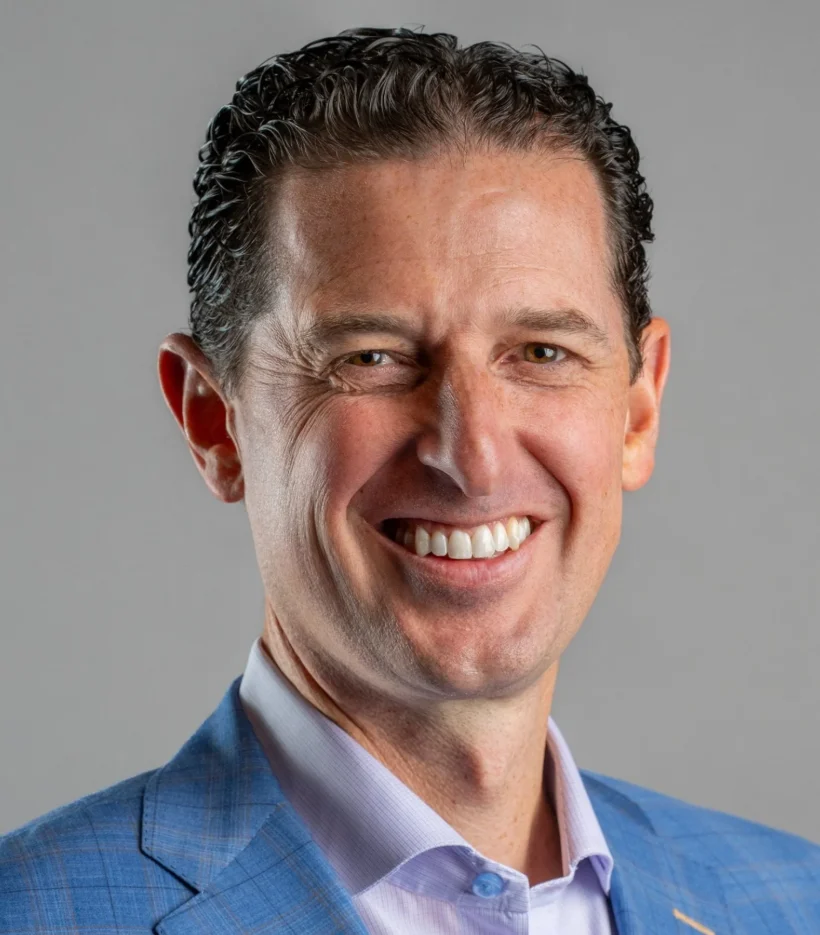
Eric Spindt
Eric Spindt is CEO of Commonwealth Financial Group, where he leads the firm’s strategic direction, mentors financial professionals, and advances the capabilities, infrastructure, and planning processes that distinguish the organization. Under his leadership, Commonwealth Financial Group has doubled both its advisor count and its geographic footprint across New England.
Eric is a CERTIFIED FINANCIAL PLANNER™ professional and Chartered Leadership Fellow®. He earned his bachelor’s degree from Brandeis University and is recognized for his commitment to leadership development, organizational culture, and special-needs advocacy. He chairs the board of Special Olympics Massachusetts and co-founded BioBall, a charitable basketball event that has raised millions of dollars since 2005.
Read the Webinar
Welcome and the Link Between Belief and Results
All righty. Well, welcome, welcome, everybody. We are going to go ahead and get up and running. Uh, we've got a couple of folks that are going to be helping out with tech support today. We're going to go ahead and ask that.
If you are here, we would absolutely love it if you could turn your camera on. Those of you that have done so already, thank you in advance. We're trying to get as much engagement as we can. Uh, we've got a great presentation lined up today. There's going to be some slides that are shared throughout, but during our time today, please take note that the chat is available.
If you have any questions, if you have any comments or thoughts, please use the chat as much as you can to stay in contact. We'll do our very best to answer all of the questions that come through the chat. But as you can see on the screen, you're going to get a two Spindts. Today we're going to have a presentation from my brother Eric Spindt from CFG, before he gets up and running. I'm letting him get his slides and everything prepared.
Just want to do a quick introduction and thank you all for being here for another edition of an executive impact at The Pacific Institute. We like to do these open sessions to give you samples of what we have to offer and the mental technology that we like to employ. On the first Friday of every month, we do a beyond limit session where you get a heavy dose of yours. Truly, we like to do these other sessions called Executive Impact, and that's what Eric's here to do today. If you are new to The Pacific Institute, thank you for joining us.
We are a 54-year-old organization based on the principles that beliefs drive behavior, and that behavior drives results. So very high level at an organization, raise your hand if you've got a camera on, if results are something that is important to you. If you're in charge of a number, good. Anybody that didn't raise their hand, I apologize for that sore shoulder you must have. 'cause we're all in charge of numbers and results.
In order to get those, we probably went to some sort of a planning meeting. We sat down with the executive team. We talked about what that strategy was going to be, and here in January, that's a pretty common topic. But as most of us recognize, in order for any strategy to work, we need human beings to behave in a certain way. We need them to take certain actions.
Things need to be done in order for the strategy to work. And if you look on the top of the screen, you'll see that beliefs drive that behavior. So we know that the most powerful lever that you have for driving results in your organization is going to be the beliefs. And the beliefs start on an individual level, but the beliefs that are collective of your organization, that's your culture. So sometimes we like to say that culture is the collective self-talk of your team.
It's what everybody's saying. It's what the break room walls would say. If they could talk a quote from our founder, Lou Ty says, all meaningful and lasting change starts on the inside, and it works its way out. So we know that those beliefs start with the individuals. And the presentation that we'll be seeing today has an awful lot to do with those individual beliefs and how those make their way through an organization.
These sessions, executive impact, this is an opportunity to have a live conversation with somebody in our network, an executive who has applied these tools with success in their organization. These are real life examples. This is not, uh, you know, made up. These are real live results. You're able to ask any questions about how things went along the way.
And the goal is to be able to get you some practical takeaways from individuals who have practiced and lived our mental technology in their business to get the most use out of this session. Here's what we recommend. Listen for patterns. Eric's business may not be exactly the same as yours, but I bet you there's a lot of areas where it is. So listen for patterns you can apply, maybe not necessarily a direct prescription, but I definitely think you'll see patterns.
Notice where belief shows up, see where those thoughts are showing up in decisions and behavior and executions. And again, don't hesitate to use that chat. That's an opportunity to ask questions either of myself and the other members at Pacific Institute or with Eric directly. That is me occupying all of the four minutes that I'm going to occupy. So I'm going to go ahead and turn this presentation over to my big brother Eric spent and let him take it away.
I'll be back on at the end for just a couple of minutes to give you all some information. But I'm going to go ahead and stop sharing my screen. Eric, you can go ahead and start sharing yours and I'll turn it over to you.
Back to top ↑Strategy as a Set of Choices
There we go. I'm off of mute. Uh, see the screen. Okay. Not yet.
There. It's, yes, there We go. Okay, cool. Um, Kevin introducing me a to me as his big brother is just his way of saying I'm older than he is. So yes, I'm older than he is.
Um, he is the younger, better looking version of the Spence. So he, he has that claim to fame. Uh, I have a little cold today if it feels like I'm straining or if it sounds like I'm straining, I apologize ahead of time. Hopefully that will not get in the way of, um, some good stuff I think I have here to share. So Kevin talked about belief.
Uh, just by way of background, I've been using The Pacific Institute, um, curriculum and, and materials in my career and business for about 20 years now. So this has been a, uh, significantly, uh, meaningful part of the way that I run my organization. Um, I would tell anybody that I've ever talked to about this, that it was literally life changing for me when I first was introduced to it. So, not to set the expectations too high, but that's, um, if you've not used Pacific Institute before, that's what it was. Um, and continues to be for me.
So, uh, that's just my background. Here's what we're going to do to start. I'm going to talk about strategy and belief. Kevin and I were having a conversation a few months ago about belief, which we do regularly, and I think I made the comment that said, belief has riddled all throughout strategy. And I, I, I really believe that.
So goal today is to show some tangible ways in which that's the case. Um, but I'll start with some, I'll start with some grounding. And so the first thing is, when I say strategy, I mean choice. I subscribe to the Roger Martin philosophy of strategy. Strategy is just a set of choices.
And we're going to go through the Roger Martin strategy cascade in a minute case anybody is not familiar with it. But to me, strategy equals choice. And every time we talk about choice, we're making a decision. We're introducing risk into the equation. So as business leaders, we make a choice.
There's nothing that's guaranteed choice translates into risk, and that's where belief gets exposed. So for me, when as soon as we make a decision, as soon as a choice is made, that's where risk is, um, exposed. Okay? So that's, that's understand what I mean when I say strategy. Uh, I mean, choice leads to risk.
And then that's where we start to say, oh, now we know what the beliefs actually are. Uh, belief is not positivity. There's plenty of room for positivity and uplifting, but to me, uh, belief equals the confidence to act. Okay? So this is not a motivational talk.
My goal today is not to get you pumped up and fired up. That's a, I'm not a motivational speaker in this context. Um, when I say belief, I mean it provides confidence to act. That's what we need when we make decisions, is action. You can't have action, uh, without confidence and, and have it be a meaningful thing.
So to me, belief equals the confidence to act in the way that we would want to. And then lastly, uh, my view is that belief is a repeatable leadership system. It's not a motivational event, okay? You don't do belief events in your office. It is something that becomes part of a leadership system.
And if we don't have a systematic way to advance it forward, then it's just this thing that we did that time. It's not a systematic part of what we do. What I have found to be true is that if belief is missing, execution slows down and it doesn't do so loudly. It does so quietly, you won't even see it. You'll get passive resistance all over the place.
So when I say belief, these are all the things. I mean, this is what we're going to talk about. Um, and if it is absent from your organization, the way that you can see it is that things just move slowly. It's all about pace. Um, and it does so quietly and it does so slowly, uh, and it becomes exhausting.
The inverse is true. When there is the right belief in place, things go fast. And, um, it's loud. You'll see it, it's very visible. So that's my, that's my set of grounding.
All right. Lemme give you just sort of my view. It's not my view. It's Roger Martin's view of like, what is strategy. So if you've never read the Roger Martin material, I read all this stuff.
He's got a great medium article that comes out every single week. But his view is that strategy is an integrated set of choices. And what it starts with is a winning aspiration. And that's like, what's the purpose? What are we driving towards?
What's the goal? Not just a tangible goal, but like, what's the aspirational view? And in that cascade, the next thing, this is all not sequential by the way, you sort of bounce all over the place, but the next set of questions to answer and choices to make is the ones of where do we play? Like, what markets are we going to be in? What consumer segment would we want to focus on?
Where will we compete? And even more importantly, where won't we Saying no is oftentimes a hard thing for companies to do. I don't want to do that. Um, puts a stake in the ground. Part of making a good strategic choice is saying, what will I compete in?
And where won't we, once we've got a where-to-play discussion, then we move into how will we win? And this is really just a way of saying value proposition. What's our advantage? Why will someone choose us over anybody else? Right?
What's the unique thing about us that gives us a competitive advantage? How do we stand out from peers? That's the idea behind the how-to-win or is the, uh, capabilities. What capabilities need to be in place in order for us to win
Back to top ↑The Strategy Choice Cascade
on the fields of play that we're going to choose to play in. Um, these are all the reinforcing activities, the behaviors that Kevin was talking about. Uh, as your field of play changes or as your competitive advantage or your valid proposition changes, so too, do your capabilities. So every time you make a choice in one of these areas, it impacts everything else, right? These are all an integrated set of choices.
And then last in the strategy cascade is what management systems need to be in place? What systems, structures, measures, what are all the things that support all of these choices? And as I said, this is not sequential to me. The way that we use this in my firm is that strategy is a constant conversation about where do we need to make improvements, right? Where do we, are we changing what our, um, how-to-win strategy is?
Do we need to improve our capabilities in order to be effective in that How to win strategy? Is there a new market that we're going to choose to go compete in? Or are we going to choose to not compete in one? So all of these decisions reinforce each other. And to go back to a statement I said to Kevin a few months ago, when we make this every single time, me and my team, our our team talks through this stuff, it's very obvious where there are belief either, um, accelerators or inhibitors, right?
Belief has riddled all throughout these kinds of things. And where it shows up, for me, belief is always hidden constraints. So what I'll, what I'll do next here in a moment is try to go show you places where I have seen belief show up in a way that is an inhibitor a constraint at each one of these, um, strategy cascades. And I will put in a plug for TPI at the moment. I've worked with lots of consultants, I've worked with lots of organizations that help you think about strategy.
There's tons of 'em that are out there. Um, but my view is like, strategies help you choose. They can give you research and they can help you make the choices, but there aren't a lot of partners that help, um, organize the belief, uh, about what is possible or what is executable. So to me, strategy and belief, sit side by side each other. We'll do a lot ofra, um, consultants that do strategy.
Um, but we always use Pacific Institute to help make sure that those choices are believed to be executable. Absent that belief, none of it, none of it actually comes to, to fruition. So that's my shameless plug for TPI today. I'm sure Kevin and Richard appreciate that. Okay, here's the, um, here's where belief shows up in, in my reality, I'll give you these, these are all real life examples for me.
Uh, I'm sure others have other examples, but for me, when we talk about winning aspiration, the reality that I have seen is when you have a conversation about like, well, what's our goal? What are we trying to get to? What reality, when we know belief is not there, is that the aspirations are quietly capped by everybody individually or an organization's perceived view of what's possible. If I only think this is possible, an aspiration sits up here, we have zero chance of even putting it down on a piece of paper. No one will get there.
And a lot of this has to do with a person or an organization's identity. Uh, their self-image, it's their orientation, uh, towards the future. I think a lot of leadership teams think they're debating ambition, or what are we trying to accomplish? But what they're really debating is their belief of what's possible. If I don't think it's possible, we're not going to put it down on a piece of paper and commit ourselves to doing a lot of things.
So I think at the core, the where we've used the TPI work the most is not so much just identifying goals, but it's really unshackling leaders and saying, this is what we can believe. Let's go dream big and believe that it is possible. Once we can set that container, then we can start to get to the next. But if you don't have an environment or a culture where we are able to do that comfortably, um, then what happens is those view of what's possible just gets pushed down into what they think they can already do. Right?
And most of the time that's like, eh, I think I can do a little bit better than I did the year before. And so your ambition played out, ends up just being a, um, an under lived version of potential. That's my view. That's how, that's how belief, I think, shows up in the winning aspiration. Part of strategy.
Second is when we get to where do you play? The pain that I would experience is, um, if you find your team is saying, um, it's hard to say no to things or they get overextended, they're trying to do everything, or there's a legacy drag, this is the way we've done it before, we can't say no to that because this way we've always done it before. And if you're trying to get to a new level in many ways, I think you gotta do something that we've never done before. Um, saying no is not a strategy problem is really more of a confidence problem.
Back to top ↑Hidden Beliefs in Where-to-Play Decisions
If I say no to the way we've done it before, and that's got us to some level of okayness, um, if I say no to it, then what's going to ha And I'm not sure if I can get to that next level. We have no chance of, of moving forward. So the tie in belief here is, for me, belief shows up as a discipline, right? If we're going to say no to something, we gotta be disciplined enough to say to believe that we can get to that next level. And, and I think what belief does is it builds conviction to allow us to narrow focus without panicking.
Okay? So if I, if I, um, if I say no to this, and there goes a good chunk of what our revenue is, and I'll show you an example of how we applied this in our own firm. When we made a decision, um, to move directly towards fee-based financial planning in our world, um, when we say no to something that creates some anxiety, whoa, that's a big chunk of what we had once done. It's that panic that sets in. It's that anxiety that sets in.
And if you don't have a mechanism to help people move through that, what you'll end up with is people not being able to say no to something that might be a good idea to say no to. Um, and then the legacy of how things have been done just drags on the organization. Yeah. So that's where I think belief shows up in the where-to-play bucket. Normally, I pause every now and then Kevin, if there's questions, I'm not monitoring the chat, but if you've got 'em, feel free to jump in and, uh, stop me along the way here.
Otherwise I'll just ramble. Okay. Third, once we talk about how-to-win, what's our value proposition pain that I would say, like, what's the CEO's pain? I've seen decks where people show up and it's like, that's the same as what we're currently doing. It's like generic.
There's nothing differentiating about that. Or there's a lot of fence sitting in our team discussions at times. And I think what happens there is when people are, um, sitting on a fence or there's not that much differentiation, um, what you're getting is just a, a, it's a confidence it issue to say, I'm, I don't want to put stake in the ground, right? The tie in around belief is that confidence precedes differentiation and belief drives the courage in that position. And if I don't believe that I can do something different, I'm not going to put it on a piece of paper.
'cause then I'm going to be held accountable to it. Um, and so it's safer, it's safer to do just slightly better than we did before. Maybe it's cheaper to do slightly better. That's like the default position, uh, slightly better than what were before. My view is that in our world today, in order to be, um, significantly different in the way that we perform, we've gotta put a stake in the ground and be significantly different than the way that we're currently behaving.
If we're recruiting a different type of person, if we're trying to target a different type of clientele, if we're not different than what were before, then we're going to get the exact same results. And so once we put a stake in the ground and say, our value proposition is, is is this, um, if there's a confidence gap there, uh, you're not going to get any differentiation. Okay? So confidence to me precedes differentiation. That's all tied to, um, tied to belief.
All right? Under capabilities, what sort of capabilities are required to win? Here's the pain. You know, I'll see people say, wait a minute, that's not who we are. We don't do those things.
Uh, or they'll say, that's another person in the office. They're great, they're the ones that handle this new thing, and you rely on these stars that are in the office. Um, or you see slow learning curves. You ever seen that before? It's like, we're going to do something new.
And it's like, man, why is this taking so long to get implemented? Why is this taking so long? Um, you know, to, to improve upon that capability. And my view is that capability gaps are very rarely skill gaps. People have the capability to learn, they have the capability to be trained.
Um, but what they really are is belief gaps disguised as realism. There's a gap, but it's not in a person's skill. It's a gap in their, um, belief about what they think is real or not real for them. And I think this is really where I've seen a lot of the TPI work, uh, help my organization immensely. It's in the pace with which we adopt change.
Those, those learning curves are faster. If you believe you can do something, or rather, if you believe you can't, that limiting belief just slows the pace of how things move. And again, in our world, with the pace of change, you gotta move fast. I think we all have to move fast to get to where we want to get to. An organization only moves at the speed of whatever the cultural belief is in their own capability.
So if we can't move capabilities quickly, um, then we're not going to get a lot of change. And this is the part that's quiet. And so what happens here, I think if we try to train our way out of this solution without trying to reinforce the belief, all that training, all those dollars that are spent on training, they go for not. 'cause people quietly say, I don't think I can do that.
Back to top ↑Belief Constraints in How-to-Win Choices
That's not who we are. I haven't done that before. I don't think I can this time will pass. Um, and it's just a slow, slow drag. You spend a lot of money on systems or training or things that just don't get implemented, right?
This is probably the biggest place for me where I have seen, uh, challenges show up where beliefs show up. It's in a person's belief of capabilities. And at the organizational level, this is where things just get unlocked in a really big way. That's for me, where it gets the most amount of fun when collectively the organization goes, I can do this. And there's that belief that is there, there's a support around it.
Um, and I, I've seen things change dramatically in the positive, um, you know, when that, when that exists. All right, lastly, what management systems. Okay, every time we change something, um, things are misaligned. If we don't change incentives, um, culture and show of hands, how many people have put in a new system and had resistance from staff people or in colleagues or peers. It's like there's this pushback.
I've seen situations where, and I go, I don't want to use that new system. My old system works. And I probably have been guilty myself of saying like, I'm all for doing it one common way, just as long as it's my way. Like, I've definitely said that out loud in a number of meetings. Like no one likes to change things usually.
Um, and so that's the pain that I think happens. For me, belief is the multiplier makes all these systems work. Part of our job as leaders is to sell people on why, right? We gotta sell the, the conviction of like, why is this valuable? Why is this important?
But if we don't set up new incentives, if we don't align the culture to the new mission, um, believe that that things don't actually come to fruition. Okay? So all the systems that are in place end up being misaligned. If you don't believe behavior drives outcomes, then you won't invest in reinforcement. I do, I believe that the behavior does drive those outcomes.
Um, and so we try to really make sure that our, our investment in the new behaviors that we want sits alongside the change management systems that we're having. Like, I gotta lead with that. Um, I think that's where TPI also sits alongside those system. It activates them. It doesn't do it for you, they won't do it for you, but it'll help activate some of those systems that exist around, um, you know, sort of system structures and, and measures that ultimately support these choices.
I'll pause for a moment before I go on to show an example of what we did in our organization, see if there's any questions or thoughts here so far. Yeah, There was a good question that went in the chat that I wanted to float over to you. You might cover this later, but Jeff asked, how do you approach different learning methods affecting the change of their beliefs? Different learning methods, meaning, I'm not sure I got the whole ask the question again, sorry. Uh, It's the first one in the chat that reads, how do you approach different learning methods affect the changing of their beliefs?
I guess everybody le learns in different ways, if that's what you're trying to convey, sort of everybody thinks or learns in different ways. Um, the way that we've used Pacific Institute, I can show you in a moment here how we've done it. Um, there's lots of different ways people learn, but we try to create an environment where however a person is learning, it shows up, right? Whether they're visual learners, whether they're auditory learners, there's lots of different ways in which we go, uh, instill it into the organization. I'll show in a couple slides from now how our leadership team, um, works to instill it all throughout.
But I think at the belief level, um, if it's a leadership system, you can't just speak to one kind of an audience. It's gotta be able to speak to everybody, if that's what you're asking, like different leadership styles or learning styles, if that's what you're asking. I think part of it as somebody who has been in your firm and experienced it before is that there's a tremendous amount of modeling, of being open to new beliefs. And when leaders can demonstrate that by modeling that type of behavior, regardless of somebody's learning style, when that behavior is emulated, that's something that people are going to want to try to imitate themselves. So I see it a lot in your firm.
You might not want to brag about it, but we certainly will. I mean, it not people are watching leaders more than anything else. They'll, they'll believe what you do, not what you say. Um, and so we gotta show up. That's what I do.
I think this is all, I'll talk about it in a moment. It's all, it's all leadership driven, for sure. And one other thing that you had mentioned there that might not have made perfect sense to folks that don't know The Pacific Institute is you mentioned set that container when you were talking about some of the goals in one of your early belief slides. I thought you might want to clarify that. Yeah, I mean, aspirations, we're always trying to, when we set goals in an organization, we debate 'em on my team all the time.
It's like, what's the goal that we're shooting for?
Back to top ↑Aligning Capabilities, Systems, and Culture
Are we shooting for something that we think is possible? And that way everybody feels good when you hit it. Are you shooting for something that's a stretch goal? Um, and certainly when we're building a budget, we're not building it on like the most aspirational potential oriented thing. There's some practical reality.
But when we're setting strategy and we're trying to define the winning aspiration, that's not tied to a calendar year budget. So what we think of is like, what's the aspiration? And I want that to be as, um, unconstrained as possible. I want the container to be as big as possible. Uh, and that's where belief sets in.
If I set something up here and I I quietly don't think that can happen, then I won't set that. I'm want to push this down here. It is uncomfortable to set a goal or an aspiration outside of what we believe is possible. One of the cornerstones of the work that we've done with The Pacific Institute is to get comfortable in that discomfort. We know that the growth occurs when you're outside our comfort zone.
So as a firm, we're always trying to set aspirations not for the level of things that we know how to do, but rather for the ones that we believe is possible. Um, and then we're going to use the strategy cascade to go figure out the rest of our, our actions. We're going to go make those choices. But it does, it starts with saying, I believe it's possible. I don't know how to do it yet.
I know somebody might we'll figure it out. But that's where belief sets at the, at the container, uh, at that container level. I got two thumbs up from my little brother. That's a good thing. Okay, I'll give an example of how we applied this in my organization.
We're a financial services company in 2018 and 19. We were doing financial planning, not necessarily for a fee. And so we're trying to make the transition from, uh, financial planning in a broad sense to financial planning on a fee basis alone. So in 2020, some of the questions that we sort of asked ourselves here was, let's start winning aspiration. Ours, paraphrasing here, just so I could fit it all in one slide, is be the best firm at delivering financial planning as an experience.
We had read the material on, uh, service economy versus an experience economy. And our view was people were no longer going to pay for the service of a financial plan. And we wanted to build, we wanted to build resources and value at the experience level, at the experience value. Um, and we wanted to be the best firm in the, in the world at it. She said, okay, we're, we're not that right now.
But that was the aspiration we had to collectively buy into that. But that was something that we had to set as the belief where we chose to play. We said, we're going to choose to play in our, in our market. Our client is our advisor. So we're going to choose to play only in the area of fee-based financial planning.
And when we hire people, we're only going to allow 'em to work on financial planning cases. If they work on it for a fee, we're going to say no to any kind of transactional selling, we're not going to support it. In fact, with our brand new advisor, we're not even going to allow it. Up until that point, that had not been something that we'd done before. So we said, Nope, we're going to stick a stake in the ground.
We're going to choose to do something that hadn't been done in our office before. I had seen it done in other places, but it hadn't been done in our office before. We're going to choose those two field to play. To play in our value proposition was going to be threefold. We said, we play on interdependent systems.
We're going to build infrastructure to support our advisor, not by providing service to them, but by providing interdependence. How can we get them to plug into resources, uh, and services that, um, were aligned with theirs, right? They were interdependent. We're going to focus on experience economy value, and were only going to hire career changer. No more kids, right out of college.
We just said, Nope, we're not doing that anymore. That's not a thing for us. That's not what we had done before. But that's not a thing for us anymore. When we looked at our capabilities, we said, gosh, we gotta change everything.
We gotta change our training. We gotta change our planning experience offerings. We have to change our recruiting practices. We have to change our whole business design. How does technology interact with us?
We certainly needed to make sure we had a change mindset all throughout the organization, but those were capabilities that we looked at and said, Nope, these are our changes that we need to make. The reason that we've succeeded at this, which I'll show you a slide in a moment, um, that shows some of that not to brag, but just to show it's possible, um, is because the pace which whi with which we got through these capabilities was fast. And why was that? That was because belief existed. We all believed, yep, we can build a new recruiting system.
Yep, we can build a new training, uh, method that to, to train to the sessions that we, um, or the outcomes that we wanted. Uh, we had belief that we could go build these capabilities. And then lastly, we said, we need a better datand operating system. We don't have one. So went and built one.
We said, we need to go do this. We need to build a technology system that didn't exist in our parent company, and so we're going to go build it ourselves. And that was the tools that needed to be in place.
Back to top ↑A Financial Planning Transformation in Practice
These all reinforced each other. So these were conscious, intentional decisions that our team went and made. Not all at once, but just iteratively. This was the process that went through. And if I fast forward four years later, um, our numbers looking, these numbers for those of you that are in the financial services world, might mean something.
Those that don't to just measures of success, um, you know, in different ways. And retention is a big measure of success for our advisors. In the first four years. Our numbers look no different than our parent company, which was MassMutual. Um, in 2020.
Our retention numbers, our productivity numbers, they look the same four years later, they look wildly different. So this is an example of like choice. Um, choice is made differently, uh, a set of beliefs all around those things, uh, in this domain over, over the last four years. So there's a case study example of how we, how we did it. There's the journey.
If you're looking to say like, how do I go embed belief into my organization? I can give you what we've experienced and sort of the journey that you might be on if you decide to do it yourself. We always think of things in the s-curve in in our office. The S curve is where you start and they get to the next level. You gotta go sort of backwards to go forward.
That's the pain, that's the discomfort that a lot of people feel. Um, most people then recede back to where they were. As soon as it gets uncomfortable, we don't, we push through to the other side. That's the, the view of the scur. But the way to embed belief is a culture throughout the organization.
Uh, no surprise here. Like it starts with leadership, right? So you gotta get leadership buy-in. When we do the sessions, um, leadership participates in them in our office. Now.
I'm the one that leads the sessions. Um, before I was able to lead them myself way back in the day, um, I participated in every single one of the sessions. To Kevin's point earlier about modeling, if I show up and I'm in the back and I'm just on my phone paying attention to something different, it sends the message that this is unimportant. If I'm in the front of the class, I'm participating. I'm actively engaged.
It sends the message that this is important. Early in the cycle of, of this type of cultural change, um, I had found that this, uh, it rooted out people that culturally didn't belong, right? There's likelihood of some personnel changes. Now, for us, what this does is it attracts people who are immediately drawn to the, you know, this type of cultural environment. It's a good, um, uh, it's a good magnet for us to attract the right kind of people.
So it starts with leadership buy-in. We've done a bunch of cultural assessments along the way, cultural assessments The Pacific Institute does. Uh, I've done 'em with Cheryl and Kevin. We utilize all these tools. Some of 'em are, um, aimed at leadership influence.
Some of 'em are aimed at just sort of how does the, uh, environment, how do the employees experience us as an organization. What it forced us to do is to be rigidly introspective with the mirror up and ask ourselves like, what are we actually getting? And be honest with it, right? And be honest with ourselves. Um, some of that allowed us to challenge some of the historical norms that that existed.
But we used tools. And TPI has great tools, uh, you know, to go assess, especially culture and leadership impact. We then apply it across the organization. We launched programs and continue to launch programs of change management. Uh, we've used any number of different TPI type programs.
But I've said on, uh, a number of different occasions, our budget. When I think of our budget, we spend about one to 2% of our total revenue on programming aimed at culture. And culture to me is like the collective beliefs. I would cut off my arm before. I would not spend money on cultural focus.
It's that important to the organization. That's the last thing I would cut, um, in our budget. Uh, 'cause I just know how powerful that spend is. That 2% that we spend punches way above its weight class, if you will. Um, and we apply it all throughout the organization.
So twice a year we do a session inside our organization, we have reinforcement sessions. Like there's a bunch of ways to go do it. Kevin and team can probably walk anybody through. Um, you know how you guys all might apply it in your own world. Reinforcement, continual engagement.
It cannot be just an event if you're trying to instill belief as a strategic partner, if you will. Um, it can't just be a thing that you did one time. So continual engagement from the leadership, it can't just be like, oh, I went and did that this time and now I'm done doing it. Um, we gotta find continually new methods of applications of application to core values. How does some of this stuff turn into core values of the organization?
And then lastly, just repeat forever. That's all. Just keep doing it over and over again. This is, as I said, something that I would never stop paying for inside our organization. 'cause otherwise belief just recedes away, right?
That's how, that's how it works for us.
Back to top ↑Leadership Modeling and Cultural Reinforcement
I'm watching my shock clock. I'm close to on time here. I'll give you a couple of key takeaways and then we can open up questions. Um, here's my key takeaways if you haven't taken notes. This is my takeaways would be, uh, strategy without belief.
It's just a show, right? And it will increase execution risk to me as leaders. What I want to try to figure out is like if I gotta go do something new, how do I reduce the risk? How do I make it more likely to succeed? The answer for that to me is always like, I gotta make sure that the beliefs are the right ones.
Uh, and then I get rid of, uh, I reduce my execution risk. If belief doesn't exist inside there, your strategy might be sound, uh, but you're just going to have increased and I would argue unnecessary risk, um, in execution. Second is, uh, belief is not motivation. I led with that. I'll end with it as well.
Um, it really is permission to act. If you have the right beliefs in place, it's the permission to take action without fear of getting, you know, reprisals or punishments. But it's, it's not motivation. It's not rah rah speeches. It's permission to act and make the right, uh, the right choices.
Leaders don't set strategy alone. Yes, there's some thinking there, but what they really do is they set belief conditions. That's what I think our job is. My job is more, uh, than anything else, is to make sure that we are setting the belief conditions that allow for the right choices to be made. If those are not set in place, then it feels like you're just dragging the leaders, just dragging other people along, um, in strategy.
And that's the challenges we are likely all facing are, um, too big for any one of us to do on our own. Right? So set the belief conditions, um, I think is the primary responsibility of the leaders. And then lastly, building belief. It is not optional leadership work.
It is the work that's for me, right? When we talk on our leadership team, it's not like, um, oh yeah, I'm not going to do that, or I'm just going to focus on my functional responsibility. No, building belief is it is the work of leadership, it is the work of strategy. Um, and those two things go hand in hand. And when they do, uh, the pace of change is really good.
The growth is a lot of fun. When those two things don't go hand in hand, it's like slogging through a swamp gets hard and you're dragging and it's no fun. So, um, belief is not the optional work. It is, uh, it is in fact the work. So I think I was supposed to talk for like 34 minutes or 35 minutes maybe I did exactly that.
So thanks Kevin. I'm happy to take any questions or dig into anything further if you want. But, uh, any questions I Can, I can tell from the chat and I can tell by some folks having some looks on their face that they have questions that you're going to get some q and A here. So I want to invite people to put any questions they may have in the chat. Uh, by all means, you're welcome to come off of mute as well before any questions come in.
There was one thing that popped up for me, Eric, when you were walking through the, the strategy cascade there, you were talking about moving to fee-based planning. And for folks that are not in the industry, they might not recognize what a fear that could create. Um, for those that that understand a little bit, how did your firm, you know, you got a hundred and some odd folks there. How did they react back in 2018 when you made that decision that said, we're going to say no to anything that's not fee-based? I mean, the, I started my career not doing fee-based financial planning.
And so you get a client and you say, oh, well a client's going to work with me, um, and then I'll make money when I sell something. And as soon as you put a stake in the ground, you say, I'm going to charge a fee for doing something. The fear is, well, what if they won't pay the fee? Right? And I think a lot of advisors, whether they're veteran advisors or people brand new to the business, especially our brand new advisors who, who we recruit and only allow them to work on a client relationship if they pay a fee.
The question is, like, yesterday I was doing what, and today I'm charging you a fee. Like what am I charging for? So there's a confidence level as a belief level, I don't know that I'm worth it. Um, I think is what a lot of advisors end up saying, I'm not sure a person is willing to pay for just a promise of me. Um, I don't know that I can do that.
And especially today, if what you're selling is an, in our world, if what you're selling is an analysis, well, clients don't need an advisor to go create analysis. They go look at chat GPT and plug their information in, they're good to go. So it really is, if you're selling a fee to a client, what you're selling is something that feels intangible, which is peace of mind, it's confidence that I'll help you ask the right questions, I'll help you think about what to think about. And so belief sits there more than anything else in our world for an advisor, um, who's either, again, brand new to the career or someone who has done it a different way in the past, um, if belief doesn't exist,
Back to top ↑Building Belief Conditions Across the Organization
you can't confidently go into a person and say, it's worth $2,000 a year to, um, you know, to engage our services. So as the CEO, what is, what is the CEO's role then in shaping belief within the organization? Do you think, Uh, set the container super high, right? I think that's more than anything else, but you said it before, it's like model the behavior. Um, but above anything else, the, the, um, I think it's the CEO's job to set the bar of what's possible, super high, not unreachable.
Now if someone's like, that's impossible, we're never going to get there. You're like, if you're setting it unrealistically high in a, in just an insane way, you're going to be looked at like you're crazy. Um, I'll probably get looked at like that plenty of times, but, um, but I do think it's the job to stretch that outside people's comfort zone at that winning aspiration level. So at that first box on the strategy cascade, that's first and foremost, I think where the, um, where the CEO has to, uh, raise the container. Once you get buy in there, then I think you can start to move down and say other people are bought in, they're going to start looking for the answer.
So first and foremost, it's, uh, set the container high, set the possibility or the bar of what's possible and what you believe is possible high be effective at selling that, uh, and convincing people that that is in fact an attainable goal. So we're in a sales job, we're all leaders. We're selling our vision, we're selling our, um, you know, what's possible. That's the first and foremost job. I love it more references to the container that you're going to set a nice big container that people grow into.
For those that don't know. Uh, Cheryl had a really good question here. Cheryl asked, what was a lesson that you learned in this transformation? If you had to do it over again, uh, what would you do differently? Gosh, I've been doing this for so long.
Um, uh, let's see. What's the biggest lesson? The biggest lesson would be around like, um, the sooner you're setting belief, uh, conditions in the organization, the faster you're going to get movement and the, and the less intense it is, the slower the pace to change. Every time I've turned up the dial of focus on like, how intensely are we advancing a message of, of, um, you know, belief set and, and uh, mindset. Every time that dial has been turned up, uh, production and, and, uh, results have followed every time we sort of receive from it and we get focused on something else, naturally the, the results tend to to follow.
So that's why I sort of, in my mindset a while ago, I'm never going to not have an intensity level of at least one to 2% of our budget. That was my way of saying, I will never let this ebb and flow. If I'd have known that a while ago, I would've not have done these things as events in time and then wondered why they petered out. I would've just said, I'm doing this all the time. Right from the get go is probably the biggest lesson I would've learned.
I think that's a, an important one for us is we do a lot of work with organizations that are not just, we show up once or twice per year, but we're regularly working alongside. We very much like to take that guide on the side approach as we help folks through culture transformation. So that aligns with what we do. Um, let's see here, another one that we had in here. How do you build belief when a strategy requires that people need to let go of a past strategy or a past success?
I mean, that's almost all the time, right? If you're going to to get to someplace new, it's, um, we oftentimes have to let go of things that got us to where were. Like, the best things that got me to where I am aren't necessarily going to be the things that get me to where I'm going. So, um, it's constant, I think coaching and, uh, relationship building with those people. I, I know our team very well.
Our team knows their employees extremely well. Uh, you don't just say something to somebody and then, uh, oh, they got it now. They just move forward and they've let go of something. When you're changing a deeply rooted belief, um, it requires ongoing attention to it. So we use affirmations, all The Pacific Institute stuff, and that affirmation process, the managers work with each person.
They'll show them the, put the mirror up and like, Hey, that sounds like an affirmation in the not good sense. Like, what are we affirming to move towards that new belief? Um, so like that's, it's just commonplace language in our, in our world to, uh, you know, to make sure that that doesn't exist. You gotta let go of things, but you also have to be able to set a replacement picture, um, of what we're moving towards. And that has to be intently held onto and, and, and showcased by the leaders.
I very much like that. You talked about a language that's something that we talk about a lot is becoming fluent in mental technology. And so for, for your firm, I know you've been rolling out work with The Pacific Institute for a while.
Back to top ↑Belief as the Work of Leadership
How long do you think it took before your firm started to change their language? The way that people were talking and the way that you noticed? I mean, I've had several different organizations where I've rolled it out. So the smaller the organization, the faster, you'll see it everywhere. Um, but it's like a rock in a pond.
There's big splash and the ripples will keep on going, and the bigger the rock, the faster the ripples grow. So, um, the stronger the belief of the people who are at the top of the organization, who are the leaders of the organization, the faster those ripples are going to make it through the organization. I know how valuable those ripples are. So I make it really intense in, in our organization. How long will it take?
You'll find out some stuff real fast. Like when I first did it at both organizations that I belong to within a, I don't know, 60, 90 days. I could tell who are the people that I wanted on the team and who wasn't. I, I noticed immediate behavior change in those that were, um, that were good long-term possibilities. Um, and change happened really quickly and now it's, uh, it's a snowball.
It just builds from there. So I don't think it takes forever to get to. I, I think some people were like, how long does it take to change? Culturally? It doesn't take years and years and years.
It'll evolve over time. Uh, but you can make a meaningful impact with a real strong splash, uh, if you're the leader that's reinforcing it all the time. Outstanding. We are nearing the end of our time. Uh, we're going to continue with questions, but we did want to leave some options up on the screen In the meantime.
Cheryl put a good question in the chat there. She just said, what is Eric's belief about the people in his organization? What's the belief about the people? They're amazing. I mean, I have a, they're, they're awesome, right?
They're great people. Um, but besides that, it's like you, we see potential in people, I think is what we should do, and we definitely do. Um, so I try to see the best version of everybody and know that they're not their final version in the moment. No one's ever, me or anybody else, whatever you're, whatever's showing up right there in that moment isn't the final and best version of the person. And I believe that everybody's willing to grow, uh, and eager to grow into something new as soon as they don't.
If they, if that becomes a, um, something that's obvious that they're not willing to take those changes to grow, then they're not a good cultural fit. So we're real easy to move 'em out. So the people that are here, we love 'em, they're great, they're amazing, they're willing and eager to grow. And if they're not, they're going to wake up every day and hate being here so they don't stay around for very long, uh, either 'cause of their choosing or ours. Eric, Eric, uh, Richard here, thank you so much for a great, um, talk.
You figured this out somehow and a lot of people that are listening to you don't have any idea what you're talking about when you say things like affirmations or like, wait, what are we doing here? Right? So can you just talk a bit about like the first steps that you took here? Why, what were they, why did you take them? What was bubbling up when all that happened?
I'll go way back to the beginning and what it was for me, when I was first introduced to The Pacific Institute, I felt this like stuck feeling in my career. I was a whole lot younger, a lot fewer wrinkles and many less gray hairs. But I was stuck. I was like, man, I'm working hard, but I'm not getting, I'm not moving forward things. I feel like I'm slogging in this swamp.
That's where I was. And as soon as I learned some stuff from The Pacific Institute, I had this, like, there was a lid that was lifted, all of a sudden potential was unlocked and I grew into it. So for me, I knew that this stuff firsthand was going to be meaningful. So when I got to run my own office and I introduced it to the organization, I brought it, I just brought it into the organization, it was just said, this is what we're going to do. And I was willing to put a stake in the ground and say, I only want people around me who think the way that I think in this way.
I don't want everybody to be the exact same person as me, but I want people who are thinking about potential and growth in the same way that I did. So the answer was like, put a stake in the ground. We did programming with Pacific Institute. It was, um, it was easy. People either loved it or they didn't.
And those that didn't, I didn't want 'em in the organization. It was a real good weed check for me. Um, and as soon as those that left were I jettisoned, um, as soon as they were gone, the organization just took off. And so it happened pretty quickly. So I don't know that I figured anything out other than that this stuff worked for me and works for lots of other people and works at the organizational level.
And so that's the case. Well, I'm just going to keep on doing it over and over and over again. Um, and all the decisions that are made have changed over many years. But the underlying cultural tone and belief that's still the same, that's that same idea of how do we reinforce, um, new beliefs and the beliefs that we have today that we're working towards are very different than the ones
Back to top ↑Lessons From the Transformation
that were set previously. The things that I was setting as goals, I keep a list of all the goals that are aspirational things I've ever set. I'm sure lots of people do, and I go back and look at it periodically and whatever I thought was the top of a container of aspiration for me that I look at now and go, man, that's so far in the rear view mirror, it's just amazing. And so whatever I have set as an organizational limit, I think is, uh, we grow into, but that's because there's a belief that that is in fact possible. So I dunno if that answered your question, Richard, but that's my, uh, journey there.
Did anybody catch the, the bit of language there that Eric said, he didn't say he fired those people. He said he jettisoned those individuals, they're like boosters. They had helped the organization get as far as they were willing to go. And you don't fire people like that. You graciously help them on their way.
So I love that he said jettison those individuals because it's clear that the organization is now going someplace that they don't want to go. So at TPI, we just say we just love them from afar and I've seen Eric help. I don't know, Eric, if you have any stories about people that have maybe reached their limit and how you've sort of helped jettison them? Lots of stories, but I won't share any specifics in such. Yeah, I mean, listen there's lots of people that are, they're great humans.
I love, I'm still in touch with lots of them, but it's not the right fit for the organization 'cause they've grown in a different way. Like it doesn't have to be an angry hostile act. It's just like we're no longer the right fit and we're not going in the same direction. It's good for them, good for us. Like out we go.
It's a pretty matter of fact to me. It's a culture that people want to be a part of is what it is. For sure. There's no doubt. Are there any other questions?
We have 10 minutes remaining on our time. We want to make sure that everybody has an opportunity to ask questions. Scan that QR code, click on the links in the chat. Anything else from the audience here? In that case, we're going to loiter around for a little bit just in case anybody had questions that didn't want to ask in front of others.
But on behalf of The Pacific Institute, Eric, thank you. Another amazing presentation. It's been a little over a year since we had you. Uh, I tell you we're not going to wait another year before we do it again. We'll be employing your services shortly.
But thank you for your time and attention, everybody that's here, thank you again, Eric, for an awesome presentation. Folks, I'm going to be reaching out to a handful of you today.
Back to top ↑Questions, Reflections, and Closing Remarks
So I'm looking, I'm already seeing my calendar starting to fill up, so you're scanning that QR code. So look forward to having conversations with all of you. And once again, Eric, thanks again. Really appreciate it. Thanks everybody.
Back to top ↑