The Pursuit of Potential
November 15, 2024
Potential is not a fixed trait—it is developed through belief, experience, responsibility, and the willingness to keep growing through each stage of a career. In this Executive Impact conversation, Eric Spindt reflects on his path from financial advisor to CEO and shares practical lessons about leadership, resilience, team development, and sustained professional growth.
From Individual Potential to Leadership Impact
This session explores how leadership capacity develops over time. Eric Spindt discusses the transitions, challenges, and decisions that shaped his career, including the movement from individual contributor to organizational leader.
The conversation focuses on confidence, resilience, trust, and the responsibility leaders have to develop others. Eric’s experience shows how growth becomes possible when people strengthen their beliefs, learn from setbacks, and consistently step into larger opportunities.
What You Will Take Away
Navigate Career Transitions
Recognize the mindset and behavior shifts required when moving from individual performance into leadership.
Build Resilient Teams
Create trust, clear expectations, and support systems that help people perform through challenge and change.
Strengthen Leadership Confidence
Use experience, reflection, and responsibility to expand self-belief and decision-making capacity.
Turn Potential Into Growth
Translate personal ambition into disciplined action that supports both individual and organizational success.
The Pursuit of Potential
Use the controls in the player to enable captions, adjust playback, or enter full-screen mode.
Tip: Select the full-screen icon in the lower-right corner of the player for the best viewing experience.
Leadership Growth, Resilience, and Potential
These answers summarize the central ideas presented in the briefing.
What does the pursuit of potential mean in leadership?
It means continuing to expand what you believe is possible, accepting greater responsibility, and developing the skills and judgment required for each new stage of growth.
How can leaders prepare for major career transitions?
Leaders can prepare by seeking feedback, building broader business understanding, learning from experienced mentors, and practicing the behaviors required in the next role before the title arrives.
What role does confidence play in professional growth?
Confidence affects whether people step forward, take responsibility, and persist through uncertainty. It often grows through repeated experience, preparation, and evidence of past progress.
How do strong leaders develop high-performing teams?
They set clear expectations, build trust, give people meaningful responsibility, support learning, and create an environment in which individuals believe they can succeed.
Why are setbacks important in leadership development?
Setbacks expose assumptions, reveal areas for growth, and create opportunities to build resilience. Leaders who reflect and adapt can turn difficult experiences into stronger future performance.
How can leaders help others reach their potential?
Leaders can communicate belief in people, provide honest feedback, create stretch opportunities, and support them as they develop the confidence and capability to handle more.
What is one practical lesson from Eric Spindt’s career journey?
Growth often comes from accepting the next meaningful challenge before feeling completely ready, then building the knowledge, relationships, and confidence required to succeed.
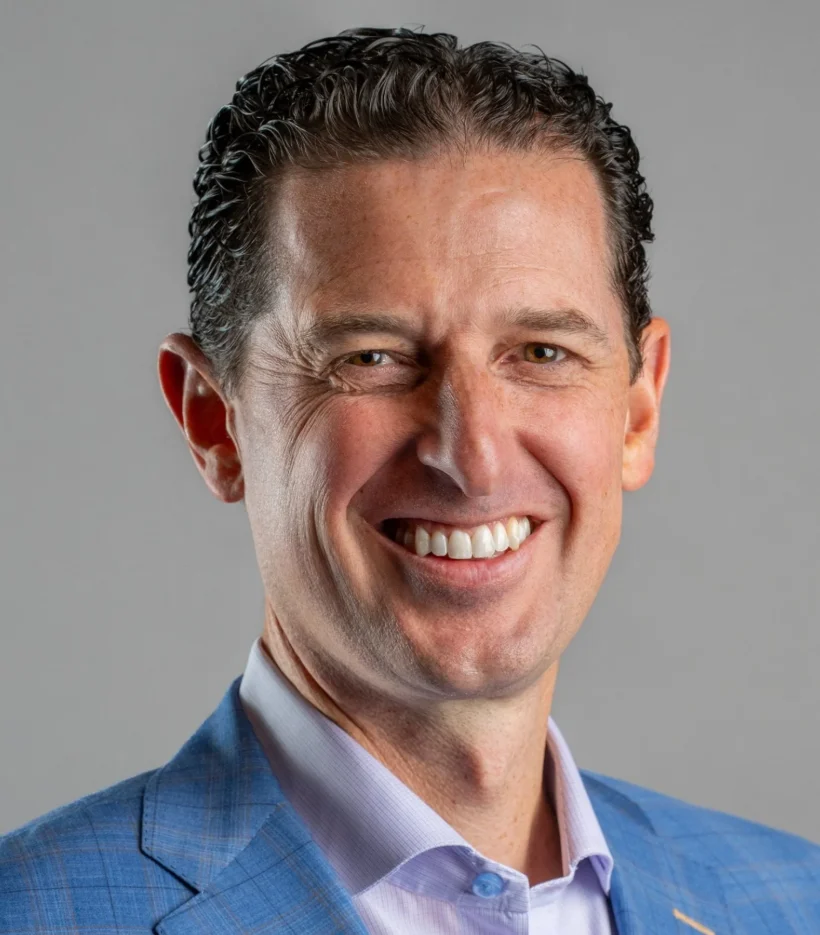
Eric Spindt
Eric Spindt is CEO of Commonwealth Financial Group, where he leads the firm’s strategic direction, mentors financial professionals, and advances the capabilities, infrastructure, and planning processes that distinguish the organization. Under his leadership, Commonwealth Financial Group has doubled both its advisor count and its geographic footprint across New England.
Eric is a CERTIFIED FINANCIAL PLANNER™ professional and Chartered Leadership Fellow®. He earned his bachelor’s degree from Brandeis University and is recognized for his commitment to leadership development, organizational culture, and special-needs advocacy. He chairs the board of Special Olympics Massachusetts and co-founded BioBall, a charitable basketball event that has raised millions of dollars since 2005.
Read the Webinar
Welcome and the Pursuit of Potential
All right, well, welcome. Welcome, everybody. We are going to go ahead and get up and running. Uh, I wanted to just say thank you to everybody for being here. If you're here and you've not put your location in the chat, we always want to see where you're, where you're coming to us from today, where you're joining from.
So put that location in there. Also, if you have the ability to turn on your camera, Eric's going to be giving a interactive presentation today. It's open for questions. The more we can see what's going on, the better. Obviously, if there's chaos going on in the background, we understand, but the more we can see your faces, the more we can interact, the more we can feel that feedback.
Ideally, we'd love for this to feel like were sitting together in, in a room all around the same table. So have your cameras on. Please feel free to put any questions you have in the chat. Also, don't feel bad interrupting. If you really have a question or there's something going on, either use the raise your hand feature, go ahead and wave at the camera.
We're going to be keeping an eye on that. But without further ado, we're going to get our day up and started here. So the first thing we want to really make sure that we talk about here is that this is the Executive Impact series, and this is our first one. And what we're going to be doing through this series is introducing individuals like yourself to individuals like us. So, starting with me.
My name is Kevin, spent, I'm the Chief Growth Officer here at The Pacific Institute. And what we want to be able to do is bring folks together like this in a room so that we can engage with the leaders on a unique platform of experts and leaders and thought leaders like yourselves. We want to have a session that features one of those successful CEOs, or an owner or a leader, somebody who's had a transformational experience and is going to walk us through that. And then we really want to focus on the insights from those individuals, focus on the strategies and the, the opportunities for personal and professional growth. So our first guest today, this one is a little bit, uh, particularly special for me.
I'm always interested in introducing our guests, but in this particular instance, I also get to introduce my big brother. So, Eric spent is going to be doing the presentation today. This is doubly special for me, partly because I shared a room with him for 14 years, but mostly because he's the person that introduced me to The Pacific Institute. So I did not know what The Pacific Institute was until he quite literally dragged me into a session. And he and Bob Gregor, who are in this room today can take full credit for me starting on this path.
So, without further ado, I'm going to stop sharing. I'm going to let Eric go ahead and share his screen, and I'm going to pass the presentation over to him for the next 55 minutes. Thanks, Kevin. Uh, welcome everybody. Um, I'm usually the one introducing you to, so can you see the screen?
Okay? Yep. So I guess you get to take a turn. Introducing me. So, um, welcome everybody.
I'm excited to share a little bit about my own journey with Pacific Institute and how I've used it in a number of different organizations that, um, I've been at, uh, and, and some of the impact it's had both on me personally, as well as the organization, uh, various organizations that I've been a part of. So, um, I'll dive right in. I'm not going to bury the lead. I will just tell you one of the most, if not the most impactful things I've ever been exposed to in my own leadership path is The Pacific Institute. So, um, that's a big, uh, opening, I suppose.
Hopefully I can give you some insight as to why that has been the case for me and why I think that's the case for a lot of people. But, uh, it has been nothing short of transformational for me and a lot of people in my firms that I've worked with in the past. So, I'll give you a little bit of a journey. I'll walk you through some of the specifics that I think have been impactful to, um, my firms, um, and the people in the firms. And then talk about some of the practical ways in which people can apply it in your business, uh, in your organizations, um, in a similar way to which, which I've done in mine.
As I said, feel free, as Kevin said, rather feel free to jump in if you have questions. You can stop me along the way or post 'em in the chat, and we'll, uh, we'll go from there. Uh, as I said, as Kevin said, rather, in 2006, I was introduced to Pacific Institute. He mentioned, uh, one of my good friends, Bob, Greg, who's on the screen. I was a young sales manager at the time in the financial services world.
I was fortunate that I had a ton of, um, confidence. I was raised with sort of an attitude of, um, we don't say the word ICA and apostrophe t And as I started leading people, I found
Back to top ↑Early Career Lessons and Personal Growth
that there's a lot of people around me that didn't have that same, that same thought pattern. And as a result, performance struggled. And I was trying to figure out why are people having such a challenge in their own self-confidence? It seems like such a natural thing to me. But, um, that was not the case that I was experiencing in the people that I was leading and or, or recruiting.
So I was introduced to The Pacific Institute. It immediately gave me a perspective into, well, how can I start to change people's lives? How can I lead in a different way? Um, that had almost immediate results. So in 2006, that's when I was introduced to The Pacific Institute.
Uh, my focus was on personal adoption of this myself, right? How do I apply these principles for myself and the people that I was directly leading in a sales management capacity? Um, and things worked really well. In 2011, I was able to move to Portland, Oregon, from Massachusetts. I got the chance to take over an office with MassMutual.
And as soon as I got into the office, uh, realized culture was something that was not as good as it needed to be. Performance was not as good as it needed to be. And the very first thing I did was, uh, spend a bunch of money, um, bringing my friend Bob into the organization to lead The Pacific Institute session for the firm. There, uh, it was, again, transformational for the people that was there. Almost immediately.
It helped me figure out who were the people that were going to get on the bus in the way that I wanted them to, who were the people that were not. And in the three years that I was in Oregon, we saw consistent and steady growth. Uh, not steady, but like significant at the rate of like 50%, 50%. Like it, it changed really, really quickly. When I moved back to Boston, I had the chance in 2014 to move back to Boston.
Uh, same thing happened, right? I had a leadership team. The office was a little more successful than the original one that I had in Oregon. Um, but the same sort of cultural undertones existed. And of course, 'cause it had worked for me many times before we instituted, uh, or we installed The Pacific Institute in my office in, in Boston.
Uh, having been here for a long enough time now and, and gone deep enough, um, we really started to, to be able to penetrate Pacific Institute, not just with the executives in the firm that I had, but all throughout the firm. And now having been here in, in, uh, in the Boston office that I'm in right now for a little over 10 years. Um, we apply it all throughout the firm today. So we have 150 advisors. We have another 75 staff.
Every single person in our firm goes through a Pacific Institute within the first six months of their onboarding. They go through it as many times as they want to. It is woven into everything that we do, uh, all throughout the firm. That impact, I think, is hugely important when it gets to all the changes that we all face in our businesses and how it prepares people to deal with change, uh, which I'll talk about all throughout the, uh, my session here. Couple things that are always present for me when I think back on the journey.
One is I received personal value from my learning or my involvement with The Pacific Institute. And then there was also organizational value. Both things were present. So early on for me, the personal value was I had huge growth, growth, financially growth as a, as a individual, uh, growth as a leader. Uh, this applied in every aspect of my life.
But the organization got was top performance, right? Every time I've put this in, an individual gets out of this. Their personal value is improved performance improves quality of life, improved relationships. Uh, what the organization gets is improved performance from that, from those people. When it's at the executive team, I think what happens is you're able to start to attract individuals with the culture, um, where their view is about potential, not just minimum performance.
The idea of, of exceeding expectations is exciting to me, rather than just performing at the bare bones minimum. And once we had a mindset, um, of potential seeking, uh, individuals, a culture got built around that. Uh, and that's what happens when you have leaders who also embrace this idea that culture drives personal value for everybody. We grow into the size of the container created by our organization that gave everybody that was in the organization significant, uh, personal value at the organizational level. The leadership team now has ability to lead with a common language.
Like there's common language all throughout the firm. There's consistency in the way we speak to the employees and the way we lead and the way we attract employees. And as a result, after all that organizations, even in times of real challenge, and I can share a couple of 'em, even in times of real challenge, the organization thrives. So to me, personal or, uh, Pacific Institute has an impact, both on the personal side and the business side. Both are connected as hopefully everybody knows.
Um, and that's been a little bit of my journey there with, with, uh, Pacific Institute. Here's what I learned, and here's
Back to top ↑Moving From Advisor to Leader
why I think this is applied. One of the things I loved about The Pacific Institute is that it was grounded in science. So everything that I learned and everything that we talk about is all grounded in, uh, logic and reason and science. There is no, uh, you know, sort of this just, uh, if I believe it, it'll happen. Like there's action that is required.
But action is all grounded in science. What we're all after, I think as leaders is human performance, like improved human performance. And there is an enormous amount of money that we probably all spend in whatever industry you're in on recruiting talent to try to find the best performance. There is another enormous amount of money that gets spent on training that is aimed at building skills, knowledge, and competency of the individuals in our organization. And for all the managers that I've talked to in, in my, in, you know, sort of my leadership journey, I find there's a steady tone of frustration.
I can't find enough good people, and they're not doing the things that I train them on. And therefore, I'm not getting the performance that is out there. IE I'm not reaching my potential. And what I learned to be true, uh, with The Pacific Institute was that the reason for that is that a person's performance is largely shaped by their own mindset. And if we don't have something aimed at their mindset, then they're just going to perform the only way they know how they're going to perform to the level that they've come to expect of themselves, no matter how well we train them, no matter how good the knowledge is, no.
How effective and, and, um, you know, meaningful. The, the training is if it's, if it's not aimed at a person's mindset, performance doesn't change. And what we know also is that a person's mindset has been shaped by their past experiences. And typically, uh, those experiences come from their community, their culture, their teachers, their parents. One of the things I learned through The Pacific Institute is the way we think about things.
Our emotional reaction to things is largely set by the time that we are seven or eight years old. And so if we wonder why our adult lives or our kids think or act a certain way, we have no further to look than in the mirror. Uh, and then we get to see exactly what's responsible for a lot of that stuff. So when people grew up in different environments or they had different, um, you know, sort of experiences that shapes a person's mindset, again, Kevin and I were really lucky. One of the mindsets that I got instilled into me was, we don't say the word ICA andro t it's just not a word I can even fathom uttering.
And so when faced with the challenge, I'm able to, I can do this, why can't I? There are lots of other people who are taught things like, don't set your goals too big. You know, you don't want to disappoint or don't try to reach too far, or any one of those other kinds of things that we'd refer to as a limiting belief. When that shows up in a person's mindset, uh, it ultimately shows up inside their performance. Once we learned how to change that, or once I learned how to change that, all of a sudden I was able to help, uh, drive significant performance by aiming some resources and, and coaching and training all around personal mindset.
And we do that through The Pacific Institute in a mindset process that is encompassing of self-talk, journaling affirmations, which for me were the most transformational thing and goal setting. And some of you may look at those words and go, really, the most transformational thing is an affirmation. And I would nod my head vigorously and say, yes. What's inside your head is this self-talk. And we have, I have learned that people perform exactly to the level that they see themselves.
So if you think of yourself as average performer, you will have a self-talk with an affirmation of that reality, and you will not break outside of that, out outside of that focus or outside of that, that, that container through a process of mindset that we've used in The Pacific Institute. All throughout my, uh, journey here. Um, we help people learn how to reframe some of their self-talk, how to use affirmations to change the way they think, and then ultimately change the way they perform. And when I've installed this in the organizations that I've been in, uh, literally it changes really fast. I've seen people do unbelievable things from a performance standpoint, from a health standpoint.
People that have struggled at, uh, whatever they were doing for a long, long time in their life, as soon as they rewire the way they think, their performance changes immediately. So if you're seeking really good, improved performance quickly, I would tell you this is probably the fastest way you could do it. If you can get people on board with thinking differently, then you can get people on board with performing, uh, entirely differently. Now, one of the things I learned, as much as our past experiences are shaped by community, culture, parents and teachers, that's what shapes our mindset. Those are probably the most significant factors in, in what a person brings to a company.
Back to top ↑The Role of Belief in Career Progression
As soon as a person has a boss, there's an outsized impact on what that person says in how a person performs. I've seen people come into a world where they have unbelievably positive thoughts, they're met with the boss that can be, uh, diminutive in the way they talk or micromanaging, and all of a sudden you'll see a person shrink. And I've seen the exact opposite happen. So that intersection point between a leader and an individual has a huge impact on a person's mindset and ultimately how they perform. So why is this important for any one of us?
Man, I like your a hundred percent thoughts that pop up there, little little lines. Um, why is this important for leaders? If you want to have people perform at a higher level, how we interact with them unbelievably changes how they ultimately perform. So at that point of impact, that leadership starts with what is a leader's mindset. I see a lot of leaders who want to surround themselves with people who are not as good as them for fear that they might be challenged, but that doesn't lead to great performance.
If you're a good leader, what you want around you is a lot of people who are really good. And so it's that that intersection point between a leader's mindset and an individual mindset where we get to make the biggest amount of change. And if you take an entire organization and my office that's 150 advisors with another 75 employees, that that whole ecosystem of leadership mindset versus, uh, personal mindset is what we call culture. The culture is comprised of how we communicate, how we design jobs for people. What are the systems, what's the structure?
And at mo at the most important, what's that intersection point between a leader and an individual? And all of this, a leader's mindset ultimately is shaped by a leadership philosophy. What is my philosophy about how I influence people, how I manage people, or how I lead people? And so this little title in the slide here said, these are the factors that drive human performance. I know that as we're all seeking improved performance in our companies or our communities, um, understanding how we help people think, how we use leadership to help people influence that mindset, those are the things that are most, uh, significant and ultimately change in the performance.
And if you think it takes a long time, it doesn't. I snap my fingers again, it's the same. It happens really fast. Performance change can happen extremely fast when that culture is comprised of the right kinds of leadership mindset type, um, that's grounded in the right type of leadership philosophy. I'll pause just to see if there are any questions, but I won't wait for too long and we can take 'em at the end.
Here's a philosophy that I know I have just around how people think and how it leads to performance. What I know is that a person's value system and their belief system influences their behaviors, and that ultimately influences their performance. And, and one of the thoughts, or one of the values or a system that could be instilled in a person is my effort makes no difference. Doesn't matter what I do, my effort makes no difference. What that will lead to is behaviors where you say, I'm only doing this because I have to.
I don't want to do it, but I have to do it. And that leads to a performance that's disengaged. That's a common outcome in an, in an organization we call these in, in The Pacific Institute vernacular. I call those limiting beliefs. What this does in an organization, if you have an entire culture that is of a value system that says, it doesn't matter what I do, it doesn't make a difference, I'm only doing these tasks because I have to, which ultimately leads to disengaged performance.
What you end up with is resistance to change. How would I change if nothing good is going to happen? And enormous overhead. If you're a business owner that cares about the bottom line, these are not good things, right? It's pretty easy.
On the flip side, you could have a value system that runs through your organization where people and everyone say, my effort does make a difference. Now, what this leads to is behaviors where people are performing them because they really want to, they wake up excited and say, I'm in. I want to do these things. What that leads to is performance that is engaged. We call these ones liberating beliefs.
And in an environment where there are more liberating beliefs than limiting beliefs, it drives innovation. It drives new ideas. Those are welcomed things. It enhances revenue that you find in all new places. And of course, if you're a leader of a business, well, those things matter, right?
You can't in the environment that we're in, have a resistance to change and expect to be successful. So what I think makes more sense is to engage in behaviors that drive those liberating beliefs, drive an engaged employee desire to, to work on things, um, and that'll lead to better results. Broadly speaking, what I learned was there are two
Back to top ↑Building Confidence Through Experience
types of cultures. One is what we'd refer to as adaptive or two as unap or constraining or defensive cultures. In these un constraining cultures, you're full of more limiting beliefs than liberating beliefs. And as I said before, this certainly creates overhead and change. But even worse, it drives some really toxic behaviors underneath the surface.
Things like focusing on blame. Who's at fault for when something went wrong? Image becomes more important than the actual substance. You're always trying to appear better so that you have a better standing inside the organization. And there's this just passive resistance to change.
The whole goal of an adaptive constraining decept or uh, defensive culture is to maintain the status quo. Change is bad. Like just maintain the status quo. Just sounds like a terrible environment to be in. I think of, uh, we've all probably been in them before, they're just not fun.
On the flip side is what we'd refer to as adaptive or engaging cultures, constructive cultures. This is a culture. Uh, and by the way, just a little preview, you can assess this stuff, right? This can be assessed. You could take an assessment, figure out what your culture is, where are there liberating beliefs, where are there limiting beliefs?
Uh, but in an adaptive culture, the whole ecosystem, the whole environment drives more liberating beliefs than limiting ones In this environment, the outcome, the behaviors are things like, as I said before, fostering of innovation. The emphasis is on personal responsibility and accountability, not as a punitive thing. We hear in our political world all the time, we gotta hold this person accountable, which is synonymous for saying we've gotta punish somebody. So people tend to have a resistance to accountability. When you have a positive, engaging, constructive type culture, personal responsibility and accountability are viewed as positive things, not punitive actions.
There's a value on performance. And ultimately we enhance and drive innovation. Now, I, at one point in my life, I certainly don't think this now, now all of these things a little bit sounded pollyannish. So if you're wondering like, um, why do I care about this? Why would it matter?
What are the results? Here's my answer to like, why does this matter as a business leader, why does it matter? Why does the culture actually matter? Can you quantify the value or the return on a good culture? And I think the answer to that is yes.
I saw this study a while ago. It's an old one, but I think it's an important one. And what the study shows is done by TER Heskett, they essentially studied a bunch of firms for what their cultural vent is. Are they adaptive or are they adaptive? What were they?
Those organizations that were deemed to be unap had revenue growth over an 11 year period of time that they were studying of 166% stock prices, as these were public companies, grew by 74 workforce opportunity, which I means just sort of expansion of the workforce grew by 36%. And the net income only grew by 1%. That's the un adaptive cultures. Why do I care? Just from a pure business standpoint, the adaptive cultures, in the same comparison time, those that were deemed to be adaptive had revenue growth of 682% stock price increase of 901% workforce expansion, which means opportunities for the people that are in the organization of 282.
And again, if you're an owner of a business, the thing you care the most about is the bottom line profit. It was 756 times more profitable than those that were deemed to be adaptive. That's huge. I didn't need to see any more than this to realize that you can make a significant financial difference on culture. A significant financial difference can be made with a mindset and a philosophical change that aligns more towards those liberating beliefs than those limiting beliefs.
This was enough for me. Again, just appealing to the business side alone. This was enough for me to, to understand how significant it was to lead an organization with a outcome aimed at those adaptive cultures. I'll pause for a moment before I go on any further. Any, any questions or thoughts here so far?
You guys are easy today. Here's the stages of how I would execute this in the various organizations that I've been in. And I'll give you sort of a journey. And first, if you look at this, uh, s-curve, I always get teased in my office about my s-curves because I think of, um, change, which is often heard as, oh, change is hard. Um, I'm not sure it's hard.
It might be hard at first. Uh, but it's not necessarily hard in the end. Change, any change curve starts with this dip at the bottom, right?
Back to top ↑Leading Teams Through Expectations and Trust
And so I always think of anything, I'm going to do something new. It's going to be a little step backwards. It's at the bottom of that s curve that people tend to experience a little bit of anxiety or change or frustration, or I don't like this. It feels new. Think of if you went to the gym for the first time in a long time, you feel stiff the next day you go, well, this is no good.
That doesn't feel good. I'll just stop going to the gym. That's what most people do. They go back to the thing where there was comfort. Yeah, if you push through the other side of the s-curve, that's when things start to grow eventually.
Uh, s-curve can only take you so far and you reached this point of plateau. Hence the reason to start another change. So the first s-curve that I embarked on all the time when was when I've seen this done, is you gotta get leadership. Buy-in. If you're the CEO of the firm, that means you, that means I'm in the sessions, even though I've done 'em a thousand times before.
I'm in the sessions in our set, in our firm now. I lead the sessions, I'm now licensed to deliver the sessions. So everybody knows if you're the CEO of the firm and you're spending time on it, it matters. So I lead the sessions, participation in the sessions model, the desired behaviors. Uh, those are things that if you don't have leadership buy-in, you don't have a chance of it working.
I've seen plenty of times where leaders provide it. The leadership team isn't there. And what ends up happening is the people who participate either really gravitate towards it and say, I don't belong in this organization. I'm going to take this great knowledge. I'm going to leave.
Or, um, it just doesn't go anywhere. Now, every time I've instituted this or installed this in the organizations, um, it sort of acts as a filter. The people who are drawn to this kind of message rise. Those that aren't quickly depart. So for me, this becomes a really easy tool in the beginning, uh, you know, to, to assess who's the right fit for the culture.
Who do I want on the bus, so to speak? There is a likelihood that people will not, you won't know who they are. You might have an idea, but there's a likelihood that you're going to have some personal, you know, personnel changes. I view that as a good thing. 'cause what it does is the people who stay are the ones that are totally bought in.
So step one to me is leadership. buy-in. Hey Eric. Yep. I'm sorry. Can I just ask you a question because this is, um, based on what you're talking about now.
So I'm sure it was maybe easier for you in Oregon because you were the CEO and that was it. And then transitioning back to Boston, you obviously had a partner. So talking about leadership, buy-in, like how did you, um, influence the ability to kind of lead that in the organization with the partner who wasn't part of this program before? Um, I would just tell you, I learned a statement the other day. I'm going to say it.
Um, Easy's never on the menu. So even though I was in Oregon and I was the final one on the, I was the final, um, decision maker, it was still hard. So, right. I like it hard. That makes it good.
Like good, hard is fun, but, um, your approach is different. When I was in Boston, the fir or in Oregon rather, the first thing I did was this. I didn't have any barriers to run through, right? In Boston. I waited a little bit longer.
I had to, I had to build some credibility first. I think when you're in a leadership role, sometimes you lead with positional power. I don't think that's the best position to lead from. Uh, sometimes you lead from credibility. I do think that's the best one to lead from.
So when I was in Boston, I established credibility by living these behaviors, by talking in this way. And that got enough of a groundswell that people were like, well, where did you talk? Like, what is it? This is different. And then when were able to introduce the program, it was, they were receptive to it.
So, um, at some point, if you have a partnership agreement or you have other people who are not bought into the firm, there's just sort of a, a decision point that needs to be made. I'm going in this direction, I don't care who falls and whatever happens, happens. That's what I did. Um, so I dunno if that answered your question, Adam. Thank you.
One of the things that I always tried to do in each of the organizations once we got deeper was leadership buy-in. We went through the programs, um, that were called thought patterns and any number of different things. Uh, but then we also did some cultural assessments. The cultural assessments are great. You can probably talk to Kevin or anybody at The Pacific Institute about those.
Hugely valuable. They're just assessment tools, um, that allow you to have some really honest, rigid introspection about yourself. I learned a while ago that all progress starts with the truth. And the truth was many times that I didn't have the culture that I wanted to have in order for us to achieve the success that we needed to have. And if I didn't have a way to see that, it was just going to take a long time to change.
Sometimes you gotta step on the scale if you want to figure out where I'm starting from in order to lose some weight, right? That's us stepping on the scale. So second thing we always did was a cultural assessment, um, rigid introspection. And in order to make some changes on whatever we found, we had to be, we willing to challenge some of the historical norms. I think that's really hard to do, but it is an important one to do.
Some of the things that got my firms
Back to top ↑Developing Resilient, High-Performing Teams
and probably yours to where you are today, may not be the things that get you to where you want to go next. These norms that you hold on as like, these were important things, uh, may not be the right activities to engage in moving forward. So the assessment tool allowed me to challenge those historical norms with some level of, again, science to say, Hey, this is not ideal. Here's what more ideal looks like for us. Uh, therefore we're going to rethink some of these things that have been done this way for a, for a real long time.
Once we had the cultural assessments, then we said, we're going to take it to the world, not just the leadership teams. Um, this was an organizational application. It was a sense of saying, how do we launch this throughout the firm? Change management, I think is the tagline saying, but it's a lot of change, right? If you're going to push all throughout the organization, you should expect a lot of things to change, especially if people embrace it.
And I believe change is a really good thing, especially if it's going in the direction of adaptive and, and, um, you know, those types of behaviors, liberating beliefs. Uh, and the other thing that happens is new leaders emerge. People that are drawn to this because they grow. All of a sudden you'll wake up and realize there are some new really talented people here who have bought on board. Uh, and that's really good.
So new leaders emerge that gives you a whole different set of a runway to grow. It's kind of like pruning the trees. You get rid of the dead wood, uh, the dead branches and new ones sprout. And that's what was happening inside my organization all the time. I have been shocked to see some of the people that were early in their career, twenties level, you know, mid twenties, who all of a sudden grabbed the material, unbelievably grew and are now in executive leadership positions in my office.
Hugely impactful ones. They do lots of big things. And people look at our team and say, how old are they? I'm the old guy in the room now. Like, how old are they?
Like, these are really talented people. Um, and a lot of that, I think I give, uh, a lot of credit to this as a framework to help people drive, um, you know, rapid growth in their, in their leadership career. Once we did the organizational application, now it's a matter of reinforcement, continued engagement from leadership is this. If this was something that I just did and said, all right, we did it that time and then we walked away, we would walk away too. The culture would walk away.
So continually looking for new ways to engage new methods of applications, um, in our firm, we sort of applied this to our core values. All of a sudden we, when we would think of core values, things like potential, right? Uh, no show up in our core values, okay, how do we, how do we foster that even more? Um, those are all things that we do. We, when we look at our, uh, reviews of employees, we assess them on some of those cultural values.
How much are they using the affirmation process? Uh, what are some of the self-talk that they have and what are they contributing to, um, in the organization? So weave this information into literally everything we do. And it's a reinforcement exercise, right? And then lastly, just repeat only forever.
Nonstop, always. This is the way of life. It's not a program that you do one time and then stop and the goal, yeah, I did that that time way back when. This for us, and I think the successful organizations that I've seen, it just becomes the way things are. And as, uh, I think my friend Bob told me one time, like, culture, the definition of culture is like, it's just the isness of the way things are done around here.
And if the isness of the way things are done is constant desire to change and seek potential, that's fun, right? You're just constantly repeating, you're constantly growing, um, into new heights, and you look behind you and you go, geez, I can't believe how I was thinking back then how were thinking back then compared to what we're, compared to what we're doing right now. So, if I think of the application, if you have not participated in any Pacific Institute stuff before, and you're figuring out where do I, where do I start and what can I expect? This gives you a little bit of a my journey of, of sort of a tactical application. Uh, it doesn't take, you know, I started this in 2006.
It doesn't take 18 years to see improvement. You'll see improvement in every single one of these s-curves along the way. Um, but it's a, uh, uh, hugely impactful, uh, journey at each one of these different stages. I'll give you one final thought as just sort of a, an example going back to my journey, and then we can open it up for questions, Kevin. Um, but I said before, like, this was my journey with Pacific Institute in a, in a broad sense in what I've observed.
As I said before, one of the most important things about The Pacific Institute that I took away from it was affirmations as a way to think. And when I was early in my career, I would see myself in front of all the situations, and there was these problems or challenges.
Back to top ↑Navigating Setbacks and Career Transitions
And sometimes I felt like I'm not, I'm not big enough for the challenge, right? I'm not big enough, uh, to congress to the, to overcome whatever the issue was. So for me, one of my affirmations early on was, I am bigger than the challenge in front of me. I don't care how big it is, I'm bigger than the challenge in front of me. And so that was the mindset that I drilled into my head every day, first thing in the morning.
And every night right before I went to bed, that was my self-talk that I wanted to put inside my head. I'm bigger than the challenge in front of me. What that allowed me to do was perform at a level higher than my peer group, right? The organization that I was at at the time got the benefit from my exceeded performance or my performance, um, exceeding expectations. But it always grounded in this like, I'm bigger than the challenge in front of me.
Doesn't matter how bad you know, you know, no ma no matter how big the challenge is. When I started leading with that and others heard it or felt it or saw it, others were drawn to that idea. Others that said, yeah, heart is fun. I'm excited to do big things. I only like to do things if they're big.
People are drawn to that. It's like a magnet. If you have a, um, you, you know, a an isness of the way you are those that share that are drawn to it. And that's what I was able to do. I was drawing leaders to this idea.
When we did that, the entire leadership team, the organizational value innovated, they got to do new things. When the leadership team says, we're bigger than the challenge in front of us, they do really big things. What that led to for me as just one of the many times in which were bigger than a challenge, things like covid, which were huge impacts. All of a sudden we spent our, we spent our entire careers. In my world in person, you go see people in person.
And just like that, were not able to work in, in person. We were told in the state of Massachusetts, you cannot go into your office. And so now you have a bunch, a bunch of people, people, uh, who like being around other individuals told you can't go engage. But because the organization said, we're bigger than any challenge in front of us, we thrived. And it actually, we grew at a level through covid.
Um, that completely transformed us, right? We quickly found our recovery point. Uh, I can point to lots of other scenarios where it felt like, um, the, the obstacle in front of us was way bigger than were. But if you walk around with the mindset of, I'm bigger than the challenge in front of me, and the organization adopts that, uh, challenges are not viewed as obstacles. They're just things to go over.
And you come out the other side in a, um, you know, in a manner in which you're, uh, in my case and, and in our case was, um, thriving, right? That's just one of the, I can't even count how many affirmations I've used, but if I draw, uh, you know, line back to some of the early thoughts I had all the way back to, to 2006 when I was introduced to these ideas, um, there's a lot of things that we're doing today as a firm that are innovative, that are different, that are positioning us to succeed in whatever challenging environment we're in, um, that are grounded in some of that basic self-talk and, and affirmations that, that, um, you know, arose early in early in my own career. I think that's the end there. I'll pause and see if anybody has any questions on anything I shared or applications on how they might use this in their firm. I'll stop sharing my screen, Kevin.
And, uh, I had a fair number of questions come directly to me through the chat, which I'll share, but I want to give everybody here the opportunity to ask any questions. First. Eric, I have a question. Um, who do you, do you have everybody do this? Advisors and management?
And then the, the second part of that, like how, uh, when you implemented it right before somebody's hired, or oh, let's say they're already on your team for years, like how do you engage? Yeah, we, so the short answer is at this stage, everybody in the firm goes through this. We started with our leadership team and then we moved our way into the next level of leadership, and then we started opening it to everybody. So, um, we do have it for everybody in the firm. Uh, we run sessions twice a year.
They usually have 35 people in 'em. We let people, people come back to 'em a second, a third, a fifth, a 10th time. Like they, uh, and every time they come, they learn something different about themselves. They hear a different piece of information. It goes like, it's like an onion.
You keep peeling the layers back. There's more there. Uh, 'cause what we're talking about is a person's mind. So yeah, there's plenty to work with in between the ears. Um, and so we do it with everybody.
We've opened it up for people's, uh, spouses and kids. I've had kids come, I've had spouses come. Um, and as a benefit, if you think of it that way, we have employees that are like, I can't believe that you'll let my family come in and learn this stuff. That they then get to go apply in, in their, um, in their organization or their family. So yeah, when we, when I think of improving a person's mindset, I'm not just thinking of it
Back to top ↑Growth, Responsibility, and Organizational Leadership
as what's their work mindset. I know I'm only going to get the best version of themselves if that, and, and what we want is the best version of their entire self, not just their work self. Right? If we, if we're just focused on one. So, um, the, the long answer van, yes, we do that with everybody in the firm.
We started with leadership first. I needed buy in from the key people that were going to be influenced. I'm going to figure out who I wanted on the bus. Um, and then we, uh, and then over time, we just kept finding ways to reinforce it throughout, throughout the organization. Awesome.
Thank you. And so when you do it, you do it twice a year. Like what, what's the setup? How does that look like? What's the structure of it?
Early on, before I knew what the heck I was doing, I would just hire someone to come in. And if you're asking yourself like, how much does this cost? The answer is how much would you pay for the kind of performance that you get at 756% better than the wrong cultures? The answer is like, I've spent enormous amounts of money, and it's worth every penny. It doesn't, I I would spend twice as much and still think it's worth every penny.
So early on, you hire, we did it, uh, in person. I thought there was value in doing it in person. We bring someone in to facilitate it was, uh, typically a two day session. If you're thinking, how do I give up two days of my life or somebody's work output? The answer is again, how much would you give up to have the best performing culture that you could possibly have?
That's like the easiest, uh, you know, if you believed it's going to work, which I knew it did. Um, that was the easiest thing to, to go solve for. So two days session and then, you know, managers, it was like reinforcing with the, with the leadership. So, um, over time, um, I learned to facilitate the information myself rather than having to try to juggle schedules around. Uh, I went and got licensed to deliver the content myself.
And now we have several people in our firm who are licensed to deliver the facilitation. Um, and we do it all internally. Now, What motivated you to get licensed? I know it wasn't just to save money. I was always curious about like, well, how could we, how could we do it even more?
Right? How could I do it even more? There was a limitation on how many times I could bring anybody in or how many times how much I could afford. But it was also, um, it wa you're correct. It wasn't just the money.
'cause the money's well worth it, even if I wasn't doing it. The most valuable thing. I think anybody who's in a senior leadership position thing, you know, ha is their own time. And so I felt like if I was the one delivering it, it was a statement of how important it was. And so that was really easy.
I got licensed because I wanted to show the organization how important it was that I was going to spend the time to do it. Uh, and that made it really clear. Like, you're either, if you're on the bus, you're doing it. If you're not on the bus, like that's okay. You just, it's not okay to be here.
Very cool. I mean, not trying to blow smoke Eric, but thank you for your leadership. This is awesome. And all the work you do on the GA stuff is awesome too. Thank you.
Thanks. Appreciate it. It's also one of those, if you really want to internalize new information, teach it. Mm-Hmm. So when Eric took that option, he was internalizing it even more and that just made it even stickier.
So even if you don't go the route of getting trained as a facilitator to do that, being involved more frequently, you become a co-facilitator, you become in charge of your breakouts. And when you're then sharing that content, you're internalizing such a tremendous way that it's others. It, it allows others to see you modeling. And that was one of the things Eric talked about with modeling behavior. Cool.
Kevin, I'm glad I accepted this. Uh, invite. I, I thought it was spam 'cause it was like case. I was like, did somebody go through Eric's email? And I was like, oh no, I, I know the other people on this invite.
So thank you guys. Appreciate it. Yeah. So hopefully it didn't fall into the category of spam. I had a few more questions that came in that I'll share, but I wanted to still keep this open for group questions.
So one of the questions was actually on that topic of modeling, uh, Eric, it was asked, how did you model the type of behavior early on when it wasn't, you know, when it was, when it was still new to your firms? I mean, some of it was just, I would talk about affirmations. That was one of the things I would talk about, self-talk. When I would hear somebody say something that sounded to me like a limiting belief, I would ask them, that sounds like a limiting belief. What if we had a different thought?
What if we replaced what you're thinking, uh, with a different thought? Do you think you'd have a different outcome? So you know, all of the specifics of, um, how to apply, you're going to learn in the curriculum, you're going to learn in the material. And I was, um, I was really quick to say, well, I'm just going to assimilate this and make this part of what I do. It's going to be the way I talk to people.
Uh, it's going to be the way I interact with people. And therefore, you know, you learn in the material,
Back to top ↑Turning Potential Into Consistent Performance
your reticular, your reticular activating system, which is what pays attention to things out there. It's like, it was on for limiting beliefs. I was attuned very well. Like, oh, I just heard something that sounded like I can't do it. And that's not the way we talk around here.
So, um, that, that was a, you know, you'll, you'll, you'll sort of know it when you see it as soon as you get to material, as soon as it's absorbed and, and, um, internalized. I don't even, there's countless ways to go do it. I would talk about affirmations all the time. Uh, I would talk about self-talk all the time and still do, um, you know, one of the exercises is a rubber band. Wear the rubber band on my wrist.
It's like, Hey, I, uh, had a negative thought. There it is. So they just sort of see you, um, you know, living and, and acting in that, in that capacity. There are questions before I read down my list, right? One of the other ones that came in is when you first rolled this out at the different stages in different offices, where did you first see the resistance from the other individuals that work with you?
Or how? Um, in people's lack of behavior lack of change? Every time I've done this, I'm trying to think back. The, the ones that obviously stand out more are the people who embraced it immediately. And I think I did my first session out in Oregon, um, Bob's on the phone or on the zoom screen here, a laughing because who knows what I'm going to say.
It was like maybe a half hour into the first day of the session. And I had a woman on our team jump up and run out of the room in tears. And I was like, oh my God, this is not going well. This is really bad. Uh, and when she came back in, Bob being the great facilitator that he is, said, you okay?
And she said, I just realized I've been under reliving my potential and this is the day that you know, it, it changes. And so like that, that like, those are the positive ones. I saw lots of other people that just shied away from stuff. They just stopped showing up. All of a sudden they felt uncomfortable.
And I was like, that was pretty easy. So it like, and then, and then you walk away from 'em. Like, it became really easy to see who wasn't on, especially because you could see so much more clearly who was on, right? This woman was certainly in, and by the way, she's gone on to do some unbelievably successful things, grown into potential. It's phenomenal.
I still get notes from her every now and then, uh, that, that are, Hey, this is what I did next. I still remember that first session. You know, um, those are all really positive things. It's the absence of that that just becomes glaringly obvious, which is, which is amazing. Any others?
There's one more question that came in that I want to share. So the one last question that would came in is for various different stages of somebody's career. So whether they're an advisor today or whether they're a manager today or whether they're a ga today, what would you recommend is the first step for somebody if they wanted to try to kind of go down the same type of a path that you've been on, Go through the program. I mean, that one's like easy, right? You only start by starting, you know, like, it seems so simple to me.
Uh, the answer is like, start right, get exposure to something. If, here's what I would say maybe with a less flippant answer is, um, there have been plenty of times in my own life, I'm sure this is for everybody, where you feel like you're right there on the edge of success. Like it's there, but you keep, feel like you're bumping up against something. If you've ever felt like that or feel like that now, like the potential's on the other side of the door, you just have to go through it and this is the way to go through it. Like that's, it's that simple.
So the short answer and the flippant answer is like, just go through the program and then you'll either go, oh my gosh, now I see the pathway. And it doesn't make it easy. You know, I have a, I have a pop socket, which makes me, uh, more relatable to my teenagers. But on the pop socket, what it says is, um, affirmation without action is delusion. So you can't just like say it and do nothing.
Like you gottact, you gotta do something. Um, but it all starts with like, the something to go do is, is uh, like go through the program, like get in, get into it, and then start leading with it and fully embrace it. It's less about the program, more just the mindset that comes from it. So, I mean, really simple, like start, go to the first session, it's really easy. One additional question that came in from manual, I put in the chat there for you that just said, can you share one or two stories from tough moments or situations you faced and then what you learned from TPI to prepare you?
What was the question? Ask it again. Sorry, I broke up. I put it right in the chat there. It says, can you share one or two stories from the toughest moments or situations you've faced and how you learn how what you learned from TPI prepared you to make tougher decisions.
Back to top ↑Leadership Lessons From the Journey
Here's probably one of the biggest challenges. I think. Um, if you go through the material, you're going to grow. If you embrace it, you're going to grow, you're going to thrive, you're going to grow. There's, it's, it's, um, either that or you're not.
Like there, there, there is no middle ground. And there have been people in my life who have gone through the program, either in my companies or in my personal life where I was growing. Like the option of growing or not was like not wasn't on the table. And when those that were around me chose not to, there was tension. And sometimes those are really good humans that I love.
Personal friends who worked with me and like having that conversation with them that was like, you're not growing, you're not on board. The further that gap got, not in like financial success, but in sort of a mindset, the further away they got from right for the organization, that's hard. I've seen lots of people that they stick with, people that they're loyal to or that they're, um, you know, that, that they, uh, you know, that they care about personally and they sort of make excuses for them. And how did the programs help me? Like my mindset was like, I'm bigger than the problem in front of me.
This is a big problem. The organization is what I'm responsible for. Stewarding the decision is easy. I love you to death, but you just can't stay here and it's time for us to part ways. I'll help you get to a new recovery point.
Every single time I've had that discussion, I was able to find a recovery point in our organization that afterwards it was like, why didn't I do that sooner? What was wrong with me? Why didn't I do that? Why didn't I do that sooner? So that's the hardest thing is the personal friction or tension I think when you're growing and those around you may not be growing as quickly.
Um, that's probably the hardest thing. Good answer. I thought it was a good one. Yeah. You know, we'll compliment the answers.
Uh, is there anybody else here that has any questions? We've got just a couple more minutes. I want to make sure we have everybody an opportunity outside of Manny giving you the applause. So here's where we're going to go from here. First of all, Eric, thank you very much.
It seems like everybody was pretty darn engaged. Uh, I have to admit, just a twinge of jealousy. Perhaps they were more engaged than when I talk, but if you'd like to engage with us as an organization moving forward, this is how to do so. So number one, there's going to be a survey that's on that QR code. We value feedback.
I'm going to steal this line from Eric. All feedback is a gift, even if you want to return the gift sometimes, but we do really value that. There's also the opportunity for how to engage with us moving forward. So if you are curious about how to take that first step, if you're curious about the assessment process, if you're curious about what it looks like to be involved with us, or if you just want to set up a meeting to discuss, please scan that QR code. I'm also going to send an email.
So if you are not feeling like you want to deal with technology today, don't sweat it. Everybody who attended this meeting today is going to get an email from me in just a couple of minutes. We wi, we did record the session, so anybody who would like a copy of that, just let us know. We'll put that in the message. And, uh, other than that, I'm going to stick around till the top of the hour, I think Eric will as well.
But thank you everybody for being here, being here on time, giving Eric your undivided attention. And I sincerely hope that I see many of you moving forward. Here's a shameless promotion. We have a beyond limit session on December 6th that yours truly will be hosting. So if you've not yet registered for that, I'm going to put a link in that email as well.
But Eric, thank you again for a wonderful engaging presentation. And thank you everybody here for being here. We're going to stick around for just a couple more minutes, but thank you and have a wonderful weekend. Thanks everybody. Eric, thank you.
Appreciate it. Good Work spent. I know that. No, Thank you. I know who he's talking to.
Bull Spence, B Rob, Bull, Spence, bold, Spence, Bravo, Bravo B. Rob's probably like surfing right now while taking the call. I don't know about surfing, but you know, multitasking. There You Go. Good to see some of my math mutual, uh, GA's on this call.
And I'll be presenting this set at my next committee on how we can add this to our, uh, leadership development. Yeah, Jimmy. DI, I already apologized to Kevin. I I didn't realize I was, I was messaging something AI this whole time, so I'm dropping like, love and apology and forgiveness requests to Kevin because he told me about this years ago. Then Brandy tells me about it and then Julie says, you better do it.
And then I'm finally on the call and I'm like, okay, like single point of failure in seven months when Shelly retires. So if I don't do it, like I'm the idiot. So we, we have to do it. And, uh, I sent a note.
Back to top ↑Questions, Reflections, and Closing Remarks
I already did the QR code, so we'll connect later. But just super thankful and um, you know, I'll send you our kickoff meeting dates in case that's a place to kind of talk about, Hey, she's retiring. There's a big message on that, like, this is where we're going and how we're going to get there around potential. And so I'll message you guys separately. Outstanding.
Awesome. Happy weekend. Happy weekend. Thanks guys. Thanks guys.
See you all. See you guys. Think we're down to just the last couple. Thank you. Thank you much.
And Eric, if you're still on Eric Mason, that is, or uh, uh, Manson that is. Yes, we did record and we'll send you a copy. Cool. All right. I'll jump off.
I will let you do that. I'm going to go ahead and hang up and end it. Eric, thanks again. My pleasure. We'll see.
All right.
Back to top ↑