Starting Culture Work at the Top: Clarity. Alignment. Executive Momentum.
April 3, 2026
Culture change rarely stalls because leaders lack another strategy or system. More often, the executive team has not yet achieved the clarity and alignment required to move together. In this Beyond Limits Executive Briefing, Richard Resnick and Kevin Spindt examine how culture work begins at the top and how leaders can identify the right first step toward sustained transformation.
Creating Clarity and Alignment Before Culture Work Expands
This session offers a practical framework for diagnosing what is happening beneath the surface of an executive team. Richard Resnick and Kevin Spindt distinguish between a need for greater clarity and a need for stronger alignment—two different conditions that require different starting points.
The briefing explores confidential executive interviews, blind spots, belief patterns, structured alignment conversations, and the movement from insight to shared commitment. The goal is to help leadership teams create the executive momentum required for culture and leadership-development work to take hold across the organization.
What You Will Take Away
Clarify the Right Starting Point
Determine whether an executive team first needs deeper clarity or stronger alignment.
Surface Hidden Constraints
Use structured conversations and confidential interviews to reveal patterns affecting trust, performance, and execution.
Align Leadership Beliefs
Create greater consistency by making hidden assumptions and competing interpretations visible.
Build Executive Momentum
Move from insight toward shared commitment and a disciplined first step for sustained culture change.
Starting Culture Work at the Top: Clarity. Alignment. Executive Momentum.
Use the controls in the player to enable captions, adjust playback, or enter full-screen mode.
Tip: Select the full-screen icon in the lower-right corner of the player for the best viewing experience.
Executive Clarity, Alignment, and Culture Change
These answers summarize the central ideas presented in the briefing.
Why should culture work begin with the executive team?
Senior leaders shape the beliefs, decisions, and behaviors that are reinforced throughout the organization. If the executive team is unclear or misaligned, broader culture initiatives will struggle to gain credibility and momentum.
What is the difference between executive clarity and executive alignment?
Clarity is a shared understanding of what is happening, what matters, and what the organization is trying to achieve. Alignment means leaders are prepared to support the same direction through consistent decisions and behavior.
How can leaders tell whether the team needs clarity or alignment?
A team may need clarity when leaders hold incomplete or conflicting interpretations of the situation. It may need alignment when the facts are understood but commitment, priorities, or behavior remain inconsistent.
What do confidential executive interviews accomplish?
Confidential interviews allow leaders to speak candidly about patterns, tensions, assumptions, and concerns. When the themes are combined, the team can see systemic issues that may be difficult to recognize from inside the group.
Why are blind spots important in culture work?
Blind spots allow unspoken beliefs and repeated behavior to continue without examination. Making those patterns visible creates an opportunity for more intentional leadership choices.
How does belief alignment at the top affect the wider organization?
When executives share a coherent understanding and reinforce consistent expectations, employees receive clearer signals about priorities, behavior, and decision-making.
What creates executive momentum after the initial diagnosis?
Momentum comes from converting insight into explicit commitments, assigning ownership, reinforcing the same leadership expectations, and taking a visible first action that demonstrates the team is moving together.

Richard Resnick
Richard Resnick is CEO of The Pacific Institute, where he leads the organization’s work helping individuals, leaders, and teams create lasting change through belief-driven performance and culture. He brings more than two decades of executive leadership experience across technology, healthcare, life sciences, and data analytics.
Before joining The Pacific Institute, Richard led multiple venture-backed organizations, including Cureatr and GQ Life Sciences, and earlier served in executive roles spanning bioinformatics, genomics, and software. He began his career working on the Human Genome Project at MIT’s Whitehead Institute and holds an MBA from the MIT Sloan School of Management, an M.S. in computer science from Worcester Polytechnic Institute, and a B.S. in computer science from the University of Massachusetts Amherst.
Kevin Spindt
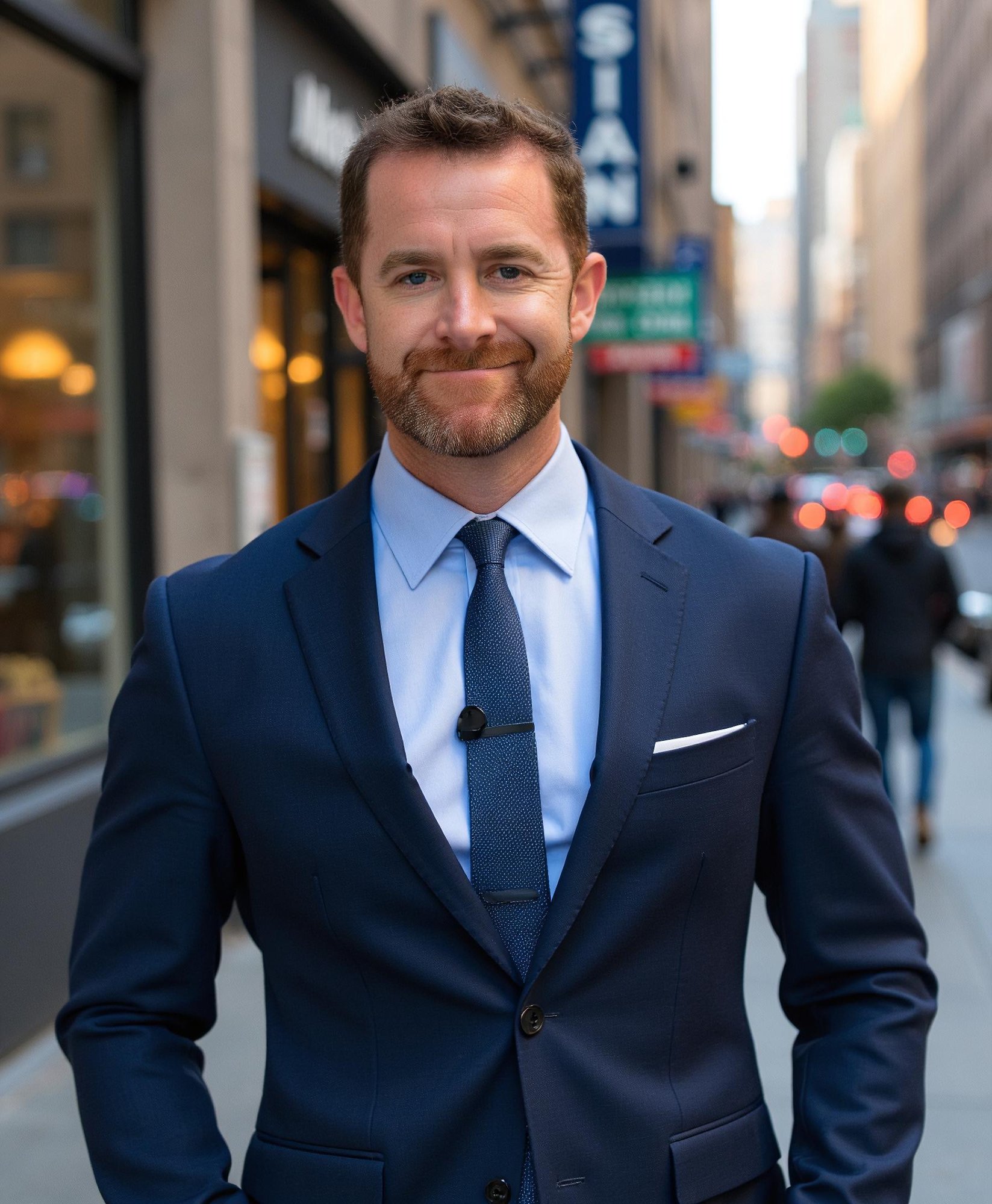
Kevin Spindt is Chief Growth Officer at The Pacific Institute, where he helps individuals, leaders, teams, and organizations unlock greater potential and achieve sustainable growth. His background spans performance and leadership development, professional training, communication, and organizational effectiveness.
Kevin works with business owners, executives, and professionals to strengthen leadership capability, improve performance, and address the beliefs and behaviors that shape workplace culture and business results. His approach combines practical strategy with a focus on the mindset shifts needed to create lasting personal and organizational change.
Read the Webinar
Welcome and Why Culture Work Starts at the Top
Welcome to another session of Beyond Limitss. Raise your hand or put a thumbs up in the chat if you have been to Beyond Limitss before. If this is not your first time, welcome back. Thank you for coming here. If this is your first time coming here, put something in the chat, raise your hand, wave at us if this is your first time here.
And for those of you that just did that, welcome. What we do during these sessions is we do this on the first Friday of every month, and this is a monthly conversation that we host. Our goal is to get leaders into a room in a setting like this, fundamentally, individuals that want to think differently about the work that they do. We're not here to give you a sales pitch. This is not going to be a product demonstration.
This is designed to be an honest conversation about the things that are actually driving performance in the real world, and what's driving actual cultures, and what's going on inside of organizations. So we're hoping to be able to share that with you. So each month, first Friday of every month, we will bring a new topic, a new perspective, a real-life experience from the work that we do every day, and hopefully, we can share some of the things we've been doing with those individuals and teams from all around the country and the world. And then the best part about these sessions is what comes from you, the participation, the answers that you put in the chat, the feedback that you give to us, your willingness to laugh at the jokes that Richard and I are inevitably going to make. So today, we're going to talk about culture, and we're going to talk about where that culture work starts, why most organizations have a tendency to make the wrong first move, and the goal is by the end of what is now 55 more minutes of our day today, hopefully you'll walk away with at least one thing that you can take back and use with your team right away.
Hopefully, it's more than just one, but hopefully at least one thing that you can take back, put into action right away, or at the very least, have a new thought running between your right ear and your left that might spark a new action. So as you've done any work with us before, you know that we have a belief that all humans, all teams, all organizations, every single one of us is built perfectly for the results that we're getting right now. We are following a perfect recipe to get us exactly where we are right now, and if we're completely 1,110% happy with where we are, we should change nothing. We should keep doing exactly what we're doing. But if we're looking for more, and more can mean a variety of different things.
More can mean more growth personally and professionally. It can mean more alignment with ourselves, our team, our goals, our beliefs, more energy. That tends to come in pretty handy as somebody with an early bedtime. Innovation, ideas, use of any number of different technologies, returns, if those things are important. Bottom line, every single bit of this is all going to start with the way that you think.
It's going to start with that message that's running between your right ear and your left all the time that guides your actions. So what we believe at The Pacific Institute is we can help people unlock their ability to think differently, to change that conversation that's happening in their head. And when the conversation changes, the automatic actions change, and it allows individuals to hopefully be able to create the future that they want with intention. So doing so by design and not by default. So whether you've landed where you've landed today because of absolute intent or whether it's completely by accident, the goal of doing things moving forward should be by design, and that's exactly what we want to do.
And it starts with the individual. It starts with the human being and the beating heart that is each and every one of us. Our founder, Lou Tice, said this 55 years ago now, "All meaningful and lasting change starts on the inside, and it works its way out." So the first thing I want to do is I want to know what's going on in the inside. This is my favorite part of every session. This is what we call Tell Me Something Good.
Tell me something good. And this is where I'm going to ask you to put something in the chat, absolutely anything at all that is going on that is good in the world. I want you to turn on your awareness. I want you to prime your mindset for learning. Set a constructive tone for the session, and as always, I will go first.
My something good is I was watching "Inside the NFL" yesterday, and Dan Orlovsky's son, who's autistic and is a giant Eagles fan, go Birds, did an absolutely wonderful job of speaking a message of positivity and optimism for the autism community on a global stage. I was in tears. It was the highlight of my entire day. If you haven't seen it, look it up. That's my something good, but let's hear what else is something good that's going
Back to top ↑The Difference Between Clarity and Alignment
on. This is in the chat, Kevin? Yeah. Put those answers in the chat. Kathleen leads the way with March Madness, and if you just so happen to be one of the right teams, the right places, that can be awfully exciting.
Richard's got a good one. I think that's a great one. Kid coming to town. Baseball's back up and running, although if you're here in San Diego and a fan of the Padres, the season hasn't quite yet started, right? Hockey playoffs are coming.
Basketball playoffs are coming. We got five or six games left in the NBA season. Grandkids are healthy and doing awesome. Would you look at that? There's some good stuff going on.
Family vacation to Cancun. Chickens are laying eggs. Richard, we got a lot of good stuff going on. Spring has sprung. The tulips have risen.
Everybody's having good weather, and hopefully everybody's off to a good weekend. So why do we do this? We do this because nobody is in a worse mood. It doesn't take any time for us to be a human for 90 seconds, for two minutes, to think of all the things that are good that are going on in the world, and this is one activity that I happen to like doing a heck of a lot better than I like turning on the news. So thank you for participating in something good.
Please use this as an activity that you can bring back with your teams, with your family. Wouldn't this be an interesting way to start the next family dinner? But if we can prime our minds to think about the things that are good, it allows us to find other positivity in the world, and that's what we're looking for. So our stage today is hopefully primed. Hopefully, we're looking for the positivity, but what we're going to talk about today is what's really happening inside of executive teams and the work that we do with those executive teams, the private and one-on-one conversations that we have.Why the first move is a little bit more critical than a lot of owners and leaders recognize, how to diagnose what's driving friction at the top.
And we mean social friction, not intellectual friction. Intellectual friction is good. Executive teams should be able to disagree with one another, but there should not be social friction when they do so. And then we're going to talk about the starting point that we recommend the most. So we'll do a slight deviation today.
You normally get a healthy dose of yours truly, but today you're going to get a little bit of Richard as well. My name is Kevin. I'm the Chief Growth Officer here at The Pacific Institute. I deal with a lot of organizations that are looking to expand to grow, and what I want to share with you is some of the things that I am seeing when I'm having these discussions, when I'm meeting with these organizations. Richard's going to tell you a little bit about what he's hearing when we get under the hood and we have these conversations with the organizations directly.
So the first thing that we're recognizing is everybody's growing, organizations are growing, transitioning, and navigating more complexity than ever before. I'll just put a little dot next to AI and pretend like that's a tiny issue that we all have to navigate, when in reality it's a tsunami that we're all preparing for. But in addition to AI and other automation, there's a lot more that's going on. The pace of change is happening faster than ever, and organizations and leaders are being asked to do more than they ever have. And it's almost never that strategy is the problem.
Our good friend Don Schmenke says that when he does autopsies of dead organizations, they always have a strategy firmly grasped in their hands. They just didn't follow it. So the strategy is almost never the issue. It's just that the execution feels heavier and slower than it ever has before. We're being asked to change faster, but suddenly the oil tanker won't change directions.
So leaders are left being busy but still feeling like something is just plain off, like things just aren't quite going right. And the teams that are pulling ahead are the ones that have a crystal clear vision about what's in front of them, and that's what we're seeing over and over and over in discovery phone calls, in initial meetings when we first sit down with organizations. When we sit down and we actually do the work, though, and we look under the hood, Richard starts hearing some completely different things. Richard, what are those? Hey, everybody.
Thanks, Kevin. Great intro as always. So first of all, I'm a repeat CEO. I've run five companies, so I've been on five executive teams, actually seven executive teams, five as a CEO. And you start to see patterns.
You really start to see patterns everywhere. And I'm talking everywhere, including at times here at The Pacific Institute. So the first thing that I would say is that executives, when you talk to them, they're always willing to tell you that they're on an incredible team. Like, "This is the best team. So pleased with all the people with whom I work.
I couldn't imagine being in a better place. I love my CEO." But then beneath that,
Back to top ↑Recognizing the Real Executive-Level Constraint
there's almost always some sort of a friction that isn't being named, but everyone is aware of it, we're just not talking about it. Does this resonate with anybody who's ever been on an executive team? There's a great big fat elephant in the room, and we're just not going to talk about it. We're going to stay on this incredible team and stay at the surface. Also, what you end up discovering is at the core, speaking the language of TPI, what you're really dealing with are the individual beliefs of the humans about what is right and wrong, what we should expect from each other, what we should hold each other accountable for.
And then that sort of failure to have outright debate ends up being in the classic five dysfunctions of a team world where you stop trusting. You can't really have honest conflict because you don't trust each other. And by honest conflict, I don't mean, "Cheryl, I'm so mad at you because of the thing that you said." No, it's conflict about the actual ideas, about our strategy, about our tactics to execute those things. We should argue about that because, as you know, we all have scotomas, we all have blind spots, so we have to argue about this all the time. If you don't have good conflict, you can't generate really great clarity around a path forward, a committed path forward.
You can't hold each other accountable. You don't produce results. And it's all because we're all on the greatest team, and we don't want to really hurt anybody else's feelings. So how do we change, right? That's the question, and I think I pass this ball back to you, my friend Kevin.
So the primary step that we want to take is we want to hear from you first. We know what we're seeing. We know what we're hearing. We know the things that are going on, but we want to hear a little bit from you. So what I'm going to ask everybody to do is open up the chat, and we've got a couple of questions for you.
I'm going to give you maybe 90 seconds or two minutes on each one of these. But first question that we want to hear is, what's one thing about your organization that you're genuinely proud of? And yep, we're right here again. Something good. But now we're going to tell me something good about your organization.
What's something that you're actually genuinely proud about? Take a minute to write that up. Put that in the chat. Remember, typos are encouraged, so don't feel bad if you have any. Nice.
Ooh, there's good stuff going here. Mm-hmm. I noticed in some cases, it's just like employee retention, commitment, committed, energized coworkers. In other cases, it's about change. It's about improving culturally or changing something about ourselves, the way that our services offerings are growing, that sort of thing.
That's interesting to me. I think it's pretty glaring not one person said, "Our compensation plan." Mm-hmm. Are you trying to tell me something? Were the breadcrumbs not obvious enough? But we talk about the things that we're proud of, and most people, if they answer the question, why do they go to work, might incorrectly say for a paycheck.
But it's not what we're proud of. Good stuff going here. The second question that we have for you, moving on to question number two, is the flip side of that coin. I don't have a "tell me something bad" song to play for this, but what's something that frustrates you or slows your team down? What's got you a little bit annoyed?
Back to top ↑What Confidential Executive Interviews Reveal
Mm-hmm. Thanks, Lee. Good one, Evan. I like the air quotes around "looking good." That's really good. The need to look smart.
The need to always have the answer. I like that lack of willingness. Yeah, I was looking at that one, too. I'm surprised nobody's put the word attitude in here yet. There's a big theme around slowness to change, reluctance to change, unwillingness to change, when change is the only thing that's constant.
That must be frustrating. If you have the good fortune of working with our consulting team and Cheryl Hicks, you have the tools to work through that constant change. Instead of waiting for the disruption to end, you just have a motor to power you through it. Thanks, Cheryl. Failure to assume good intent.
Ugh, Lee, I feel you, and I'm so sorry. I'm going to leave that as the mic drop moment as I go into our third question here, which is, think about the team that you're on. Richard does a good job of describing this, where you share the same boss. That team. What's an unwritten rule or pattern or quirk that everybody knows but nobody ever officially talks about?
What's the unwritten, "This is how we do things around here" that nobody officially talks about? Austin, you got it. Kevin, that's good. Kevin, that's really a TPI accuracy, right? For sure.
We're seeing some good stuff there. Not confronting poor behavior. The unwritten rule, always check your back. Don't talk about rent. We don't talk about Bruno.
Good one, Cheryl. Yeah, hesitancy to challenge the status quo. We see that one a lot, and we're a 55-year-old organization. We can't do things exactly the same way we did in 1971. Ed, speaking on behalf of a client here who will remain unnamed, but I'm typing, we can't fail the boss.
Don't say no, ever. Say yes and rattle the people underneath you. Starting to see an awful lot of theme today around the things that we're proud of do have to do with growth. Things that we're frustrated by are a lack of growth.There even seems to be an unwritten rule that says staying where we are is okay. Interesting.
But as we move on, we recognize when something's off. We know what we're proud of. We can recognize these unspoken things. We can tell where that kind of fork in the road is when things don't feel quite right. We know what that off feeling
Back to top ↑Surfacing Patterns Beneath Strategy and Structure
is. So when we do have that feeling, when we can tell that it's a little bit off, what's your first instinct? What do you typically feel inclined to do? What is your first automatic action when something feels off? Mm-hmm.
I think we're going to see all the DiSC profile styles show up real quickly on this one. Mm-hmm. Some say they're going to be real quiet. Some say they're going to make sure that others feel the same way. Some people jump immediately to solutions.
Some check to see with the team. I think, Gerald, I think we just covered all the DiSC profiles. Withdraw is really common, and so I just want to honor the people who said withdraw. Lee, what Randy said, shut down and be quiet. That's what I'm talking about.
That's what most executive teams suffer from. And that inaction is still an action. Being quiet is actively making the decision to do so. A lot of folks want to diagnose. This is good.
A lot of folks are trying to figure out what's going on. Why is the check engine light on? I like it. So what we tend to find, and we saw this a lot in your answers just now, is there's a natural instinct to react when something happens, either by holding still to wait it out, but we go to a little bit of fight, flight, or freeze. Right?
And most leaders want to go right into solution. There's this natural inclination, "I'm in charge. I'm the boss. I need to do something." And if you're super action-oriented, that's a new strategy. You'll restructure.
Let's split up the teams a little bit. We'll start a new initiative. You'll chase the next shiny object because that feels like you need to do something. When something's off, we need to act. That's what we're paid to do as leaders.
The difference is, though, the teams that manage to get unstuck and the ones that can actually move forward, they do something a little bit different first. They recognize when something's off, just like the rest of us do, but they take a pause. They take an intentional pause to slow down, do a little inventory to figure out exactly what's going on. Not on the surface, because that's obvious and we can see it, but beneath the surface to find out not what the pain is, but what's causing the pain. Because if you don't stop and pause, you're moving forward with that unknown obstacle in the way.
So those blind spots and those conflicts, they get harder. They quietly solidify. We like to say that which is unexamined becomes the new truth. You leave it alone for long enough, that's just the way that it is. If you don't believe me, think about that scratch in your kitchen cabinet that drove you crazy the first time you saw it.
"I have to fix it. It must be fixed." Three and a half years later, it's just what the kitchen looks like now. That becomes the new truth. We do that in other areas of our lives, not just the kitchen. There's misaligned motion.
People are moving- Right... the wrong things. People are moving in the direction- Paper here No... the big one. People are moving inefficiently. Right? They don't have the right destination.
So if I'm going to the right and Richard's going to the left, we're both exerting maximum energy, but it feels like a tug of war. And as a result, there's a silent accumulation of work. Debitch, and that work quietly accumulates, and then when it does become visible, it's now a problem that needs to be addressed. Not something that could've been handled in advance, but now it is this big, overwhelming problem. We need to pay for the two-day offsite to come in and fix this big problem that we have.
And the results end up faltering, and that's a big one. We're all in charge of results around here. Everybody's in charge of a number that's attached to their name in one sense or another. And when the team misses the real issue, the output suffers, and you only end up being as good as any individual contributor, which takes away the value of a team. Because if you're only as good as the individual contributor, you're not a team.
You're just an audience for that individual contributor. So we're introducing something new. We have a new product, new service, new technique that we're using that we call the executive
Back to top ↑Blind Spots, Beliefs, and Leadership Behavior
team MRI. Richard's going to go into some details, but at a very high level, this is a diagnostic that's built for what executive teams simply cannot see on their own. The same way I can't tell you if my hair's messed up in the back unless I have a mirror a friend, we have a diagnostic tool to tell us what's going on in our blind spots as well. And much like a true MRI, if you've ever had the misfortune of needing one, it doesn't do anything for you. It's not a treatment.
It's a diagnosis. So this'll help us identify if there is a concern and what that concern might be, and it's going to show us a true reality of what's going on. Not on the surface, because we can look and see what's on the surface, but just beneath the surface. And it allows us to make informed decisions so that we can decide about what comes nextFrom a point of strategy, from a point of intelligence, from a point of knowledge and datand that's exactly what the executive MRI does. It's designed to provide clarity and alignment for these leadership teams.
Richard, you want to walk us through exactly what we do during an executive MRI? I'm going to pop these up here and leave it for you. First of all, I just want to say that this is my favorite thing to do. Of all the things that I get to do at The Pacific Institute, this is my favorite. It's so amazing how you can have a team that's got an elephant or two in the room that they don't want to talk about, and if you isolate them and you just have one one-hour conversation with each human, they literally all say the same thing.
This isn't a statistically validated approach. Again, I see some of our friends from Human Synergistics. There's way better diagnostics when you want to look at culture. But when you're trying to understand what is making this group of six or seven or eight humans move more slowly, this is so powerful. I've done this a whole bunch of times.
It's one-hour interviews with each human individually. And what we do is, as we start to hear themes with person one, we probe on those with person two, and by the end, you get such a clear view of what's happening here, like a system-wide level synthesis. So we put all that together, and we read that back out to the executive team, and then we recommend paths forward. I'm going to be honest with you right now. We're a business, and part of the trick here is that if you let us do this, we're going to find things that we're going to be able to partner with you on.
So we're doing this because this uncovers opportunities. Right? And so we actually will recommend what those opportunities are. I'll give you an example or two. I was working with one company doing this, just interacting with each executive.
They're all fantastic. They're all world-class. They are all really busy, like executives often are, working really hard. And these executive team meetings are virtual. They're all in different parts of the country, and they show up every Monday for two hours for their huddle.
Have you ever been in that meeting? You got so much to do, and yet you got to show up with these seven other people and go through a bunch of stuff, and there's no honest conversations that are happening. The scorecard's all green across the board, right? And then people are like, "We're not really connecting in these meetings. We don't turn our camera on." So if you're me, not turning on your camera in an executive team meeting that's required to be virtual is basically saying, "Hey, I'm not in the meeting.
I'm not here. You do not get the benefit of the primary way in which I communicate, which is through my body language. You do not deserve the benefit of that." And as I'm discovering this pattern with this particular team, it comes up and I say, "So cameras on or off with the next person?" "They're usually off." "And what's that like for you?" Every single executive says, "It's weird. Why do we do that?" They literally are all behaving in this way, not wanting to, but not able to just make this one shift, right? Those are the sorts of big elephants in the room that actually you think they're not really slowing you down, but that's the quiet part.
You don't actually know how fast you can go. You know that you're going at this pace right now, and that's the essence of what
Back to top ↑When an Executive Team Needs Greater Clarity
happens. Does it make sense that if you-- In fact, you could pose the chat question at the bottom of this, Kevin. Think about your own organization. Think about yourself. Are there issues that you might bring up or that people might bring up sharing one-on-one with an outsider, who's going to not name you but is going to put together a report for you and your team to look at, that you would say to this outsider that you wouldn't necessarily feel great saying internally?
Yeah, there are. There are. This always happens. So this is such a simple thing. It's really just tapping into the humanness of every member of the team to say, "What's really going on here?" And then catching those threads and surfing them.
It's remarkable how quickly you get clarity on this. And then when you present it back to the team with the CEO there, with everyone there, they're all like, "Yeah, that's right on. That is absolutely it." I'll often go to the CEO first and say, "Here's what I'm going to review with you and your team. Is this okay?" And if the CEO says no, then I say, "Well, we're not the right firm for you. We're sorry.
We can't work with you because we work with executive teams that actually want to improve, that want to understand the current reality." But yeah. You said yes in the chat because this is just part of the nature of being human. It's crazy that this happens. This is the team that you're on. It's like you spend nine, 10 hours a day with these people all the time, and you can't talk about the basic stuff that you think is holding us back.
Just to double-check, everybody does have an N and an O on their keyboards, that they did have the option of writing no, but everybody still opted to say yes to this question? I say that with all the sarcasm in the world, but we're not surprised.It seems to be a pretty consistent theme that the humans in this room recognize that the teams that we work on we have some unmentioned, unspoken, unsaid truths that we'd be comfortable sharing with a stranger, but not with our teams. Now, Richard, what are some of those things that are coming up outside of the room? Um- What are some additional things that you're actually hearing, and what are you providing with that? It's basically like, look, you could build all these out.
Thank you. There is this hesitancy to discuss the things, especially a frustration that I have with a team member's performance. Yeah. That's something that people don't really want to talk about. Now, that's crazy to me because you're not winning or losing, your team is winning or losing, and so if somebody's dropping the ball a little bit, you're losing, so help them.
Pick the ball up and go. So there's these private things that we don't want to say, and we need a safer way to talk about them. It's fascinating that it's nearly always the case that everyone says the same thing. These outside perspectives, they're super clear. Everyone is feeling the exact same thing.
They already know what's broken. They already agree about what's broken. And so the synthesis, what it does is it allows you to talk about it. Like, this is just true now. It's out on the table, and you get fast healing once you start talking about these things.
So yeah, that's what it is. What we've been discovering in a pretty large way is there's a couple of com... Oops. Let's try that again. So the things that most executive teams are in need of, we've identified.
The first one is going to be clarity, and this is clarity about vision, about where they're headed. So the team doesn't have a shared picture about where they were going. If were going on a road trip, a shared replacement picture is we're all going to the Grand Canyon. It's in Arizona. That's a shared replacement picture.
It's clear. We know exactly what it is. We know where we're going. But surprisingly, there's a lot of organizations that simply don't have a clear replacement picture. And if you look at it like GPS coordinates, you're never all going to get to the goal if you have different GPS coordinates.
So leaders are working really hard, but it's on slightly different versions of success. We're going to Arizona, but we haven't necessarily determined that it's the Grand Canyon or not. Well, we're going to start deviating, we're going to start pulling on those common resources, when we could be working towards the exact same thing.
Back to top ↑When an Executive Team Needs Stronger Alignment
But without that vivid common destination, the gap between the effort and the progress starts to get wider and wider, and you start to doing more conflicting work. 100% effort to the right while Richard's doing 100% effort to the left, and the tug of war is getting exhausting. So when there's clarity, it creates a clear replacement picture that everybody can orient around. The destination is known and clear, and we all know exactly where we are supposed to end up going. That way, if, and very likely when, things get off track, we don't have to wonder what do we have to do to get back onto the right replacement picture. But if it's not a clear picture, there's a lot of wasted energy.
Now, if you're lucky enough to have a clear replacement picture and you've got clarity, we oftentimes find that there's gaps in the alignment. And what we mean by alignment is the destination is understood, but the team cannot seem to move together. We've agreed we are going to the Grand Canyon, but we haven't decided who's driving, where we're stopping, how frequently we're stopping. Are we driving through the night or not? So there's alignment issues that are causing wasted energy as well, and those turn into trust gaps, communication patterns, unspoken friction, that type of things.
That slows things down. And even though we feel like we're charging towards this destination, even when it's clear if the alignment isn't there, we're wasting a ton of energy. I made the joke to Richard the other day, if on this road trip we both decided we wanted to ride shotgun, we would just sit in the driveway for six or seven hours, not going anywhere. So we need to make sure there's alignment about what we're doing, and individual beliefs have a ton to do with that. And these are not beliefs like deep religious convictions.
These are the things that you believe are important and are valuable, and that will keep you and the organization safe. But when there's alignment, it brings the team into a shared commitment around what they already know. We know where we're going, we know what our jobs are. Richard's going to play quarterback. I'm going to play wide receiver.
Cheryl's going to play running back. We're assigning our roles, and that allows us to be able to move towards that common replacement picture with alignment, without wasted energy. So that if Richard does need to go 100% left, and I do need to go 100% right, there's clarity around why that's part of the big picture, big orchestra that we're working on. But it's important to recognize that these are two different problems, that these are not the same thing. So they don't get the same approach, and if were to try to address how we work with a team without understanding if there's a gap in clarity or alignment, or potentially both, we're providing the wrong prescription.
And medically, we would never want to provide the wrong prescription. We don't want to do it in this type of work either professionally. So our question for you is, if you were to look at your organization or your team and you had to guess, what do you think your team or your organization needs more of right now? Is it more clarity? Is it more alignment?
What do you really need more of? Is the picture clear and you need alignment?Are you lacking clarity? Starting to see some answers coming in there. There is a part two to this question. So whether you answered alignment or clarity or both, part two is what does that lack of clarity or alignment or both cost your team or your org in time, resources, money, energy, hair loss?
Indeed. The way that I like to think about this question that we work with clients on is let's keep it for now at the level of an executive team. Yeah, trust, definitely. Time and energy. But what about money?
How much money does this cost you? How much money does this cost you? Imagine every member of your executive team is clear on the goals. You have the clarity, but they're not entirely aligned on how to get there. What that looks like is you
Back to top ↑Creating the Conditions for Honest Conversation
got two departments working on the same thing, maybe very well, right? Some siloing, some back and forth, things being dropped, fingers being pointed. Let's say that the lack of alignment is just, say, 20%. We're 80% aligned. We're 20% unaligned.
Okay? Now, every one of these executives has a team of people underneath them, and if I'm 20% unaligned with the rest of my executive team, then you all below me are also. So what is the total fully loaded cost of every single person in the company? Multiply that by 0.2, 20%. That's the cost.
It's worse than that. Because of that failure to align, it's not just that you're spending 20% on your team to just go run around in circles. There's opportunity costs, which they teach you in business school is exactly the same cost. So you double that. That's the lost opportunity of actually getting it done right.
Then there's probably also revenue loss opportunities. There's expense inc-- there's all this other stuff. The cost of a tiny little bit of misalignment at the level of the executive team is double-digit percentage points to the bottom line every time because you and I can't talk about the fact that I don't trust the way that you're handling that. Yeah. It's not small, guys.
And that's just the economics of it. The thing you haven't touched into is how much of that makes an impact on an ongoing basis. Like how long the erosion of trust goes on, how long unspoken problems get in the way and prevent us from being able to be successful moving forward. The emotional aspect of that, I think, slows down work even more. It's just a big anchor.
So the fundamental discovery, and Richard can speak to this a little bit because he's in these conversations a lot, is ultimately, we're able to discover what's going on with your culture. And when we say culture, we don't mean your social culture. We're talking about your high-performance culture, the beliefs and behavioral norms. So, Richard, what are some of the fundamental uncovers here? I'm going to pop these open for you.
Sure. I mean, here they are. I won't read them. Every team has a culture. Every team has a set of beliefs about what it's okay for me to do.
You know what? It's okay for me not to update my scorecard metrics because I've not done it three times in the past and my CEO doesn't seem to yell at me. It's okay. That's the culture, right? And so the culture is really like if you've got a...
I work with the CEO who doesn't like to set clear goals. Isn't that weird? Now, if you think about it, I don't like to set clear goals as the CEO because they might change. I don't want to over-engineer the direction that we're going. The clearer that I become, the more I correct people when they're wrong, and I might miss some innovation if I do that, right?
That's culture right there. That's totally culture right there. Or absolutely uninterested in working on the alignment of the team. Here's the and you guys got to figure this out. All of that is culture, and inside of all of that, that's the driver of the bus.
Clarity is where you're going, alignment is how you get there, and culture is whether you get there, right? Is whether you can create the clarity, whether you can develop the team alignment necessary. I love that analogy about clarity is a destination, alignment is moving together, culture is the driver of the bus. Like we're simply not going to get there. A clear destination is a great starting point.
Alignment is valuable. But if the culture is such that people don't do the behavioral norms and the actions and have the belief that this is the clear picture and this is how we're going to achieve successThe bus doesn't have any fuel. Not going anywhere. So it's just an off-site meeting like the one we just had here at The Pacific Institute. But if we don't put fuel in the bus, it doesn't go anywhere.
Right. So what ultimately becomes possible when we fuel the bus, when the unspoken truths are actually on the table, the conversation starts to
Back to top ↑Moving From Insight to Shared Commitment
change. We start to have different conversations. We start getting to the real issues. Leaders start to hear each other differently. When they've had the opportunity to say what's been maybe quietly eating at them in a one-on-one session with Cheryl or Richard and get those cards on the table, they start to hear each other just a little bit differently.
And the belief alignment at the top creates consistency that's able to cascade through the entire organization. Because if I leave the exec team meeting with a lack of clarity, what in the world can I possibly hope to bring back to my team? Right. At best, the same level of lack of clarity, but most likely the game of telephone will make it even less clear. So by the time the answers make their way to the shop floor where the work is done, it's all the way down to the real culture that has nothing to do with what happened in that meeting.
So our MRI here is not the destination, it's just the on-ramp. It's just the on-ramp to meaningful and lasting change. It's the fueling station for the bus that is your culture. Kevin, I want to make a point before you jump in there. The lovely human with the name Franciscan Renewal Center asked for some examples of organizations that have full clarity and alignment.
Charlie Brown, hello. Charlie. The guy who originally played Spock, Leonard Nimoy, the last public proclamation that he made before his passing was, and I loved it so much, I think I've got it memorized word for word. "Life is like a garden. Perfect moments can be had, but not preserved except in memory." And that means a lot to me, right?
It's anti-perfection, which is something that I am. Perfect is definitely the enemy of really good. And it also applied to this. I can give you examples of organizations that have full clarity and alignment, but it's just a moment in time. Even here at TPI, just last week, we worked on our Q2.
I believe we have really high clarity and very high, slightly lower alignment. Yeah. And if we don't touch that again, we're right back to where were. So it's a constant, constant move. Yeah.
It's tiring, but the alternative is thrash, right? And so it's a great question. Thank you so much. Another example of that is an organization that we've worked with for a long time. When I say a long time, over a decade.
And they have shared organizational affirmations that they use, and one of their shared organizational affirmations, and I've brought this up in the past, is they say, "I'm bigger than the challenge in front of me. We're bigger than the challenge in front of us." And when that is your level of clarity and alignment, that's a pretty clear destination that says, "I don't know what's on the other side of this tornado, but I'm bigger than whatever it is." And that organization, I'm proud to say we're right at the anniversary of COVID, what? Six years old now? Seven years old now? It's a good old thing.
This was one of the fastest adapting organizations to change that I've ever seen, and it's because they could orient around that clear vision of not a specific organizational target, but an organizational belief of, I'm bigger than whatever the problem is that's in front of me, no matter what it is. And when we have that belief, we can start driving a totally different type of results, even when what's on the other side is unclear. This is the part where I jokingly say, "Raise your hand if you're in charge of results," and then everybody raises their hand because we all are. And we have strategy. Richard just shared it.
We all met here in my hometown, here in San Diego. We put our heads together, and we came up with a wonderful strategy. And guess what? We all understand that that strategy is not going to do squat if we don't take a behavior first. That strategy is no good, right?
What do we say strategy is? Dental floss. Works great if you use it. Doesn't do squat in the drawer. So we need a behavior to take place, and if we're going to take action on this great strategy, we need to do a thing.
And we know that we're human beings, and human beings think it before we do it. So we know that we have to drive our beliefs if we're going to drive our behavior. And these patterns that Richard was talking about are the beliefs and the behavioral norms that make up what is your culture. And when you're thinking about culture, all that time, money, energy, resources, I don't know how much we spent getting us all to San Diego to have that nice hotel for a day to build a strategy, is completely wasted because strategy lives outside of culture, because culture needs belief and behavior. And that's inside a culture.
In fact, that's the entirety of your culture. And culture is what drives results.
Back to top ↑Building Executive Momentum for Culture Change
So you can't follow a strategy without shifting a belief first, right? You got to change your belief that using this dental floss is actually going to get me results. Otherwise, it just sits there in the drawer. But if you change the belief, the behavior follows, the results take care of themselves. That feels like a model that I can work with.
But it starts someplace like this. We start with a simple decision filter. That's what we're using our MRI for, the executive MRI. This is the part where this is a... What do we call this, Richard?
I think it's an advertisement. We're advertising what we do here. And this is a $2,500 executive program that we run. We do five one-hour interviews. I will openly tell you that Richard does a bad job of keeping that to one hour, so it's more like five 90-minute interviews.
So you're getting a lot of constructive time with our executive team to help give you the information that you need to get a facilitated read back. The other part about that is every penny that you spend goes towards whatever work it is that we recommend. So the only way this costs you $2,500 is if this is all you ever do, and if so, I promise it's a very valuable $2,500. But I also promise that what we do and the information that that informs us and what that allows us to be able to do in a tangible and meaningful way is like none other. So we highly recommend.
We have an opportunity for you to scan a QR code if you're interested. If you want to learn more about it, I'm dropping some information into the chat here as well. You can email myself or Richard if you'd like to be in contact with us, ask any questions, just reach out and say hello. That link will take you directly to a page where you can purchase. If you're tech-savvy and you want to scan that QR code, that will take you to the page as well.
But we highly encourage folks to reach out, ask any questions that you might have. We are really enjoying seeing some of the positive gains that are coming from the organizations. As Richard mentioned, this is one of his and our favorite things to do, partly because it's fun and we get to learn about you, but also partly because we know that this is the first stepping stone towards meaningful and lasting change. And we really hope to have plenty of opportunities to be able to take those steps with you. Richard, is there anything else you'd like to add to the end of our time, or are we letting these good folks go home just a few minutes early today on Friday?
We're going to do that. The one thing that I would add is that I am, as always, impressed and delighted with your delivery, Kevin. Great job. You, sir, as well. Thank you everybody for being here, for your time, for your attention.
We will be back again next month. Keep your eye on the calendar. It falls on the 1st, so it is on the first Friday is the 1st of May. So we will see you all in slightly less than a month. Have a great weekend.
Back to top ↑