Why Your Strategy Isn’t Producing Results
November 14, 2025
Organizations invest heavily in strategic plans, operating systems, leadership programs, and performance measures—yet many still fail to produce the intended results. In this Executive Impact session, Don Schmincke explains why activity is often mistaken for strategy and why execution requires a higher-order meta-strategy that aligns beliefs, behavior, and decision-making under pressure.
Moving Beyond Activity to Coherent Strategic Execution
This session challenges familiar strategic planning models by separating operating strategy from meta-strategy. Don Schmincke argues that tactics, initiatives, and measurement systems cannot create alignment when the organization lacks a unifying logic for how leaders and teams should think and act.
Drawing on research with thousands of executives, organizational failure data, and lessons from high-altitude expeditions, Don shows why plans often collapse at the moment of execution. The briefing explores the role of beliefs, stories, cultural tension, and leadership systems in creating strategy that remains coherent when conditions become difficult.
What You Will Take Away
Uncover Why Strategy Fails
Recognize why effort, activity, and conventional planning systems often fail to produce coordinated execution.
Distinguish Two Levels of Strategy
Separate operating strategies and tactics from the meta-strategy that governs alignment and decision-making.
Challenge Comfortable Culture
Understand how polite agreement, slogans, and untested assumptions can quietly weaken performance.
Embed Strategy Under Pressure
Use beliefs, stories, leadership systems, and shared logic to sustain alignment when the terrain changes.
Why Your Strategy Isn’t Producing Results
Use the controls in the player to enable captions, adjust playback, or enter full-screen mode.
Tip: Select the full-screen icon in the lower-right corner of the player for the best viewing experience.
Strategy, Meta-Strategy, and Execution
These answers summarize the central ideas presented in the briefing.
Why do strategic plans often fail to produce results?
Many plans emphasize initiatives, metrics, and activity without establishing a shared logic for how people should make decisions and behave. When pressure rises, disconnected tactics compete with one another and execution breaks down.
What is the difference between operating strategy and meta-strategy?
Operating strategy defines programs, priorities, and tactics. Meta-strategy sits above those activities and governs the beliefs, alignment, and decision logic that hold the organization together.
How can an organization tell whether it has strategy or just activity?
A strategy creates clear tradeoffs, coordinated choices, and a coherent explanation of how the organization will win. Activity produces motion, but the initiatives may not reinforce one another or lead toward a distinct outcome.
Why can a comfortable culture undermine execution?
A culture that prioritizes politeness or agreement may avoid the conflict needed to expose assumptions, resolve tradeoffs, and confront weak performance. Alignment requires honest tension, not merely positive language.
How should leadership development connect to strategy?
Leadership development should build the specific beliefs, judgment, and behavior required by the organization’s meta-strategy. Generic leadership programs may improve individual skills without strengthening strategic execution.
What do expedition failures teach leaders about strategy?
Expeditions reveal that maps, plans, and expertise are not enough when conditions become dangerous or uncertain. Teams need shared meaning, disciplined coordination, adaptability, and confidence in how decisions will be made.
Why are stories important to strategic alignment?
Stories carry meaning more effectively than slogans alone. They help people understand what the strategy looks like in action, which behaviors matter, and how the organization responds when tested.
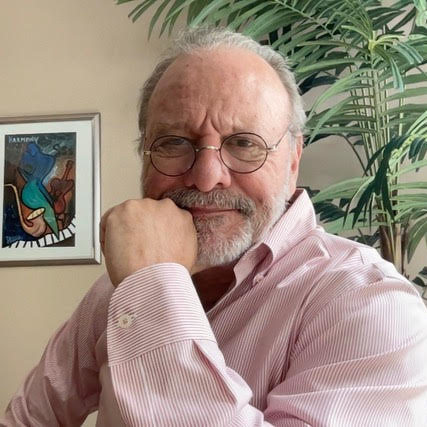
Don Schmincke
Don Schmincke is a best-selling author, researcher, educator, and global explorer who has spent more than 35 years examining why leadership and strategy programs so often fail. After work at MIT and Johns Hopkins, he pursued cross-disciplinary research spanning anthropology, biology, neuroscience, archaeology, and evolutionary psychology.
Don has advised or trained more than 30,000 executives across North America, South America, Europe, India, and Africa. His books and programs challenge status-quo management thinking and focus on the underlying human systems that determine whether organizations align, execute, and perform under pressure.
Read the Webinar
Welcome and the Strategy Execution Problem
I'd be delighted. Thank you. Good morning to everyone except folks in my time zone and east of us in Bermudand Europe, Africa, et cetera. Uh, my name's Richard Resnick and I'm the CEO of The Pacific Institute. I've been here for about a year and a half.
I've been a practitioner of the, the work for about 20 years in my career as a CEO of the, the companies in lots of different industries. And today we're delighted to have a guest, Don Sch, who I will introduce in a second. This guy will blow you away. But first, just to orient you as to what this talk is about and how it fits into the work that we do, if you might go forward, Kevin, one slide for me. Thank you.
There are three reasons why transformations fail. The first is a failure to see that you need to change, right? The second is, well, we get it. That's a problem. We're driving right towards that cliff, but we don't move, we don't make, we don't take action for lots of reasons.
And the third is we do take action and then we forget about it, put it in a drawer, and we go onto the next thing, failure to finish. So all of this stuff requires both lots of mindset stuff, the stuff that we have traditionally done here at The Pacific Institute, as well as a focus on external systems. So what I want to make sure you all are aware of as you go to the next slide is that this is the mindset stuff. And you can see at the bottom of this slide, this is the stuff that many of you who know The Pacific Institute have been, uh, benefiting from and enjoying and passing along. It's sort of how we gain control of what it is that we believe so that we allow ourselves to set our goals.
Um, that's the table stakes in order to actually play in the world of culture change and transformation. But what we're doing now in TPIs new chapter is we're bringing that into every, every engagement that we run, but we generally start with an assessment of the organization. And those could be leadership or individual or team assessments or cultural assessments. Then it starts at the top, right? All lasting change starts within, and then it works its way out.
It better be at the top. And so we work with executive teams to really get them aligned, um, and by aligned like clarity on where we're going, but also honesty, trust, safe conflict, all those kinds of things. Now, uh, that includes core purpose, strategic planning. We'll then engage the organization and cascade that down. And I won't talk to you about the various programs that we have here, except to say that, you know, high performance, uh, high potential sort of up and comers and all the sorts of things that you'd expect, where the way you talk to yourself really matters, uh, with respect to the results that you deliver.
And then finally, a bunch of things around sustaining transformation, coaching individual and group, uh, et cetera. The reason why I share all this with you is because our speaker today focuses in on this area of core purpose and strategic planning. So that's the, in the align, the executive team, right? So you're going to have different consultants that are doing different things, and Don Ska is a force of his own. We use other folks as well for this.
But if you can get Don, you're really getting the cream of the crop around that core purpose and strategic planning. So let me introduce Don, perhaps you might want to get your slides up while I do that. Don Minka, uh, is a wild guy. He's a, um, Don I think he started as a, as a planetary physicist, right? And then you turn into a researcher on leadership, and you've been doing that kind of work for 35 years, and you've advised probably tens of thousands of executives all over the world.
You've got three bestselling books, high altitude leadership, the code of the executive, and his most recent one, winners and Losers. And if, uh, if I'm missing one, you'll tell me later, uh, it wouldn't surprise me. No problem. Um, good. Uh, and today Don works with us on his own and other organizations training hundreds of CEOs every year.
Um, he's got a, just a fantastic history where he brings together the hard science and this kind of like gene for anthropology that Don really,
Back to top ↑Why Most Strategic Plans Fail
you'll see it in a second and applies it to modern companies growth culture performance. I'm thrilled. He's with us. Please help me welcome Don Shamicka. Hi.
Well thank you everybody. Uh, thanks for having me in guys. 'cause I always like sharing this research. And, um, and this is a culmination of about, uh, geez, I guess maybe 20 some years of research that started back when I was a planetary physicist. And then I, I automated, uh, the Harvard MIT biomedical lab, which allowed me to start looking at human testing, which I'd never done before.
And so for me, that was, uh, really interesting. But it took me to Hopkins where, uh, I began doing my graduate work in there, and I started running into a lot of people working on their MBAs, and they were frustrated with what was going on. And so this allowed us to take a look at why things are failing, like strategic planning. And so I'd like to just take a quick agendand look at, you know, brief moment on the foundational thinking, and then a primal model that your ancestors have been using for thousands of years, and then some implementation to really answer the questions around, you know, strategy and, and where it got to where it is today, but why we're having problems with it. And so it also feel free to jump in any time if you want to unmute and just, um, ask questions.
I like to keep it dynamic, so feel free to do that. Um, a lot of this started when I was working with CEOs and when you're, when you think about it, um, I, I was, uh, they told me, I've done about 2000 speeches so far. So I'm like, oh my God, I've gotta get alive. But they, the time I used there is to collect data. And so I will be in front of numerous CEOs and I'll ask them this question and they will gimme a bunch of answers, and then I'll, I will go from a flip chart back to the screen and show them how much I've collected on this.
And it looks like everybody's having the same problems. And what was interesting is the audience generally gets a little shocked because it's like, wait a minute, how come you have all this on the slide? I said, yeah, I've had it there for 15 years. I've done, nothing's really changing. And they're kind of like, well, what, what, what's happening here?
So, I don't know, but it gets even worse because Oxford University gave me permission, uh, to republish an ancient document that was developed over 700 years for training executives. And that's when I published something called the Code of the Executive, which was on Samurai executive training. And guess what their issues were, they were dealing with. And again, it was the same thing. So this started opening up some clues, like, why are we dealing with the same stuff for, for over 10 years, but maybe over centuries?
And then I, and then it inspired me to look even deeper, and I started researching really ancient manuscripts, the first writings of humans. And, um, I found out that the most, most of the writings of humans are from leaders complaining about humans. And I thought that was interesting. I thought that was interesting. And so, uh, what I came up with was something like this.
I began to document and show that, you know, we're not alone here. I mean, look at this Sumerian, uh, troublesome humans failure to create ideal workers. Oh, what a bad day that is. Change resistance. Haven't heard of that before.
Customer service complaints, core leadership, more change, resistance, ego issues. And my favorite absenteeism, excuses. Some of these we don't use anymore. Embalming my brother, I don't think that's common anymore. But, but you can kind of get the idea here we're we have these issues.
They've been going on for centuries, we think we have them today, and we think that's about us, and it's not. And I started, so I, so my next logical question, has anybody tried fixing this? We've had 4,000 years, and this is where things got interesting, because I was like, okay, let's assume fundamental theories exist. So there were some attempts to look at what are these theories? And I found out that we published 35,000 business books annually.
Annually. You know, it's like we publish more than cancer research in business, but at least we're making progress in cancer research. We're still dealing with 4,000 year old issues with no change. I think somebody should have led with this. So then I had a research in India put together every time a new theory is mentioned somewhere in the mediand sort of calculated it.
And it came up with all of a sudden an avalanche of new theories with life cycles that just, just something happened in the nineties, they just start piling on. And now with ai, of course,
Back to top ↑Operating Strategy Versus Meta-Strategy
it's going to give you more exponential. And I'm thinking, is anybody seeing this? And this doesn't mean we have 4,000 year old problems. We're throwing more theories at thing, we're still having complaints. So I thought, okay, let's look at replication success.
And I found out that the replica research publishes shows a 70 to 90% failure rate. I just downloaded this from Google Scholar, which is where Google puts all scholarly articles from your universities and laboratories. And it looks like five and a half, 5.6 million scholarly papers published on the failure rates of our management theories. So now things are like getting really interesting because we got 4,000 year old problems. They're not being fixed.
We're getting failure rates of our own theories. So I went to the authors to see what their expertise was, and they admitted, and when I got 'em drunk at the hotel bar, which is an interesting place to do research, they started telling me the truth. And they said, look, you know, most of them were used by bankrupt companies. They never tested their methods before. They sold you millions of copies of their books.
And, uh, many just copied a repackaged idea. So now I'm, yeah, I'm like running out of runway here. I'm trying to help people understand what's going on in failure rates, but I said, let's look at mergers and acquisitions. These are the best in the world. And of course, of course, your publications all pulled out the same data, 70 to 90% failure rates.
So you can imagine how frustrating it starts becoming when you're trying to figure out how to solve a 4,000 year old problem. And nobody's talking about it because we're trying to, I mean, we're bringing in the normal suspects. You know, I work with clients all the time and they've had a bunch of these in place. But the problem is what's happening? And I can't be the only one seeing this.
There's gotta be smarter people than me out there. And there were, you know, Mike be announced this program, why Change Programs Don't Produce Change. Years ago, shut down the conference boards international event when he told the world's top thought leaders, their products fail like a hundred percent of the time, and they couldn't find a bottom line impact. Uh, Phil Rosenberg at Wharton, I've been really supportive of, uh, appreciative of, of Wharton's work with us. And, um, I think the, uh, he did the most statistically significant study of the impact of management theory on a bottom line.
And he finds out it does work and it can improve your performance as much as 5%. So I'm reaching at dead end. I don't know where to go next. Yeah, this is my poor attempt at, uh, ai. It's just not there yet, so I apologize.
But the journey starts. Could it be primal? And this is what my students asked at Hopkins, could there be something going on in our biology that is affecting us? Because throwing more theories at the problems isn't solving it. But what's been going on and what are we missing and what are we missing?
Because there have been successful companies, there have been successful civilizations, there have been conquerors, and what are they doing that we're not teaching? And this is really interesting. Is there a better way to get performance, traction, strategic planning, et cetera. And so I thought, well, let's start asking some dangerous questions. And went through and said, look, what if everything you know is wrong?
And we created a new team with no business people, business people on it, but they knew about planets and they knew about biology, and we started moving ahead. And one of the questions that came up was fascinating. What if we stop studying successes and start doing autopsies? Now, that was interesting because, you know, we have all these successful books out there of these great companies. Every year there's a new book on great companies, and, and all of a sudden we're like, okay, great.
I'm going to buy this book. I'm going to be a great company too. And they have a great company list, but none of these authors will, will footnote that their great company list is going to change 18 months after publication. But they do. And so I thought, what if we start doing autopsies again?
I can't be the only one figuring this out. It's gotta be smarter people than me. And this guy, Jeffrey Moore, started the Crossing the Chasm model back in the high tech industry, but he wrote a new book called The Zone to Win. And he published in his book, his autopsy research, I thought, thank you, Jeffrey. Finally, you know, I don't feel like I'm alone anymore.
These are the top companies in the world. These are the ones that in all the bestselling books you spent millions of dollars on. Uh, and, um, and they're dead. You know, the greatest companies we admired, we wanted to be like, we wanted to learn from, and they hired all the top management consultants and thought leaders, and they died. Some still have a pulse.
So toys or us, I understand is a renting space at Macy's. Nothing like tying your lifeboat to the Titanic.
Back to top ↑The Missing Logic Behind Activity
I don't know why you want to do that, but, and there's more and more and more, and you can certainly do your own research. But I think the point is, what happened to the greatest companies were learning from and trying to be like. And so I was curious about this. So I, Jeffrey went further, he went to nasdaq. He said, let's capital markets 150%, what's happening to the leaders?
They should be twice as far, but they weren't. And the company that should have led the charge, IBM loses 40%. So obviously we're up against some interesting data here. So we finally found out what was going on. And so let me go into to looking at the model.
By the way, any questions on the research? I know I hit you with a lot of stuff there, but I want to make sure that, uh, we're good. All right? So feel free to unmute, chime in anytime. All right.
So what I'm going to share with you, we've tested in over a hundred industries from the largest to smallest companies, nonprofits even transformed the US Navy Fleet warfare program. So I taught the top admirals of the Navy. That's the research that I'm showing you here and the methods, uh, to test it, to make sure it worked. We had to, we had to do a pilot program. So we, we started the Gulf War and, um, and it, and it worked.
So we got a chance to test it out in the Gulf War accidentally sales bureau, two to three times, in some cases, 10 times. People thought that was interesting. So what was happening? We got more traction, more results. And so what did we discover?
Something called the Results creation protocol. Now, what this was, this is interesting 'cause this parallel Lou Tyson's work early on, I did not know that were parallel universes, but you kind of see some interesting parallels in this. See, we started with looking at what do leaders do and what separates the ones that are winning versus the ones that we're losing because we've seen enough failure rates. But what about those few? And we found out that when you become a leader, you get infected with a mental disorder, you become results infected with the results disease, I call it.
All of a sudden you start doing something you never did before. Worry, you know, you start going to bed worrying. You wake up worrying, how are my humans going to do what I want? And then we followed you back to the office. We found out this is what humans do to try to get results, many goals, objective structures.
We need write processes and training and systems and all that. And this actually is your to-do list. This is your average day at the office, and this is what we normally see. And the problem is, I don't see a problem. That's the problem.
I don't see a problem with it. This should be working, but apparently it's not. But this is, this was confusing to me because we had these high failure rates for thousands of years, and yet we're totally bombarded with what and how to do stuff. And the anthropologists join the team and they said, Don, we see the problem. I said, what's the problem?
I said, well, you're an idiot because you're asking the wrong question. These are just tolls. Tolls do not drive results. And I didn't realize that it was, it was like I, it we're throwing tolls at the, these problems for 4,000 years and we're getting these failure rates. And they said, what really alters results isn't, aren't the tool.
And we need the tools. Tools are cool, but what really drives it is the al the altering of human behavior. And so what was happening is we began to see human decision did not change. And that's why the failure rates are so high in management theory. So this, this was interesting because when we looked at all of those issues on that issues list earlier, all those complaints and those problems, it was because of humans, all of them.
And it was because the humans weren't altering or aligning their behavior and the decisions. And that's the problem. So how do you alter behavior? Well, went back to talk to some CEOs like, uh, Alexander Cleopatra Gandhi, Hannibal Caesar, Genghis Khan, and they're saying, Don, you're an idiot. You know, you're, you how you alter behaviors, but the one thing you're not teaching in your MBA programs.
And that's altering human belief. And so that was the conclusion to the ancient model, is if we do it this way, we can alter human decision, use the tools we've got and get to the results we want. And that seemed to be the common thread and those few companies that could dominate and win Any questions? I just have a, I have a comment, which is you might now understand why The Pacific Institute
Back to top ↑Beliefs, Alignment, and Behavior Under Stress
works with Donka. Yes. Yes. Because when you think about it, this is, this is an ancient model, but we've been doing this before, right? I mean, Socrates, Platos student, Aristotle, numerous Asian philosophers, universities start words like worldview or paradigm.
And The Pacific Institute over 50 years ago, create something called mindset and find your why. So we have been on this journey, and you can see these, these parallels. That's why I've, I've enjoyed being with The Pacific Institute because I could see this, this alignment. And, and what was happening though is, is it was, these are all great sources because they do help us personally develop, uh, become more, more powerful in, in our own careers and our lives and, you know, freeze us up to, to, to be great, you know. But the problem is, what we found is when you get into companies, there's issues because all of a sudden we still have an issues list.
Why is it not working there? And this is where it took us into another dimension to look at how do we get traction in these areas? And it's, it's, it was look at we gotta stop focusing on our tools so much and implement a strategic system because I found out that the reason we're focusing on the tools and not the beliefs is because what we recently concluded in our research is because of the animal instinct for safety. All animals want to be safe. And how you are going to be safe, control your environment.
So if I'm in an expedition and I'm in Africand I'm being challenged by a rogue elephant who's noticed me, or the most dangerous animal, uh, the hippopotamus, I know I'm in their environment. And it's probably best that I extract myself quickly because one of us is going to lose this battle and it's probably going to be me. So, uh, humans, however, want to control our environment. Two, for safety. So we use our tool called analysis to help us understand the world and then develop the tools to be better at it.
And this all really works great, really works great until you start studying the debt. And the project I did with Chris Warner for the NBC program on K two, Chris was suddenly K two and we had now video and audio. Now, Chris, being the top rescue climber in the world, has pulled enough dead humans off of mountains. And we noticed an interesting clue. Dead climbers are clutching their tools.
They became too confident, they didn't listen to their guides and they died. And I said, Chris, so did dead companies. They, they, you can find dead companies clutching their tools, they don't let go. So we, we, uh, came up with a term called tool seduction. So this really opens the question that when you're working is, do you, you are, are you using the tools or the tools using you?
Because beliefs is a very much more dangerous area. It's art. And there is no analysis, there is no structure. You're like, you're, you're creating something from nothing. And so here we are now realizing why the model isn't working, because we're not using it, you know, and, and we're in the organization, are tools using us, but we're not using them.
So this became a complete picture. Yes, we need experts and trainers to do the tool stuff, but with the belief area, we need guides, sages, elders because it's a different type of path, which then brought us to, okay, how do we implement a strategic system now using this beliefs model? And when went to look at all the tools that we're using, we began to realize weren't finding anyone describing or giving us any epiphanies around what are the beliefs missing that's causing the failure rates in all of these, especially strategic planning. So I did a number of expeditions around the world over the next 20 some years and started looking at humans in different environments. And we began to see there were clues now that let us see what genetic biological leadership looks like.
So we had done a number of areas. Military helped us with strategy. The samurai with Oxford University helped us with leadership, us, me and my kids in keel to Japan, learning how to kill people with swords, bad dad, vacation Vikings, excellent area to look at this issue of mission. And this, me and my son with their pet elephant and my daughter following a tribesman who's part of a 10,000 year old organization that's interesting to study a 10,000 year old company that taught of us culture change. Psychiatry at Hopkins, where I was helped here, black Hawk down helped us with looking at action planning.
And this actually is where we arrived.
Back to top ↑Why Comfortable Culture Can Block Performance
So the, the journey took decades. It was worth it. And when this is applied in companies, it's pretty remarkable. And so I, now we can talk about strategy, 'cause now I think it'll make sense around what's going on with strategy and why are the failure rates so high autopsy reports found that, you know, most companies had a strategic plan, but I wasn't sure like what, what, what was different about their plan versus the winners. And then it dawned on me that when we do strategy, I was kind of teaching it this way as sort of a fill in the blanks template, which is a helpful tool to focus an executive team on the elements that need to be understood and agreed to.
So, and I, and when I was teaching at Hopkins in the graduate school, yeah, I had great templates. I I love my templates. It was great. I could teach MBA students when you're, you know, in the company, you gotta be able to do this and make sure you're addressing some of these issues. Here's the problem.
I couldn't figure out why companies that were winning didn't really have a template. In other words, like what was, what was I missing? And of course, what I was missing was this, we use analysis to create strategy, but the winners were doing something different. And I couldn't figure that out because they were violating a lot of what I was teaching. And they were doing things that, you know, experts in the industry would say, then that's not going to work.
They're stupid, they're crazy. It's going to, and yet this company rises up and dominates the world. So I had to realize I was teaching it wrong. There were, I was missing something because what the winners were doing is they were using intuition. And so I began to see that I was only teaching half of strategy.
And the reason it was failing is I wasn't using their other half because the winners have a way of out intuiting their enemy's moves. And that's how they outmaneuver and that's how they win. And I thought we should start teaching this again. As, as I dug into it and we began experimenting with this over a couple of decades, I realized what's been missing is a meta-strategy intuition before the analysis, before the planning. And it should drive the tactical strategy.
So it looks something like this. So I think we need two types of strategy. And the failure rates of strategy was because we didn't have a meta-strategy driving the tactical strategy. And these were the questions that hardly ever came up. You know, what does winning really mean to us?
Now there's a belief alignment. And then how do we win? How do we outmaneuver? Well, we gotta look at legacy beliefs. Are there old beliefs that we're stuck on?
Maybe our mindset is based on an old belief system. And how could that help us create a new field of battle and identify the real enemy? A lot of companies are competing against enemies that are phantoms and they don't realize who the real enemy is, and that's how they get outmaneuvered. So the whole point of, you know, what kind of thoughts could end our company? How do we shift competitive ground?
These are the questions. Once you have a meta-strategy for winning, then it's easier to drill into the template, then it's easier to fill in the blanks. And what you're going to have is a much more powerful execution than anything. Questions, comments at this point? We good?
Alright, let's, uh, feel free to interrupt any time. Now again, it, the experts are necessary for the tactic stuff. You know, industry experts are invaluable, but up here, you, it's, it's guides. This isn't about logic and analysis. It's about moving through and shifting beliefs.
Because the flow is really, this meta-strategy is the formulation strategy, not the planning of it. Then you're able to get into the planning of it and then you can drive into the operating plan itself. Does that make sense? So let's look at how to create a meta-strategy. The, uh, what we used over studying thousands of years in the most documented industry has been the military.
And so we have a lot of data that we could use here. 'cause the three questions that seem to come up with all of the great leaders throughout history is they got a idea of like, where's the battlefield? Who's the enemy? And how do we win?
Back to top ↑Leadership Development Without Strategic Context
It was really very, very simple. And um, and generally this actually works in capitalist societies because we have an environment where nobody's going to give us their money for no reason. We have to compete for it. So unless you're in a communist country and your funding is given to you by the government, you have to have a competitive edge. And that's why competition creates a healthy economy and, and the best minds.
And that's where I think the military terms make sense because we are competing. And some people are like, well, can't we have more cooperation and all that? So ask the dead bodies what they thought they died, they felt they were in battle, you know? And so with that, it gives us a chance to say, okay, what are the limiting beliefs around our market that has a seeing it the way it is? And we can't, we can't really challenge a segmentation until we can shift their beliefs around that market.
And then what's our thrust vector? So these become now things that are different than planning. These are conceptual epiphanies and evolutions of belief systems. Um, and it's a, so some examples like, I'm going to, I'm going to be flying out of Tampa here on Southwest in a couple hours. And, um, they're not supposed to be operating.
'cause all the experts told Continental Delta, United and American, don't worry about that small Texas airline. They're not going to leave Texas. They're doing it all wrong. Well, they left Texas and they disrupted the airline industry. But what's interesting is the battlefield, they were not competing against an airline.
Now that's a belief shift. You're an airline that's not competing against an airline. Think about that. So who would they be competing against as the CEO Kellerher was out to crush a guy named Craig. Craig was not the CEO of an airline.
He was the CEO of Greyhound bus. He wants to crush Greyhound. That was his battlefield. All the other airlines are running around with their hair on fire. What's he doing?
How's he doing it? What's he doing? They never ask what's he believing? This explains why Southwest targeted Greyhound hub cities, not airline hub cities. And why when you get on air, a Southwest flight, you feel like you're getting on a bus because you're actually getting on a bus.
But there's more and more case studies here. You get the idea. PC speed and features, even today, they compete on that. Apple was bankrupt and then bankruptcy. It was, well what about the user experience and what happened?
They dominated the world tax and medallions in New York City inflated to 1.2 million until somebody had a thought. They got p****d off waiting for a taxi and created Uber. That changed everything. Medallion rates collapsed below 300,000 that year. All of this is, he had a thought, they had a thought, they had a thought that everybody's had got a thought, you know, but that thought destroys the industry.
As it's known. I was doing a strategic planning event. Uh, we do like two day retreats and um, I was in Chicago and every morning I get to walk by the Britannica Mausoleum, the old office building, which is now Whirlpool. The world's knowledge got replaced by a washing machine. Why?
Because in their strategic planning and they're filling out their templates in the encyclopedia business, nobody had a thought. What if somebody figured out how to give knowledge away for free? And well end of story, right? So what thought could put you out of business? See, that's an interesting question that never gets asked in a strategic planning session, but you should be asking it before you go into a planning session.
And so let's take a look at just some, these are some of the models that we typically use as we do strategy. And sometimes it's challenging. What are the market segments and what are our beliefs around that? And are we stuck in those beliefs or are there new ways of looking at the segmentation? And then what are the targets?
Where, where's the plus sign areas where we have margin and we have growth and we have competitive advantage to win. But a lot of companies are in the negative areas. Were they missing one of those? And we always ask, well, why are you guys fighting it? Well 'cause we're losing.
I said, yeah, they forgot to teach you another class in your MBA program. How to withdraw from battle. It's another question for you is, are some of you fighting battles? You should not be fighting? Are your company's fighting battles?
They should not be fighting, but should be withdrawing from? See, that's strategy. And then what we're looking for next is looking at, well,
Back to top ↑Failure Data and the Limits of Best Practices
what is it about, uh, the tomorrow? Where have we gone? Well, you got a number of options. You can m and a box, you can stay in your segments and go vertical and add more value. Or you can take your products or services into new segments that you're not in yet.
Or you can diversify. See, this is why you can't do a SWAT analysis for strategy formulation because the SWAT changes depending on your vector. Every vector has a different SWAT profile. So the SWAT needs to come later after you formulated strategy. Otherwise the strategy could fail.
I mean, it's, it's like, Hey Don, we did a SWAT analysis for upcoming tank battle. I'm like, yeah, but the battlefield you chose was submarine warfare tank sink. I mean, you've lost before you've engaged the enemy. That's not a good strategy. So it's good to know where your vector is first before you move forward.
And um, so the other thing is, once you, once you understand the vector, now you're going to look at enemy situations. And we find that a lot of companies, and when we do strategic planning with them and their formulation with them, their their meta-strategy, they sort of think the rivals are their enemies. This happens quite often. But when we do the autopsy research, uh, we share with them during the meta-strategy retreat that most of the arrows come in from the back. So this opens up, the question is, could your enemy be behind you?
And in a lot of the dead companies we studied, yeah, the enemy was behind it did a, uh, residential home builder in Fort Myers, 7 million revenue. They were growing, but they got flat. So I got called in and we did a meta-strategy. And it turned out that they thought the rivals were taking their business, but it wasn't, it wasn't true. The belief shift was when they realized it was globalization.
China. Back then China, China was sucking cement out of the planet. And therefore, if you were in the United States, you were, you were number two in line. And the CEO realized, geez, if I, if I get more cement, I can grow like crazy. And, um, in fact, I just did a follow-up retreat with him.
Uh, I haven't hadn't seen him for 10 years. They called us back to tune it up again. They're doing great now. But at the time they found out that, you know, one of the, one of the VPs in the room said, why don't we buy the ReadyMix plan and the CEO? He shared this story just a few weeks ago.
He said, look, I that's a stupid idea. We don't know how to run a business like that. Why? Why, why are we getting involved with that? That's ridiculous.
So after they bought their ready mix plan, yes. So ended up having cement and guess who did not get it? And that's what happened. They went from about 7 million to about 70 million. They, they grew in the next two to three years, magnitude in size because they had a different thought than their enemy.
So you kind of get the idea that it, you have to start questioning, you know, what is the real threat? Otherwise you can't really look at, you know, where is, how are you going to win? And winning takes a couple of different flavors. And so you gotta figure out what, what's driving you. Because each of these are different cultures, different processes, different structures, different.
They're all different. And when you try to do both, it tends to make you weaker. And that's another reason for strategic planning failure is you're diffusing your strength because you're believing you need to do everything and you shouldn't. So how do you implement all this? Generally get a meta-strategy, then you do your tactic strategy.
And now, okay, you already did a tactic strategy. Don't worry, do a meta-strategy and then go back and tune it. We just did a client two weeks ago. They had the templates all filled out. We did a meta.
And when we flowed back into the templates, they were able to align things much better and stop doing some of the things that was, you know, really distracting them. So that's the, uh, that's the area. Uh, you'll have this on the recording, but these are just some tips and techniques we've learned over doing this for a couple of decades. And so I find the one that's often missing is the pre-event situational analysis where no, you're not really identifying what are your beliefs that are inhibiting intuition or sustaining legacy thinking. You know?
And so the, this is really important because until you understand what's got you stuck in your, in your mindset to use TPI terms, you cannot really go to an event and get success because you're going and already stuck. But if you understand where you are,
Back to top ↑Lessons From Himalayan Expeditions
then you can design an agenda to target the shifts in those beliefs. And generally I find that in the battlefield and enemy configurations, you can do that in about a day. If, if you have the situational analysis done right, it it'll just take a day. Also, it's hard to have a solid agenda. Um, only because what I find is that, um, you know, it's, it's a flow.
It's like ZI mean, what are you going to do? Say, Hey everybody at 10 15 today, we're going to have a breakthrough thought to change our industry. Well, good luck at 10 15. Lemme know how that works out. You know, I don't know when it's going to happen.
Sometimes it's the morning, afternoon, happy hour. Extreme example. We had one client we're in a bonfire outside the hotel reading a Beowulf. We had to go to poetry to get them to shift in their brain. And it was the second dragon, the mother of the dragon when, when the lights came on.
Like, oh, that's it, that's it. Then, then we could continue. So, alright, any questions on, uh, on the meta strateg is one of the areas missing, causing failures. Failures? John, there was a question in the chat that's a little bit before this, but worth asking, um, from Cynthia Goro, uh, beliefs drive behaviors, behaviors, drive results.
So how, as coaches, do we help leaders discover their intuition, their beliefs, if you will? And what if they are the CEO don't have it and are leaning on operational plans to win? Sort of what Yeah, that's do, that's a good question. That's a good question. I'll go back to the, uh, to this slide here.
It's a great question. It's almost like you have to be the sage versus the consultant or the coach. Um, in, in other words, it's, it's how do you shift their belief system to be able to look at it differently? Now I've, we've done hundreds of industries with this and most times we find that the one way to look at it, or the one way to get them to start things seeing things differently is to look at where their pains currently are. Now what I mean by that is, you know, we have two types of clients that come to us.
One is they're enlightened, they're already shifting. They want to keep shifting their mindset and stay ahead of the curve. Those are the enlightened group. And then we have the group in pain. Those are the ones that, no, we gotta do something different 'cause we're losing it.
You know, sales are flat, the board's on my case, my stock price is dropping. Those are people that want to listen to something but challenging what they're currently believing that's causing that outcome opens the door to a whole different conversation. Because, you know, if, if they, if they think that, oh well our operating system is great and we need to get better at it, that's why we're losing. Um, then the question becomes, did you know that for thousands of years, generals taught one thing consistently? And that is you can have the best operating strategy, but if your strategy for winning is flawed, your meta-strategy, if you will, it doesn't matter how effective you are operating strategy wise.
In other words, strategy should drive the operations, not vice versa. And, and I find that's when you start challenging CEOs at those deeper levels, they started waking up like, you know, you're right. I never thought about that. And so I I think we're too seduced by the operating system tool. Just, I, I think we need good operating systems.
And you're right, I can see people relying on that. But if the, if your strategy to win is flawed, it doesn't matter. In fact the way they say it is you can make any number of operating system errors and still win the war. But if you're not a winning strategy, you know you're going to lose with the best operating system. Does that help?
Uh, the question is that any others? Alright, so, uh, we got some more time here. We got about, uh, 10 minutes or so and then I'll open up for any questions. So one of the things around, uh, leadership is interesting because, you know, once you have a good strategy in place, how can you lead it into action? And the autopsies found out something fascinating everyone had was teaching strategy as a style.
So I started researching your styles and I found out that you have a lot of styles, but I never, I never read a book that told you how to use these styles. So I'm thinking like, what do you do like a morning style and then an afternoon style? Or do you have a style of the week or when the new style book comes out this year and the new bestseller, do you burn all the other style books? I mean, look, why, how do you use this? And I began to realize that the best way to get a cheap set
Back to top ↑Stories, Symbols, and Strategic Cohesion
of bestselling style leadership, um, books is to go to the liquidation of event of a bankrupt company. They've got all the books there as they went bankrupt and they had all the coaching and they had all this and they all, what is missing there, and this is interesting too, 'cause this helps I think shift how we can coach companies. It's what if it's not about stock, but it's about speed? Mm. And that's what we realized.
We weren't doing a lot of autopsies or fast companies. They were slow. And when we looked at what was slowing companies down, it was taking them too much time to get to the result. It was, they were wasting time somehow. And it turned out to be from what we called dud behavior.
All those issues that companies struggle with in fractured cultures is delaying them. And when I ask, and I've, I've been in front of 30,000 companies over the past 25 years, I always ask how much time is wasted on these things? And I get a response back, 20 to 80% average. 50 mm-hmm average, 50% loss. And when I ask them to calculate how much that costs, they, they get sick. They're like, oh my God, I'm wasting millions of dollars in wasted behavior.
So this is what led us then to look at, look for strategic execution to occur. We gotta fix this problem. But we've been trying to fix it for 4,000 years, right? We've been, we've been trying to fix it. Socrates was trying to fix it.
So what, what, how come it's not fixed? And here's came up from the research, a question never asked, maybe they should be doing it. That's why they're doing it. 'cause they should be. And when we found out it was because of fear.
And until we unhooked the basic primal fear of humans, we cannot get the speed we want rapidly. And so if you think about it, you know, what are the fears that obstruct our companies and how do we fix it? Well, the samurai figured out why they, why it's happening and why people should be doing these dysfunctional behaviors because of the evil spirits. Something else. We don't teach anymore.
Evil spirits infecting employee and project this world of fear. Well, Sigmund Freud 700 years later calls it ego. And now we have a scientific term and now we know, okay, why is it there simply this animals survive better being selfish. Darwin is, Darwin was misquoted. He didn't mean survival of the species.
He meant survival of the information in the species. And the information is su the species continues even though the species won't. And it does it because species need to copy their cell. Your, their data, their DNA replicate, replicate, replicate. Selfish animals replicate better 'cause they stay alive.
Dead animals don't, they don't replicate. And they're all of a sudden it's about genetic warfare. This is because of genetic warfare. And that genetic warfare instinct programmed into the cells of our bodies is causing lack of speed and execution of strategy. This is what we should be teaching in our ous schools.
And so how do you get rid of it? Well, the samura, I figured it out death in the first chapter. I'm like, I gotta publish this thing. I can't, I, this isn't going to go well. But they kind of figured it out because it was, you know, it's a brain hack.
We began to see what was going on in the brain. It's like, you know, the reptilian areas 300 million years ago, limbic system. But 2 million years ago, newer cortex, now animals a thought. But that that selfish energy to help to stay alive is painting this dysfunctional stories. And the thing is, I, the samurai figured it out, and, and I think we can measure this with modern neurology MRI scans, is that if you can hack the brain to think that you're already dead or soon to die, the ego is no longer needed.
And that part of the brain gives up. And I want to be able to fund this. I want to be, if anybody knows a philanthropist, have 'em call me. I want to take a check to Hopkins. I want to do 20 brain scans of terminally ill patients who've accepted their death.
And 20 scans of healthy patients who meditate on Samurai philosophy. And I think that part of the brain for ego has vanished. And that's how you get speed. 'cause that all that dysfunctional behavior tends to go away. So does it still work today?
Well, this guy thought so, But he was also pretty high ego, right? Like, I get it at the end of his life for sure. But this was a big ego man. Well see, I think what he was,
Back to top ↑Embedding Meta-Strategy Into Execution
and it really, it really, um, gets to the, uh, oh, let me jump ahead here 'cause that's a great, that's a great question. What was, uh, I was in an expedition in the Himalayas and the group started failing because, because all of a sudden were at the, at the end of it all. And so I began to look at challenging how we're teaching leadership to followers follow leaders. And I found out no. 'cause if they, if they did, why are you following a******s?
Right? I do. Following a******s. And I finally realized that people don't follow leaders. They follow the story the leader represents.
And then I did further research. The General Patton was an a*****e. There was numerous conquerors. There were a******s. In fact, they just published that Mother Teresa was an a*****e.
Oh my god. Mother Teresa was an a*****e. You can Google it. The whole point is, it's said laboratory proof that followers were following leaders of following the story. And that's what was happening.
He was a jerk. But they followed him 'cause they liked where he was going and they believed that he could get there. Yeah. So it's a great question. Thanks for bringing that up.
Well, let's see. We only have nine minutes left. Um, maybe it was a good time to open for a q and a. Uh, anything that I, I know I dumped a lot of stuff on you here, but anything that you are concerned about or questions, because, you know, this is the art of it all. I, I wish I had more time.
I have so much more to go through here. But I tell you, I think people are ready to be, to have these myths dispelled because that, that book, he shouldn't be discover earlier or, uh, it became number one on Amazon. It was just for entrepreneurs. When corporations started buying it, I was doing it for like, students in entrepreneur school, right? And, uh, it was number one for about 15 seconds, but I got the screenshot.
Um, so, so I think people are ready to hear these conversations. I think they're ready to go back and say, geez, are we believing something? Do we need to shift? You know? And that's, that's what I think is important.
So, so I think that, you know, as you go through this art, you know, I think my final actionable takeaway is, is don't try to implement everything. There's too much here. Pick the elements which make the most difference in getting performance up. So like tomorrow morning, you know, what are you going to do? What are you going to do?
And, you know, how are you going to make that happen? So it's still alive today. Um, you know, I I will offer this if, if you guys want to use it. We're starting, we're taking the Samurai program and we're putting it, it's online now and we're designing it to see if we can measure with volunteers how they're implementing this. This has now taken off a Boston consulting group.
We're looking at, um, they're interested in pilot testing. This, um, when the International Women's month happened, I had women taking it becoming Samurai. So now we're looking at transforming women's leadership development with this. I've got, uh, the guy, uh, George Stalk Hass been published in HBRA lot. He's been really interested in doing this.
So we're pioneering the samurai stuff. Interestingly enough bones on recent battlefield studies in Japan, find that up to a third were women. Mm-hmm. So up to a third were women Samurai. So it's all new stuff.
Um, so anyway, that's, uh, that's available. Um, if you guys want copy of this whole PowerPoint, 'cause I didn't, didn't get to it all. I can give you a free download if you want. You can just, uh, scan this thing. And if you want to get on the Sam ray thing, just let me know where we're, we're giving it to you at cost.
We're not making any money on this. I just want to gather some more data. And John, would you, would you mind just moving this direction on my camera so that the QR code works for people? Go, I'm Sorry. There you go.
I couldn't see, uh, yeah, I couldn't see where I was. I was trying to figure out. Perfect. Thank you. There is a question in the chat from Kevin and I like it.
Uh, how do teams start the process of developing a winning or a compelling saga? Yeah, that's very good. Um, I find that, um, what works best is when you, when you go through the meta-strategy piece and people finally realize, hey, here's our real battlefield, our enemy, how we're going to win. That winning formula becomes the best way to create the saga because mm-hmm. Because what happens is, I think we're, we're into these statements, you know, mission statements, why statements and all, but they're not, when we look at a dead company holding under their statements, the statements didn't make strategic sense.
In other words, it was, it was, they were inspiring, but it didn't capture their winning formula. It didn't capture like, here's how we're going to win. And that's missing. So I would say, you know, use the winning formula from the meta-strategy,
Back to top ↑Questions, Practical Application, and Closing Reflections
craft a story around that. Mm-hmm. Mm-hmm. What are the three most important questions to, uh, if you just had three, I am forcing you to, you can only use three to build a meta-strategy. What are they, What does winning mean?
It's a good step. And then how are we going to win? And a lot of what I've given you here are certain models around how to dig deeper into that and start shifting, uh mm-hmm. Those beliefs. But I think those the two most important questions.
Maybe the third one is, are we the team that can execute this Well with egos involved? The answer's always going to be, of course we are. Then maybe a better question is, are you willing to die for it? Right. That's, There we go.
That's A different one. Any other questions? Yeah, what does, I have a comment. I have a comment. Kevin.
Um, this is you Edwards and I'm with New York Life. And what I find is from listening today, it it, it really struck me that a lot of the leaders with New York life, they, they have the belief system, but then you have groups within the company that do not, and that's part of it that's not addressed that I see with my company. Mm-hmm. That who have generational and, and, and cultural misbelief or disbelief or, you know, incorrect beliefs that have been passed down from generations. And, um, those groups have not been addressed.
So you don't find them at the top of leadership. Mm-hmm. Yeah. Um, I'm, I'm going back here for a second because, um, that, that kind of fragmentation, um, is really a cultural, it's cultural fragmentation issue. And when we looked at the failure rates, the culture change, it was that weren't triggering grouping behavior as an animal.
We like to group because we live. When we're alone, we die. That's why tribes ostracize a member to punish them. It's almost like a death sentence. And you see this and it's now, today we don't have to worry about it that much, but it's still in, it's still ingrained in ourselves.
So I find that getting alignment is we need to trigger tribal grouping instincts. And these are several ways of doing that. So when we go into the company to align culture, we're looking at these things because if these things aren't aligned with the compelling sagand the, and the winning meta-strategy, then it will sabotage the execution. You know, we had, we had a hundred year old bank wanting to change its culture that kept failing. It turned out it was a symbolic issue.
Uh, we used a Roman technique. 'cause the ancient Romans, they kind of knew they had a rapid merger and acquisition campaign going on, and they, they kind of figured it out. And what'd he do? He'd take over a city, you'd destroy all the statues. And we had to find the statue.
And it ended up being, the assigned parking place was the symbol of this a hundred year old paternalistic bank. And went out there, we took those parking spaces down. Oh my God. I'm sure some of the executives are still on PTSD therapy for this shock, but it altered the culture dramatically. Mm.
So it's just an example. So I, I, you can align. Uh, I know it's frustrating, but a lot of this is not taught in our schools, but it's been used for thousands of years and it works because we are programmed to respond to it cellular cellularly. So I hope that may provide some ideas to think about. If there are no other questions, Don, we are so grateful for your wisdom.
Thank you very much for joining us, and we'll be sure to have you back again very soon. Good welcome. Thank you everyone else for joining as well. Hope you learned something today.
Back to top ↑