Building Values-Driven Leaders with Leadership Development Consulting
Written by Sheryl Hicks
| February 12, 2026

Here’s what CHROs and HR leaders should know about developing values-driven leadership at scale:
Most of your employees really do care about your organization’s values; one survey found that 86% of employees want to work in an organization with values that align with their own.
For these employees, just writing a few high-minded principles into your mission statement isn’t enough. Your organization’s leaders need to be able to demonstrably live by those values, too.
That means if your organization claims to value diversity, your leaders must treat all employees equally. If it says it values innovation, leaders need to create psychologically safe spaces where employees feel comfortable raising new ideas. And if leaders claim to value their employees, they need to prove it by showing employees empathy.
Leaders who live their values don’t just appear out of thin air. They’re shaped by intentional HR strategy that’s led by CHROs who embed organizational values into hiring, development, and leadership expectations. Often, that work is accelerated through leadership development consulting that helps translate values into everyday leadership behaviors. Regardless of the specific values an organization prioritizes, the leaders who successfully bring those values to life tend to share a common set of traits.
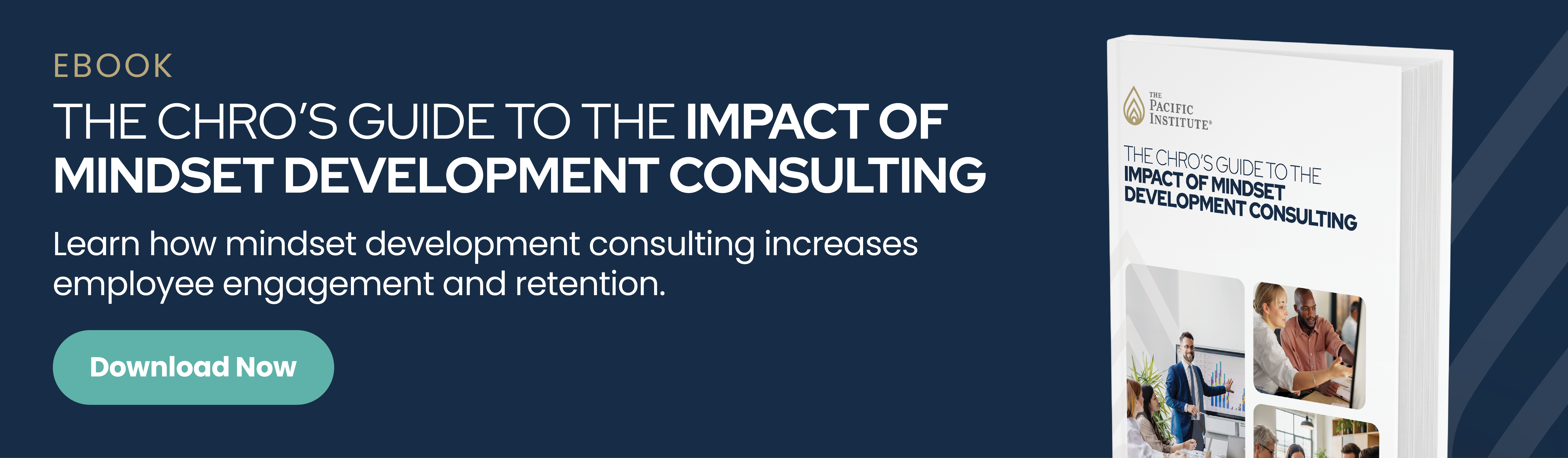
Download the eBook — The CHRO’s Guide to the Impact of Mindset Development Consulting
The Traits of Values-Driven Leadership
Leaders best equipped to create a values-based culture are:
- Self-aware
Self-awareness in leadership means understanding and managing personal impulses and emotions in order to better support others. Self-aware leaders choose to react to difficult situations in constructive, values-driven ways, rather than being driven by instinct. - Empathetic
Empathetic leaders are better at gauging what their team members need and responding with the appropriate levels of compassion and support. - Consistent
Modeling values means acting by the same principles all the time, not just when it’s easy or convenient. - Aligned with your culture
Values-driven leaders know what the organization’s values are, why they matter, and what they look like in practice — and they genuinely believe that adhering to them matters.
Leaders who master these traits make your job as CHRO easier by supporting a more positive workplace culture overall. Employees feel confident in their workplace’s values, creating ripple effects that increase productivity, employee satisfaction, and retention.
Cultivating These Traits with Mindset Consulting
Few leaders are promoted having already mastered the traits listed above. Instead, they develop them through leadership development consulting.
There are plenty of short-term workshops that claim to promote things like self-awareness or empathy in leadership, but those workshops rarely produce lasting results. These traits are simply too nuanced to be learned in one-day courses.
Mindset consulting, however, is well-suited to developing complex, nuanced traits. In a mindset consulting relationship, leaders examine how their subconscious beliefs and thought patterns impact their behaviors. By understanding their mindsets, they learn to take control of them.
Focusing on self-awareness in leadership development helps leaders break unproductive habits and replace them with more constructive ones. As a result, they’re better able to consistently act in alignment with their values — especially in challenging situations.
The Impact of Values-Focused Mindset Consulting
After a leader has undergone mindset-based leadership development consulting, their organization can expect to see improvements across many of the metrics most closely tied to a values-based culture. For example, mindset consulting can lead to:
- Improved manager effectiveness scores
When leaders have learned to be more consistent and compassionate, employees notice. They’re more likely to rate their managers higher on internal surveys and 360-degree feedback.
- Greater leadership consistency across departments
Leaders who have received similar training and are aligned on the same values are more likely to agree on how to approach problems.
- Teams with higher engagement scores
When employees trust their managers and see them consistently living according to organizational values, they’re more likely to be engaged in their roles. In fact, 70% of the variance in employee engagement can be attributed to managers.
- Better retention of high-performing talent
Higher engagement often leads to higher retention; disengaged teams can experience up to 43% higher turnover rates.
- More alignment between managers and their teams
When leaders act in accordance with organizational values, their teams see that example and are more likely to follow it.
- Improved leadership development ROI
A long-term mindset coaching relationship typically delivers stronger long-term leadership development ROI than a series of short-term workshops.
Making Values-Based Leadership Development a Part of Your Organization
For CHROs, values-driven leadership development extends beyond a consulting engagement and is reinforced through everyday systems and processes. In addition to working with a consultant, you can make small changes in the day-to-day organizational operations to systematize values-driven leadership. Some potential strategies include:
- Incorporating mindset and values assessments into the leadership pipeline
Evaluating the strength of future leaders’ mindsets and the values they hold can help you determine who to promote and what training they need. - Developing behavior targets tied to manager effectiveness KPIs
It’s important to be able to articulate the precise values and behaviors you want to see your leaders exhibit. Think about your most important manager effectiveness KPIs and create behavior targets based on them. - Creating cross-functional leadership cohorts to reinforce values
Peer groups help individual leaders find support and feel motivated to perform better. When an entire leadership cohort has been trained to prioritize the same values, keeping that cohort’s connections strong can reinforce learnings over time. - Aligning consulting outcomes with succession planning
A healthy organization has a plan for who will step into key leadership roles in the future. As you develop that plan, make mindset consulting for potential future leaders a part of it. - Providing regular leadership development consulting aligned with organizational values
Making leadership development consulting a regular occurrence is one of the most reliable ways to ensure you always have a values-driven leadership team. Working with a trusted mindset consulting expert like The Pacific Institute can help make leadership training routine.
Build a Values-Based Workplace Culture
Values-driven leaders improve retention, support employee engagement, and even collaborate with fellow leaders better. Developing a leadership team with strong values strengthens not only your organization’s culture, but also its performance.
But values-driven leaders aren’t something you can luck into or even hire for. They need to be trained and developed with mindset-based leadership development consulting. Such consulting puts traits like empathy and self-awareness in your leadership development strategy, equipping leaders to live your organization’s values every day.
Contact The Pacific Institute to learn how you can start building a values-based workplace culture that supports employee trust, retention, and long-term organizational health.